
By Lehlohonolo Lehana.
KwaZulu-Natal Premier Nomusa Dube-Ncube has confirmed the death toll from the storms that hit parts of KwaZulu-Natal has risen to 11.
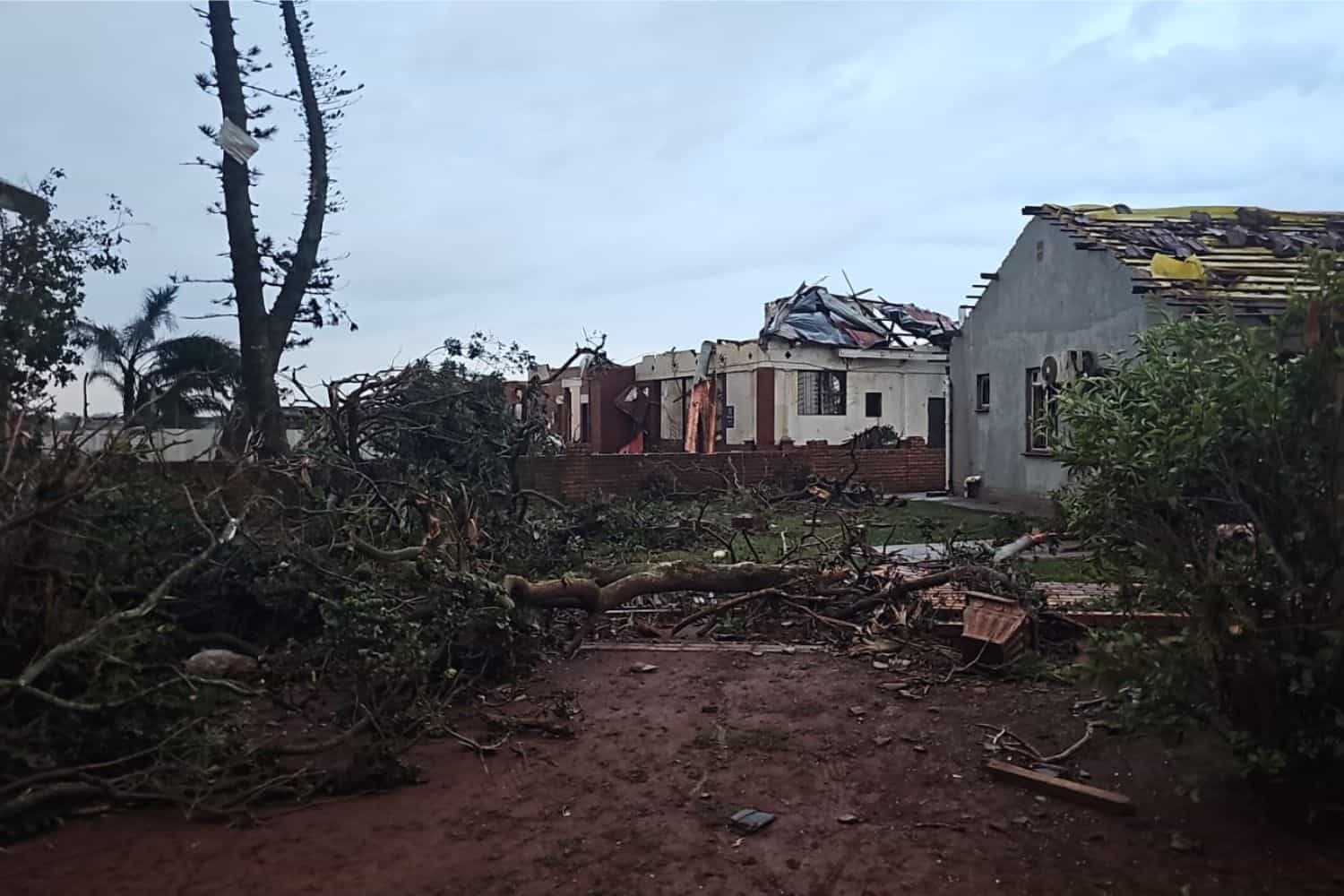
Dube-Ncube visited Magwaveni in Tongaat after a tornado ripped through the area on Monday afternoon.
She said, seven of people are from Tongaat in the north of the eThekwini Metro, and the other four fatalities were reported in Nquthu, Eshowe and KwaHlabisa.
“We have about 14 (people) that are hospitalised in and around eThekwini. Our teams are still busy with the assessments. The damage is quite huge.
She said it is expected that the death toll will rise.
“We express our heartfelt condolences to the families of those that have tragically lost their lives and wish those recovering in hospital a speedy recovery,” said Dube-Ncube.
“The areas that are affected have not only been coastal areas, the inner part of the province has also been affected badly.”
The South African Weather Service (SAWS) on Sunday issued a Level 4 alert warning of disruptive rains along the coast of the province, with a high probability of flooding.
Disaster teams are currently assessing the extent of the damages, while providing immediate relief, including accommodating displaced residents in government buildings.
The provincial government, through the Department of Cooperative Governance and Traditional Affairs (CoGTA), has also coordinated the disaster team from affected municipalities to provide temporary shelter to those who may need it, added Dube-Ncube.
“Public facilities have been opened as safe havens for the affected communities as the assessment continues. Roads are being cleared using TLBs [tractor loader backerhoe] to ensure that rescue workers are able to attend to the injured.”
The impact that it has left — the devastation — it’s phenomenal,” said Bilal Jeewa, of the Gift of the Givers.
Jeewa said that while some people in the Tongaat area were moving into community halls, most preferred to stay in the wreckage of their damaged homes “due to the fear of their items being stolen”. More than 1 200 people had been displaced in Tongaat alone, he added.
“We’ve activated a soup kitchen; last night we distributed mattresses and blankets for those sleeping in classrooms or community halls and then we facilitated products for the cooking of hot meals so they can provide them with three meals per day … You don’t get hail storms because it’s so warm here, but the hail that came down yesterday was the size of golf balls.”
According to the South African Weather Service (SAWS), the province experienced at least two tornadoes, affecting Newcastle, Utrecht as well as Ballito and Tongaat.
Initial investigations indicate that it started as a rope tornado, which developed further into a cone tornado. “Rope and cone tornadoes get their names from their shapes. These tornadoes are generally narrower closer to the ground and wider at the base of the cloud.”
A larger tornado developed later in the afternoon around Tongaat and moved east to the coast near Westbrook and Ballito, where it caused significant damage.
“This tornado was stronger and larger (wedge-like). Wedge tornadoes are usually larger and wider from the surface to the cloud base or, in other words, they are wider than they are tall. Wedge/wide tornadoes are often (but not always) categorised as strong tornadoes.”
“It is safe to say that, although a singular weather event cannot be directly correlated to climate change, climatologists agree that these types of weather systems may become more frequent and intense in the future due to a warming climate.”
The tornadoes’ strength, damage and effects will be further investigated and the findings will be released after the completed post-severe weather report.