
By Lehlohonolo Lehana.
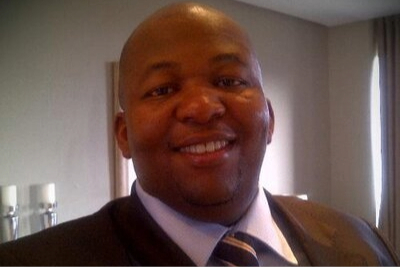
Eskom CEO Dan Marokane has confirmed that the National Transmission Company South Africa (NTCSA) is on track to start trading by 1 July 2024.
Marokane said it will continue to be owned by Eskom Holdings and be located on the Megawatt Park campus.
The NTCSA is the first of three entities to be established through Eskom’s unbundling. The process will also see Eskom’s generation and distribution divisions split into new companies.
When Marokane returned to Eskom he was asked to prioritise several key areas in the first 100 days.
This included reviewing Eskom’s unbundling plans, assessing the Generation Operational Recovery and engaging with internal and external stakeholders.
At a briefing hosted to enable Marokane to reflect on his first 100 days and to outline his strategic priorities, the CEO underlined that the NTCSA’s independent board was determined to provide “equal access” to the network as envisaged when the unbundling was initiated.
He also reported that efforts were under way to reconfigure the office arrangements at Megawatt park so that NTCSA had a distinct identity, including its own entrance.
“Megawatt Park has got multiple wings, with separate entrance doors, and at some point . . . [the South African Revenue Service] was located here and SARS was independent from us, even when we stayed in the same building,” he said.
“I think what becomes important is the drive that the independent NTCSA board will have, working with the management team, to ensure that it provides equal access to all participants in the sector.”
Marokane also stressed the priority being given to investing in new grid capacity in line with a Transmission Development Plan that envisaged the addition of 14 000 km of new power lines by 2032, as well as the installation of 122 600 MVA of new transformation capacity.
He acknowledged the slow pace of deployment in 2023/24, but attributed this to bottlenecks in the supply chain, which had shrunk as a result of years of underinvestment and, thus, required time and effort to re-establish its delivery capacity.
A target had been set for Eskom to work with the domestic industry to scale up to deliver more than 800 km a year of new transmission and distribution lines in the coming 24 to 36 months, he revealed.
South Africa has been without load shedding for 79 days, according to Marokane, but he said it’s still too early to declare that the country is completely without it.
“Load shedding remains a risk. We are not yet at a point where we can comfortably say it’s behind us,” he said.
In addition to coping with theft and damage to its equipment, the power utility has also been facing attacks on Eskom staff in communities.
“It is heartbreaking when we are unable to serve our customers because of the safety of our employees, and it’s more heartbreaking when our employees are injured,” Marokane said.
“We appeal to communities to work with us so we can improve service.”
Eskom will over the next 36 months pursue its strategy across several key initiatives to increasing of the Energy Availability Factor to 70% in the next 12 to 36 months and returning more than 2.5GW in capacity to the grid by March 2025, among others.