
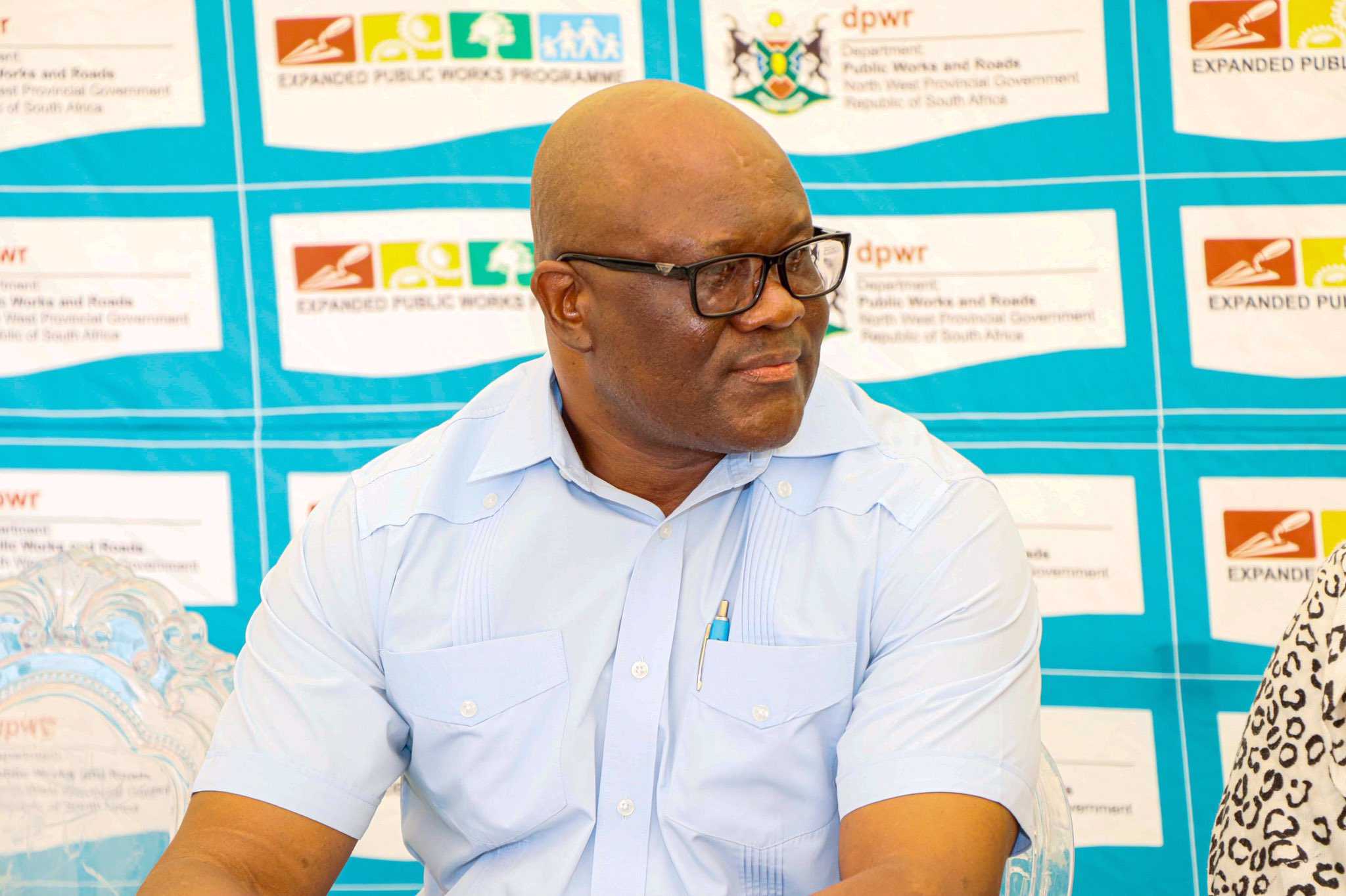
By Lehlohonolo Lehana.
North West Public Works and Roads MEC, Gaoage Molapisi, has called on all government employees residing in State houses to pay for their stay or face eviction.
During an executive management committee meeting towards the end of last year, Molapisi said that it was reported that among the many challenges faced by the department was the inability to collect revenue at state-owned properties.
According to Molapisi, tenants were blatant in their refusal to pay. The department’s financial report highlighted poor performance in relation to revenue collection because of non-payment of monthly rentals by tenants for several years now.
Molapisi said that it is disingenuous for government employees to have a sense of entitlement to government-owned properties to such an extent that they refuse to pay for rental fees or water and electricity.
Due processes should follow, and everyone found in breach of their contract and failing to pay must be evicted, the MEC said.
“The maintenance of state properties, including renovations, and ensuring that the state receives revenue collected from rental and usage of these properties remains our responsibility. We must therefore do this diligently and without fail.”
Moss Kgantsi, the head of the department, has so far already issued a notice of eviction in line with the MEC’s directive, and a service provider has been appointed to assist the department in effecting the necessary applications for eviction and providing debt collection services.
In response to a parliamentary Q&A, the Department of public works and Infrastructure revealed that the luxury homes lived in by cabinet ministers and deputy ministers in South Africa are valued at around R967 million in 2023 – with the average house boasting a price of R23.4 million.
The majority of these properties are situated in Cape Town and Pretoria, two capitals where most of their work is concluded.
58 of the homes in Cape Town are worth roughly R830 million, while the remaining 39 are situated in Pretoria and are valued at R137 million.
This is not the first instance of politicians not wishing to pay for rates and taxes while the rest of South African citizens are forced to fork out thousands each month, even if they live in modest homes.
In 2022, a ministerial handbook with no legislative backing was caught up in severe public backlash after it was revealed that certain ministers would get free uncapped utilities at the expense of taxpayers.