
By Lehlohonolo Lehana.
President Cyril Ramaphosa has reiterated government’s commitment to resolving the energy crisis that is crippling the country’s economy as soon as possible.
His renewed call comes as the country ping-pongs between stages four and six of the scheduled blackouts.
It also comes as the cost of running embattled power utility Eskom’s diesel-powered units has more than doubled, as revealed by the treasury on Tuesday. Finance Minister Enoch Godongwana also said the state-owned-entity was on course to post a loss of R21.2 billion. This was despite a hefty 9.6% tariff increase being approved by the national energy regulator and a treasury bailout of R21.9 billion.
The South African Reserve Bank has estimated that stage six load-shedding costs the country R900 million a day and the National Rationalised Specifications Association of South Africa is finalising revisions of the country’s load-shedding guidelines to allow for scheduling beyond stage eight.
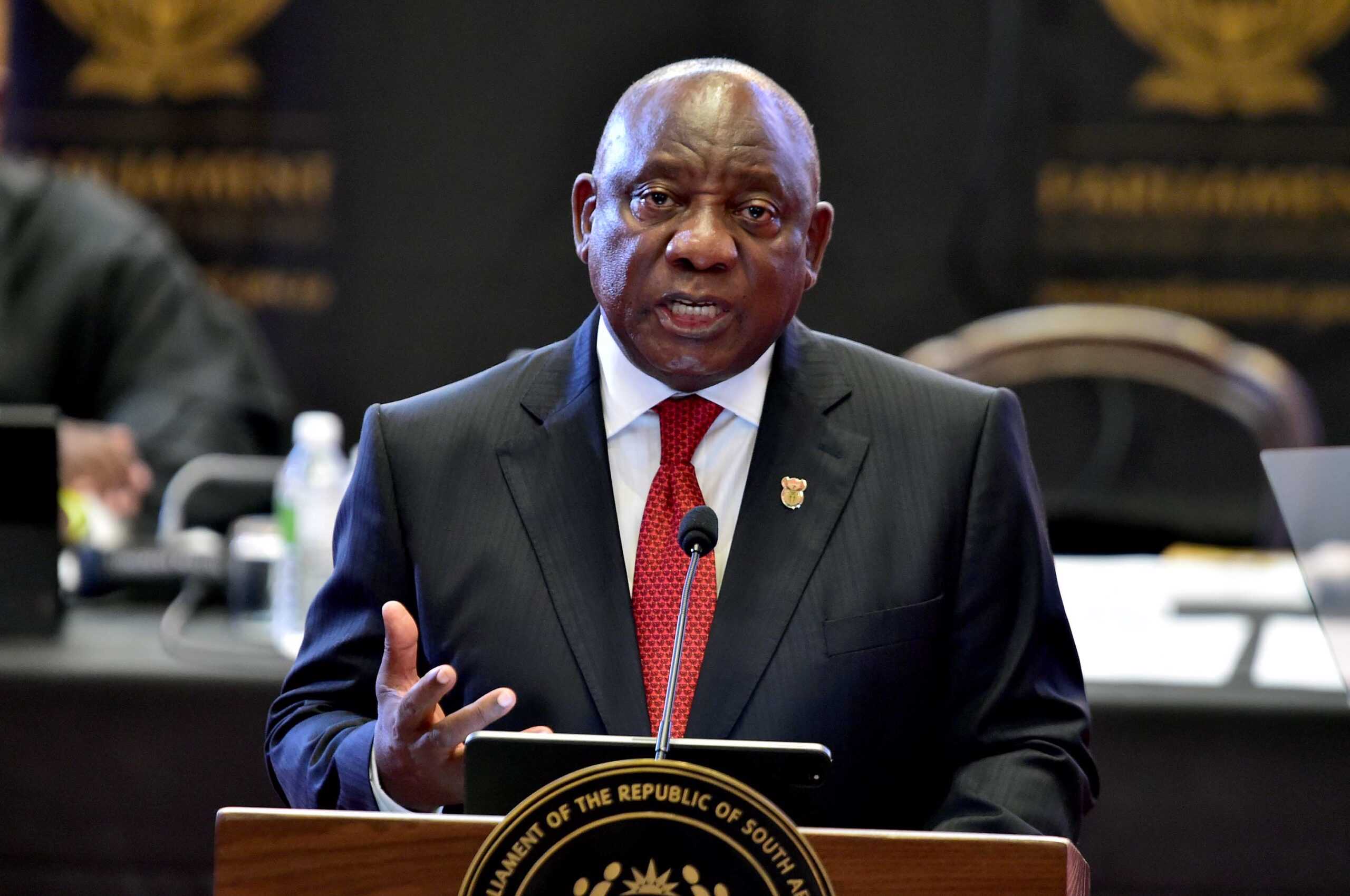
Ramaphosa was addressing the National Assembly on Wednesday during the occasion of The Presidency’s Budget Vote.
“Our overriding priority now is to end load shedding and to achieve energy security. In July last year, I announced a detailed plan to address the energy crisis. I have since established the National Energy Crisis Committee to ensure that this plan is fully implemented and appointed a dedicated a Minister in The Presidency to provide a single point of execution.
“Over the past nine months, we have made progress in implementing the measures that we outlined in the Energy Action Plan,” he said.
Reforming electricity generation
Zeroing in on the progress made, Ramaphosa said government’s move to reform private electricity generation has paved the way for an exponential growth of new generation projects.
“More than 100 projects are now at various stages of development, representing over 10 000MW of new generation capacity, with an investment of over R200 billion. The exponential growth of private sector investment in electricity generation is proof that this reform is indeed having a major impact.
“These investments will significantly close the shortfall in electricity supply as we move on. What has been pleasing… is that this reform process has attracted a variety of investors in the form of women-led businesses.
“A province such as the Northern Cape has attracted no less than R100 billion in investments… in renewable energy and is seeing exponential economic growth, with the resultant creation of jobs,” the President said.
Accelerating new generation capacity and assisting municipalities
Ramaphosa said government’s Risk Mitigation Independent Power Producer Procurement Programme (RMIPPPP) – which was created to address the current energy shortfall and reduce the dependence of diesel guzzling Open Cycle Gas Turbines – is also bearing fruit.
“Three projects from the Risk Mitigation Programme have entered construction, with a further five projects expected to reach financial close during this quarter. Project agreements have been signed with 25 preferred bidders from Bid Window 5 and Bid Window 6.
“In the coming months, we will initiate the procurement of more than 10 000MW of additional generation capacity from wind, solar, gas and battery storage, which will further contribute to closing the shortfall in energy supply,” he said.
Unbundling the State power utility
The President said the unbundling of Eskom into three entities is well underway and assured that many countries have implemented such a move with some success.
“Significant progress has been made in the establishment of the National Transmission Company of South Africa as an independent subsidiary of Eskom. I’ve asked the Minister of Public Enterprises to ensure that an independent board is appointed for the new transmission company by the end of June so that it can be fully operational as soon as possible.
“At the same time, we are making progress in decisively addressing Eskom’s debt burden. The… budget introduced R254 billion in debt relief to Eskom, subject to conditions. This will relieve pressure on the utility’s balance sheet, enabling it to conduct necessary maintenance and supporting the restructuring of the electricity market,” he said.
Legislative reform
Ramaphosa said government is pursuing “sweeping legislative reforms”, which will “end the energy crisis once and for all”.
“We have already introduced the Electricity Amendment Bill, which seeks to establish a competitive electricity market and support the unbundling of Eskom. This will fundamentally transform the electricity sector as we know it… and will create a level playing field for multiple generators to participate in producing the energy that we need.
“We will soon introduce another key piece of legislation, the Energy Security Bill, to streamline the regulatory framework and accelerate the construction of renewable energy projects. I call on the Members of this House, from all political parties, to pass this critical legislation in record time, while adhering to required Parliamentary processes. We need to do so in months, not years,” he said.
Load shedding
Ramaphosa dismissed the possibility — but not outright — of a total grid collapse. The risk was “extremely low”, he said, adding that there were safeguards in place to prevent this happening.
The government was working “urgently” to resolve the country’s electricity shortfall, he said, but this did not diminish its commitment to a just energy transition.
We will stick to our commitment to reduce our carbon emissions by 2030 to within a target range which, at its upper level, is compatible with limiting global temperature increase to 1.5ºC.
“We need to do this to prevent the worst effects of climate change, including illness, droughts, floods and other disasters. We also need to protect jobs in sectors of our economy that have to decarbonise to remain globally competitive.”
He said that any decisions — if necessary — to temporarily delay the decommissioning of coal-fired power stations to address electricity supply shortfall would be informed by “a detailed technical assessment of the feasibility of continuing to operate older plants and the cost of doing so relative to alternative energy sources”.
“It will also be informed by the timeframe in which we can expect new generation capacity and the impact on our decarbonisation trajectory. At the same time, we will further accelerate the pace of investment in new renewable electricity generation as an important part of the plan to overcome load-shedding.”
Ramaphosa appealed to South Africans to do their part, with “a difficult winter ahead” with demand set to rise.
“We can all make a difference by switching off lights and appliances when not in use, reducing the temperature by setting geysers to 60 degrees, installing a geyser blanket or geyser timer to save energy and reduce your electricity bill, and turn off unnecessary equipment like pool pumps. By taking these simple actions we can reduce demand by up to 1 000 MW, or one full stage of load shedding,” he said.
Watch Live in the video below:
Video Courtesy of Parliament.