
By Lehlohonolo Lehana.
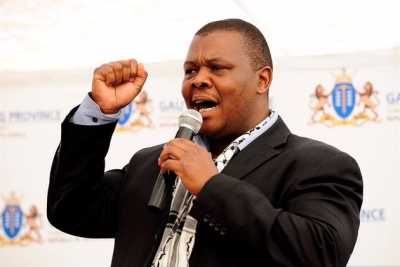
The Gauteng provincial government (GPG) will table a “concrete proposal” to national government by December 15 outlining plans to pay off the province’s portion of the long-contested e-tolls debt and switch off or repurpose the gantries, assures Gauteng Finance MEC Jacob Mamabolo.
Mamabolo was unpacking the province’s Medium-Term Budget Policy Statement (MTBPS) on Tuesday, he said that it was now time to “conclude the modalities of the settlement of the debt” and that feedback on the proposal and “finality” were expected before the State of the Province Address early next year.
A decision to scrap the e-toll system was taken in September last year.
During the 2022 Medium-Term Budget Policy Statement, Finance Minister Enoch Godongwana promised to scrap the unpopular user-pay system, saying alternative funding mechanisms would be put into place to address the financing of the Gauteng Freeway Improvement Project debt.
“Ministers made a statement, there is no going back on that the negotiations will be finalised, and we will make an announcement on this issue,” Mamabolo said.
“As I announced during the medium-term budget policy statement in the 2023/ 2024 financial year, there will be no specific location for our obligation on e-tolls this year.”
This would include an allocation of funds by the provincial and national governments.
Mamabolo told MPLs that the provincial government is in the final stages of settling the R12,9bn.
“To this extent, we will submit our concrete proposal to the national government before 15 December 2023 and expect feedback and finality before the State of the Province Address next year. We will update the people of the province on this proposal on what the national government will say about it.”
He explained that the province would strengthen its revenue-generation capacity, as part of its effort to finally switch off the gantries.
“We reaffirm our longstanding commitment to pay the debt, including augmenting our own provincial revenue without burdening the equitable share, especially priorities for social services such as education, health, and social welfare. We believe the time is now to conclude the modalities of the settlement of the debt.”
Meanwhile Mamabolo outlined an increase in GPG’s 2023 main budget of R4.5-billion, from R158.9-billion to R163.5-billion, mainly to fund energy projects and the expansion of frontline services in TISH areas, he pointed to initiatives aimed at cutting red tape in municipalities.
Investments in real estate, manufacturing plants, automotive plants, residential properties and industrial parks, besides others, are critical for the financial sustainability of municipalities.
“In our engagement with the MMCs of Finance at the CFO Roundtable, cutting red tape in municipalities carries a great potential to improve investor sentiment and make it easier to do business in municipalities.”
The CFO Roundtable was held in September, bringing together Gauteng Provincial Treasury (GPT) and the private sector CFOs, represented by Chartered Institute of Business Accountants, Standard Bank and the Chartered Institute of Government Finance Audit and Risk Officers.
At the time, it was emphasised that good governance and well-managed public institutions had great potential to enhance investor confidence and grow gross domestic product, he outlined.
GPT commissioned a project manager to analyse the details of improving red tape in municipalities, including the turnaround times to conclude certain compliance with municipal laws affecting the investment space in the municipalities.
Mamabolo also highlighted that the GPG had entered into an agreement with City Power, concluding a memorandum of understanding (MoU) that will enable City Power to act as the implementing agent to provide residents with power generation solutions to improve the on- and off-grid solutions, such as leveraging renewable energy technology.
Further, the GPG will be appointing a transaction adviser to assist with technical skills to determine the feasibility, viability and cost-effectiveness of City Power’s proposed solutions.