
By Lehlohonolo Lehana.
The Public Service Commission (PSC) says the late and non-payment of suppliers remains a serious problem within the public sector and needs to be addressed.
The PSC released its quarterly Pulse of the Public Service bulletin in Pretoria on Tuesday. The bulletin covered the period between 1 July and 30 September.
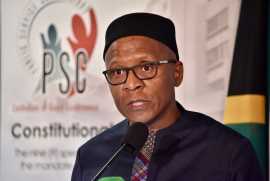
Commissioner Anele Gxoyiya on Tuesday addressed media in Pretoria on the PSC’s Quarterly Bulletin.
According to the PSC, the number of invoices paid after 30 days by the national and provincial departments amounts to 117 158, with the rand value of R11.1 billion. This represents a regression of 12% when compared with the number of invoices paid after 30 days by national and provincial departments during the first quarter of the 2022/23 financial year, which amounted to 104 937 invoices, with the rand value of R8.6 billion.
Gxoyiya encouraged the departments that are compliant to maintain their performance and continue to pay all legitimate invoices from suppliers within 30 days, as required by the Public Finance Management Act (PFMA) and its related prescripts.
“The rand value of invoices paid after 30 days in the first quarter of the 2023/24 financial year amounted to R1.2 billion, and this indicates a regression of 126% when compared to the rand value of invoices paid after 30 days in the first quarter of the 2022/23 financial year, which amounted to R530 million,” said Gxoyiya.
The most common reasons provided by both the national and provincial departments for the late or non-payment of invoices are interruptions caused by poor internal controls, internal capacity, and budget constraints.
“North West provincial departments reported the second highest invoices paid after 30 days, amounting to 12 988 invoices, with the rand value of R880 million during the same period.
“In contrast, Eastern Cape provincial departments reported the highest number of invoices older than 30 days amounting to 25 789, with the rand value of R2.3 billion at the end of June 2023,” Gxoyiya said.
According to the PSC, the main contributing departments towards late or non-payment of invoices at national level are the Departments of Home Affairs; Correctional Services; Defence; Military Veterans; South African Police Service; Agriculture, Land Reform and Rural Development; Transport; Water and Sanitation; Public Works and Infrastructure; Health, and Tourism.
Gxoyiya advocated for transparency in dealing with public finances.
“Transparency is subtly intertwined with accountability… Transparency is pivotal to democracy and accountability, as well as upholding the principles of responsiveness and efficiency.
While corruption in the public sector is by no means a new phenomenon, the nature and extent of corruption manifesting primarily through unlawful procurement of contracts was not fully comprehended until now.
“In many ways, democracy is government by explanation because in an open and democratic society, government should be accountable for its actions and decisions, which should be informed by rational considerations that are explicable to those affected by them, “Gxoyiya said.
Watch Live in the video below:
Video Courtesy of GCIS.