
By Lehlohonolo Lehana.
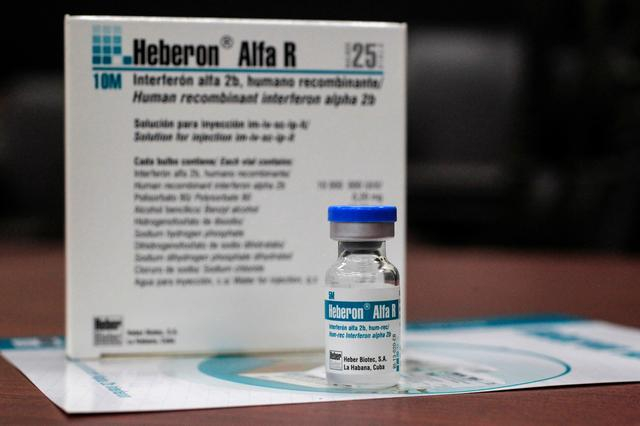
File Photo:The image shows an ampoule containing Interferon Alfa 2b as it is displayed during a press conference in Havana, Cuba, March 13, 2020. Picture taken March 13, 2020.
The SA National Defence Force (SANDF) on Wednesday confirmed that it has returned 500,000 vials of the Heberon interferon alpha-2B Covid-19 drug to Cuba.
This follows instructions and recommendations by a ministerial task team and the SA Health Products Regulatory Authority (Sahpra) on the illegal procurement of the drug which cost the taxpayer millions of rand.
On Wednesday, the chief of the SANDF, General Rudzani Maphwanya, told Parliament that all vials of the Cuban-made drug had been returned.
“The SANDF indeed had an engagement with the SA Health Products Regulatory Authority (Sahpra). I want to indicate that we have returned all that was required to be returned. So we have not confined ourselves to the 500 000 vials. Sahpra has received a report so far,” he said.
In December, Sahpra gave military bosses an ultimatum to provide evidence that the drug had been shipped back to Cuba or face having it destroyed.
In April last year, the SANDF spent nearly more than R200 million to import Heberon Alpha R 2B, manufactured by a Cuban-Chinese company.
Interferons are proteins used in the body as part of its natural defence against viruses. There is, however, no scientific proof that the drug is effective in treating Covid-19 and it is not approved or registered for use in South Africa.
MPs heard the initial complaint was laid by a Maj-Gen LC Ford in a classified internal memorandum which accused the SANDF of irregularly procuring the drug.
“Maj-Gen Ford questioned whether there was a need to procure interferon, the period in which this was decided, the period in which it was procured, the approval for its use, the processes followed during the procurement, the delivery and storage, the payment, and whether the procurement was conducted within the prescripts,” said committee chair Zolile Ngcakani.
Principle investigator Cassius Lubisi said after the investigation SA faced an impending crisis, as the drugs were due to expire before Sahpra’s approval in April 2022.
“It was too late, even if Sahpra approved the trial.”
The best-case scenario at the time would have been for Sahpra to approve the bulk use of the medication after the trial on 8,000 members, to enable the SANDF to use all 80,000 vials from the first and/or second consignment and all 131,101 vials of the third consignment before the expiry date of July 2022.