
By Kevin Rademeyer, Sports Journalist.
Photo Credit: France Rugby.
France survived a furious Springbok second half comeback to claim a 21-19 victory at the Stade de France on Friday night, ending South Africa’s five match winning run in Paris and taking a significant step towards the inaugural Nations Championship final.
The world champions scored twice after the break and France failed to add to their half time total, despite playing for 28 minutes with 14 men following three yellow cards.
But the damage had been done in a first half in which the Springboks conceded too many penalties, lost possession too cheaply and allowed Antoine Dupont and Maxime Lucu to dictate the tempo.
It was France’s first home victory over South Africa since 2005 and only their second win in their last 11 meetings.
The result also ended the Boks’ four match unbeaten start to the Nations Championship and cost them the No 1 position in the world rankings. France moved to third, while New Zealand reclaimed top spot, subject to their result against Wales.
South Africa had arrived in Paris with a formidable record against Les Bleus, having won nine of the previous 10 meetings. But the opening half exposed a side that was uncharacteristically hesitant and inaccurate.
The first major setback came in the 12th minute when lock Lood de Jager was shown a yellow card for head contact with Lucu. Lood had received a red card in the same fixture last year.
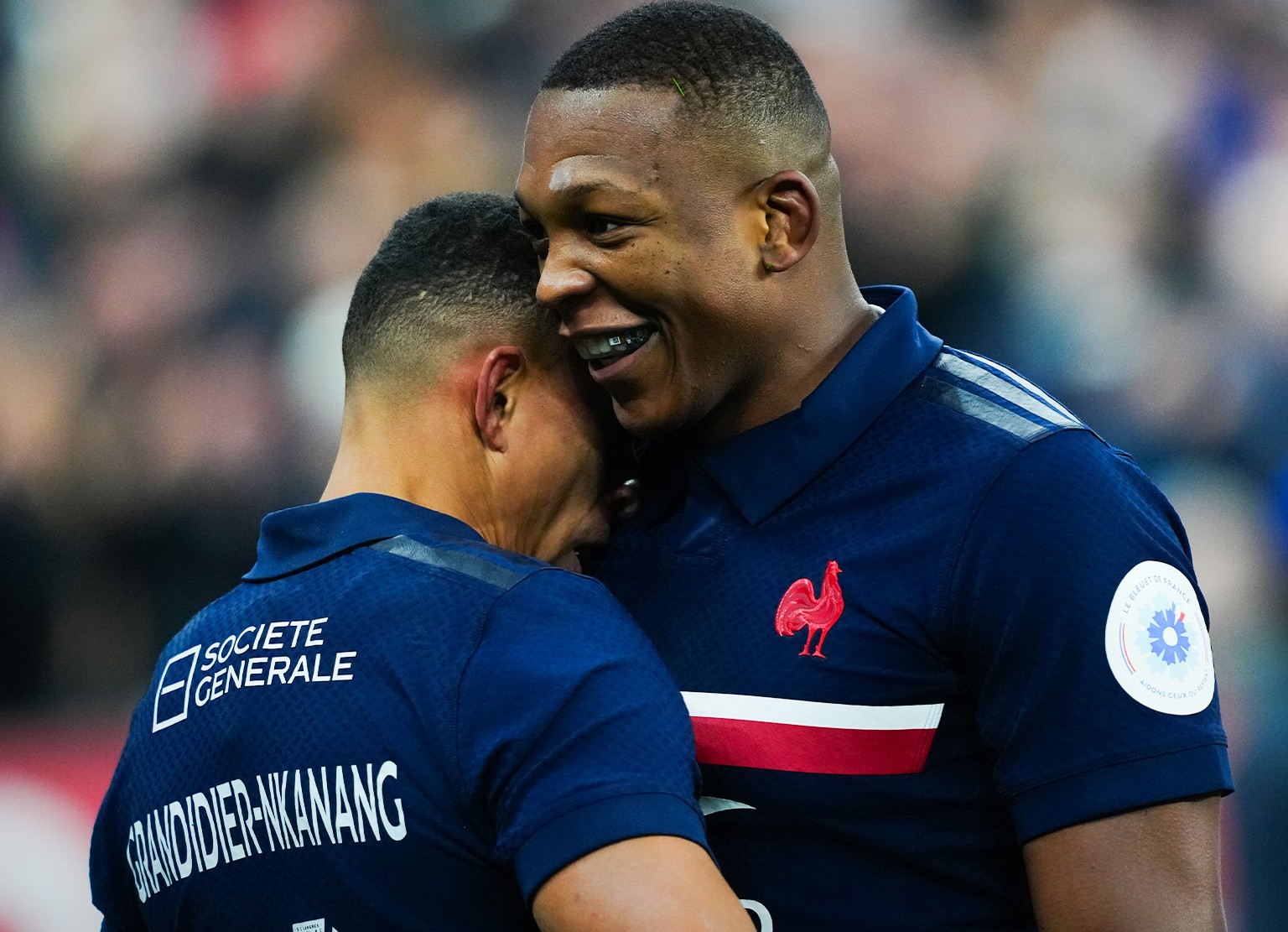
France immediately increased the pressure, and Aaron Grandidier Nkanang finished in the corner after a sustained spell of attacking possession.
Théo Attissogbe extended the lead when a pass struck centre Kalvin Gourgues on the head and rebounded into the fullback’s path. It was an unusual try, but one France were quick to take.
The Springboks responded through hooker Jan-Hendrik Wessels, who finished from the back of a rolling maul. Yet France struck again almost immediately. Peato Mauvaka made the initial break before Dupont produced a deft kick ahead for Louis Bielle Biarrey, whose pace took him clear.
Lucu was also yellow carded late in the half for a high tackle on Sacha Feinberg Mngomezulu. South Africa thought they had reduced the deficit on the stroke of half time when Kurt Lee Arendse finished a move from a lineout, but a television review ruled him marginally offside.
The Boks went into the break trailing 21-7, with the scale of the task made greater by their own errors. Six first half knock ons and a succession of penalties allowed France to attack from turnover possession, precisely the kind of opportunity Dupont thrives on.
The French captain had been named at flyhalf, with Lucu at scrumhalf, but the pair operated as interchangeable playmakers and caused the Springbok defence considerable uncertainty.
Dupont’s ability to create opportunities from apparently ordinary situations was central to France’s first half advantage.
South Africa’s response after the interval was impressive, but it came at a cost.
Jasper Wiese was initially shown a yellow card for a dangerous cleanout on Gourgues. The decision was upgraded to a 20 minute red card, leaving the Boks a player short for a significant part of the second half.
Despite that setback, the visitors began to dominate territory and the set piece. Cobus Reinach crossed in the 52nd minute after a close range attack, with Feinberg Mngomezulu converting to make it 21-14.
France were then reduced to 14 men again when Grandidier Nkanang received a yellow card. Later, prop Régis Montagne was also sent to the sin bin, adding to the tension inside the stadium.
South Africa had four consecutive scrum penalties between the 61st and 65th minutes but could not turn that dominance into another try. Their pressure eventually told through another powerful maul, with Malcolm Marx grounding the ball in the 71st minute.
Replacement flyhalf Manie Libbok missed the conversion with a poorly timed kick. This made all the difference.
At 21-19, the Boks needed only a penalty or another scoring opportunity to take the lead, but the decisive moment never arrived.
Springbok coach Rassie Erasmus was blunt in his assessment. “France played really well and we didn’t, so I can’t find a lot of excuses. They took their opportunities when they got them and we didn’t.”
He felt his side had passed up too many chances, including opportunities to finish attacks in the wide channels and a period of scrum dominance that produced no points.
“It’s probably a cliché, but I definitely think we had enough opportunities and there were simple tries we could have scored with one last pass, and perhaps one or two wrong decisions,” Erasmus said.
He also questioned the decision to rely on repeated penalties rather than kick for the corner.
“In front of a crowd like this you might feel you have dominance, but it’s just human not to keep on penalising the home team if they’ve already got a card or two,” he said. “But in the end, it comes down to the fact that they played well, and we didn’t.”
Erasmus was careful not to make the referee the focus of his post match comments, although he acknowledged the pressure of officiating in front of more than 80,000 passionate home supporters. “I’m not blaming the ref,” he said. “We’re all human there.”
The coach reserved his strongest criticism for his own team, saying: “We played ourselves into that hole.” He described the Boks as “a little bit tentative” and accepted that the coaching staff had to examine why the team had hesitated when opportunities presented themselves.
Captain Siya Kolisi shared that assessment. “They played really well tonight, and I think, as coach Rassie Erasmus said, especially in the first half, we created some opportunities that we didn’t take in the wide channels”, Kolisi said. “When they created opportunities, they took them straight away.”
He praised the effort after the break but acknowledged that effort alone could not compensate for missed chances. “If you create so many opportunities and don’t take as many in a game against a team like this, you’re not going to get the win,” he said.
Felix Jones also pointed to the fine margins. He highlighted Arendse’s disallowed try, the period of scrum pressure inside the French 22 and the missed conversion after Marx’s try.
“Some really fine margins,” Jones said. “We had a try disallowed for probably being a foot or two offside, that period inside their 22 where we had multiple scrums and felt we had some dominance, but weren’t able to get over the line there.”
He also acknowledged France’s attacking quality, including the fortune involved in the try that followed the ball striking Gourgues.
Erasmus admitted the defeat could have serious consequences for South Africa’s Nations Championship campaign. The Boks only received one bonus pint , moving them to 21 points in the southern hemisphere standings, but New Zealand can move ahead with victories over Wales and England.
“If we scored one more try, we would have got five points from this game and we would have been in the running, Erasmus said. “I think we basically killed our dreams for the Nations Championship tonight with this performance and not getting the win and the four tries.”
South Africa now face Ireland in Dublin next weekend. To retain a realistic chance of reaching the final at Twickenham on 29 November, they need to win and hope New Zealand lose to England.
Kolisi knows the response must be immediate. “We know what we need to fix,” he said. “Hopefully we will play better next week.”
France, meanwhile, will take considerable satisfaction from a victory built on their first half execution and their ability to withstand the pressure that followed. The Boks had the territory, the scrum and the late momentum. France had the points, and that was enough.
Scorers:
France – Tries: Aaron Grandidier-Nkanang, Théo Attissogbe, Louis Bielle-Biarrey. Conversions: Maxime Lucu (3).
South Africa – Tries: Jan-Hendrik Wessels, Cobus Reinach, Malcolm Marx. Conversions: Sacha Feinberg-Mngomezulu (2).