
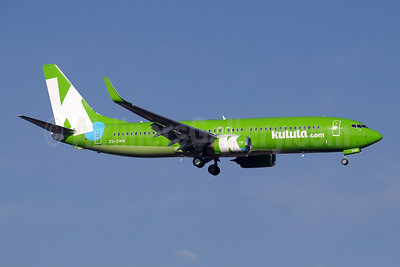
By Lehlohonolo Lehana.
The South African Civil Aviation Authority (SACAA) has suspended the operating licence of Lufthansa Technik, the organisation that maintains Comair’s fleet.
SACAA has given Lufthansa Technik 24 hours, with effect from Monday night, to resolve the issues identified by the aviation regulator.
This follows an audit by SACAA where Lufthansa Technik’s quality control management system and safety management systems were reviewed.
LTMI is a subsidiary of Lufthansa Technik, a subsidiary of the Lufthansa Group, which also owns the airline Lufthansa. LTMI operates Lufthansa Technik’s maintenance business for customers outside Germany and holds a maintenance contract with Comair.
LMTI said on Tuesday that findings made by the SACAA during the unscheduled audit were not directly related to the technical problems that led to the temporary grounding of Comair’s kulula.com and domestic British Airways flights last week.
The Aviation Watchdog suspended Comair flights for five days last week after what the authority termed “a series of incidents”.
The SACAA confirmed on Wednesday that it is busy with an unscheduled audit of South African Airways Technical (SAAT) related to these incidents.
Comair on Monday “pre-emptively” shifted maintenance of its aircraft away from LTMI to SAAT.
SACAA said in a statement on Wednesday afternoon that it found LTMI had both a quality management system and safety management system in place, but both were not implemented as per the civil aviation regulations and the requisite manuals. During the safety oversight visit LTMI’s quality control management system (QC) and safety management systems were subjected to a review to establish legislative compliance related to reporting, analysis and follow-up of occurrences, and corrective action plans to prevent recurrence.
The audit resulted in four Level 1 findings raised with the AMO. A Level 1 finding poses an immediate risk to users of civil aviation services and such findings must be closed immediately. The SACAA reviewed the evidence and corrective action plans submitted by LTMI and the evidence was found to be satisfactory in relation to two of the Level 1 findings. Two remaining Level 1 findings still need to be resolved.