
By Lehlohonolo Lehana.
Presidency appeared to defend the efforts of Minister of Communications and Digital Technologies Solly Malatsi to enable Elon Musk’s Starlink and other foreign Information and Communication Technology (ICT) companies to invest in South Africa without surrendering 30% of their companies to local owners.
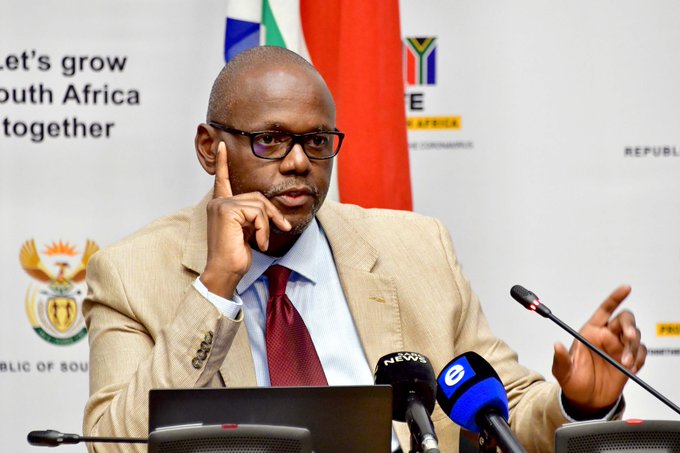
Vincent Magwenya, spokesperson to President Cyril Ramaphosa briefed the media on the president programme and topical issues of interest.
Magwenya suggested that if necessary the local ownership law could be amended to allow investment without ceding ownership.
Malatsi gazetted a formal policy directive instructing the Independent Communications Authority of South Africa (Icasa) to reconsider this local ownership rule. In effect he was asking Icasa to recognise Equity Equivalent Investment Programmes – which allow IT investors such as Musk to invest in other businesses in lieu of ceding ownership of their companies.
His directive has sparked a backlash from the ANC, with even Malatsi’s ANC deputy minister Mondli Gungubele publicly criticising his directive as undermining South Africa’s transformation agenda and self-governance.
But Magwenya noted that it was not only Starlink that had expressed interest in providing services in SA, but also four or five other foreign ICT companies.
He said Malatsi was looking at what could be done – within the law – to accelerate those processes.
“The law is quite clear with respect to the local ownership element for those seeking to be licensed as telecommunications and network services providers, and so that’s what the minister is doing.
“The president has been quite clear that whatever is done must be done within the framework of our laws, and so if it turns out that Icasa cannot do anything beyond what is written in law, then the process will be to look at an amendment of the legislation.”
“That is well guided in our statute in terms of how it needs to proceed.”
Magwenya stressed that the Independent Communications Authority of South Africa (ICASA) was an independent regulator that would be guided by the law.
G20 Summit
Magwenya said, Pretoria has urged all G20 members to engage, warning that unilateral moves threaten the multilateral foundation of the bloc.
“We are against the US boycott. We will not promote any boycott ourselves. Our focus remains on championing the critical issues debated in Johannesburg, ensuring they remain firmly on the G20 agenda, regardless of US approval.”
Trump announced that South Africa would not be invited to the 2026 G20 Summit, which would be hosted in Miami, USA.
Magwenya emphasised the country’s position as a founding member of the G20, stressing that exclusionary actions must be challenged and rejected by all members.
“These are issues not only vital to our continent but essential to the world: poverty reduction, climate action, and equitable development cannot be confined to a single country’s approval.”
Department of International Relations and Co-orporation (DIRCO) has actively engaged other G20 members, urging them to voice their positions on the US’s unilateral move.
Magwenya added, “Wev’e encouraged members to express their views openly. Many have communicated support for our stance and rejection of Washington’s decision. This is about defending multilateralism itself.”
Madlanga Commission of Inquiry
The non-disclosure of the interim report has drawn criticism about a lack of transparency, but Magwenya said the entire proceedings of the commission had been open to the public and the media, which had ensured transparency.
The commission is expected to hand an interim report to President Cyril Ramaphosa on the 17th of December 2025.
Magwenya explained that some witnesses would be called back to give further evidence to the commission, and it would not be helpful to release half-baked, incomplete evidence in the interim report. “We need to allow the process to be completed,” he said.
A review was under way on how to protect witnesses after assassination of one of them, whistleblower Marius van der Merwe, and justice minister Mmamoloko Kubayi was also engaging with media leadership to ensure they could be protected.
He stressed that there was no legal obligation on Ramaphosa to release the interim report, and any legal action to compel him to do so would be “frivolous” and a waste of time.