
By Kevin Rademeyer.
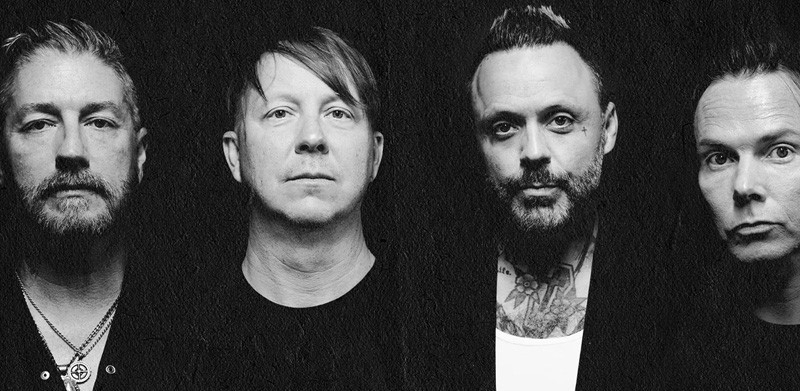
Photo Credit: Blue October.
Houston alternative rockers Blue October are keen to bring their ‘Foiled’ 20th Anniversary World Tour to South Africa, with discussions already held with prospective promoters.
No dates have been confirmed, and although unlikely that it will happen soon, the possibility of the band’s first ever South African shows adds a compelling local angle to a tour celebrating the album that changed their lives.
For South African Blue October fans, the prospect of finally seeing the band perform live could come with an especially meaningful soundtrack: Foiled, the platinum selling 2006 album that turned the Houston group into an international alternative rock success.
A South African debut during a tour built around one of the band’s most personal and influential records would offer local audiences the chance to experience the album in the way Blue October have always wanted to present it.
For now, the band are taking the celebration across North America after completing the UK and European leg. The tour began in Abilene, Texas, on 22 October, with dates scheduled across the United States and into 2027.
The centrepiece is Foiled, performed in full, including its hidden track, followed by a selection of songs from across the band’s catalogue. It is a deliberate return to a record that helped define Blue October’s career, but this is not simply an exercise in reliving past glories. For frontman Justin Furstenfeld, performing the album two decades later means revisiting a difficult period in his life from a very different place.
Released in 2006, Foiled brought Blue October to a far wider audience through songs such as Hate Me and Into the Ocean. The album married emotionally exposed songwriting with expansive alternative rock, piano, strings and electronic textures, giving the band a sound that stood apart from much of the mainstream rock of the time.
Furstenfeld has described the record as a particularly effective balance of darkness and hope.
In an interview with Classic Rock in July 2026, he reflected on its combination of self pity, self loathing, depression and addiction, countered by what he called the “positive, romantic reinforcement” within the songs.
That contrast is central to the album’s enduring appeal. Foiled did not soften difficult emotions into tidy lessons or easy resolutions. It allowed pain, anger, vulnerability and tenderness to exist alongside one another. For listeners who recognised something of their own lives in those songs, that honesty helped build a connection that has lasted far beyond the original release.
Furstenfeld also joked that the album sounded “like Pharrell and Kanye West produced an Alternative band”, a description that hints at the adventurous production and stylistic breadth behind its emotional intensity.
The record became a breakthrough for a band that had spent years developing its audience. Blue October formed in Houston in 1995 and have since released 12 studio albums, accumulated 21 Top 40 alternative singles and surpassed 1.5 billion streams.
Yet Foiled occupies a special place in that story. Its success changed the scale of the band’s career, bringing larger audiences and a new set of expectations. The anniversary tour now gives them an opportunity to return to the record with the benefit of everything that followed.
Twenty years later, the songs feel different
One of the most compelling aspects of the tour is that Blue October never mounted a dedicated tour for Foiled when it was first released. The decision to perform it in full now gives the anniversary a purpose beyond marking a date on the calendar.
“We never toured for that album, so now 20 years later we’re touring for it, and to be able to play such romantically sad music as a happy person, it’s so much better,” Furstenfeld told Classic Rock.
The distinction matters. The songs remain rooted in the emotions that shaped them, but Furstenfeld is no longer approaching them from the same place. His recovery from addiction in 2012 became a pivotal moment for both his life and the band, changing the way he could engage with his own material and the people who had found comfort in it.
Rather than being trapped inside the experiences that inspired the songs, he can now perform them with distance, perspective and gratitude. The sadness is still there, but it no longer has to define the person singing it.
That shift gives the anniversary shows an unusual emotional dimension. Audiences will hear songs written during a turbulent period, delivered by a frontman who has spoken openly about the work required to move beyond it.
It is also part of what has made Blue October more than a band associated with a handful of successful singles. Furstenfeld’s willingness to put difficult personal experiences into his writing has helped listeners feel that the songs speak directly to them.
On stage, that relationship becomes communal: private emotions are transformed into something shared by thousands of people singing together.
Bassist Matt Noveskey has seen the band’s evolution from close range. He joined Blue October in 1998 and became part of a group whose identity was shaped by its Texas roots and an eclectic set of influences.
Noveskey reflected on the musical culture surrounding the band, including pockets of emo and goth listeners and the influence of British artists such as Morrissey and Cocteau Twins. Those ingredients helped inform Blue October’s distinctive blend of alternative rock, melodic experimentation and emotional candour.
The success of Foiled changed the practical realities of touring, Noveskey explained, but it did not suddenly transform the band’s creative approach. Blue October had already spent years building a following across several albums before a much larger audience arrived.
That history has helped keep the band grounded. Noveskey described the group as never taking its success for granted, an attitude that extends to the people who continue to attend their shows.
For Blue October, the audience is not simply a collection of ticket holders. Noveskey has spoken about the way fans have become an extended family, with different generations finding their own meaning in the music. That bond has grown through years of touring, conversations and the willingness of both band and listeners to share experiences that might otherwise remain private.
Noveskey is equally clear about the importance of Furstenfeld’s recovery. “Him getting clean was such a pivotal moment, I can say with absolute confidence that we would not be doing what we’re doing right now if that hadn’t happened,” he said.
It is a powerful observation from a bandmate who has witnessed the personal and professional consequences. The anniversary tour celebrates a record born during a difficult chapter, but it also reflects the fact that Blue October are still here, still evolving and able to return to that music on their own terms.
The current lineup brings together Furstenfeld, his brother Jeremy on drums, Ryan Delahoussaye on violin, viola, keyboards and backing vocals, Noveskey on bass, and Will Knaak on lead guitar.
That combination gives Blue October room to move between the muscular edges of alternative rock and the more delicate arrangements that have long distinguished their sound. The strings and keys are not decorative additions; they are part of the musical language that allows the band to shift from tension to intimacy without losing momentum.
Performing Foiled from beginning to end puts that range at the centre of the show. Familiar tracks such as Hate Me and Into the Ocean sit within the wider narrative of the album, while the hidden track gives dedicated listeners another reason to appreciate the full performance.
The European leg already offered an opportunity to revisit deeper cuts, including Congratulations and 18th Floor Balcony, alongside the songs that brought the band their biggest audiences. The format acknowledges that the album means different things to different listeners: for some, it is a collection of defining singles; for others, it is a complete emotional journey whose less familiar moments matter just as much.
The tour also arrives as Blue October continue work on a new studio album, expected in early 2027. Noveskey has described a more deliberate approach to the recording process, with the band taking extra time to refine the songs and pay closer attention to detail.
That focus suggests a group comfortable enough with its legacy to revisit it without being confined by it. Foiled remains a landmark, but the band are not treating the anniversary as an endpoint.
For local fans, the possibility of a South African debut adds another layer to the story.
The timing would make sense artistically. The anniversary tour has been designed around a record that introduced Blue October to a much larger international audience, and the chance to perform it in full would offer South African fans a distinctive experience rather than a standard greatest hits set.
It would also bring the band’s wider story into sharper focus: the years spent building an audience, the breakthrough success of Foiled, the personal challenges that followed, and the resilience required to keep creating music with emotional honesty.
For Furstenfeld, the songs can now be celebrated rather than endured. For longtime fans, they offer the chance to revisit the soundtrack to chapters of their own lives. And for South African listeners who have waited to see the band on home soil, the hope is that the anniversary tour may yet bring that moment within reach.
At this stage, South Africa remains a possibility, albeit a long shot, rather than a scheduled stop. The band’s immediate focus is the North American tour, which runs through the end of the year and into 2027.
But if the discussions progress, the prospect is an enticing one. Twenty years after Foiled helped change Blue October’s trajectory, the album is reaching audiences again with a different meaning for the people who wrote it.