
By Lehlohonolo Lehana.
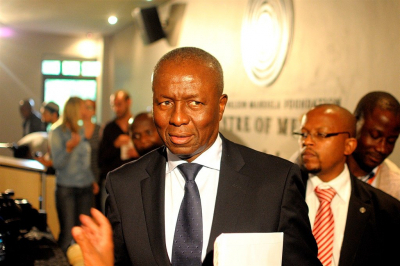
Retired deputy Chief Justice Dikgang Mosekene says journalists must continue to do their work to investigate and inform of these high levels of misgovernance that seem to be accompanied by lack of care and empathy by public leaders.
Moseneke was speaking at a South African National Editors’ Forum (Sanef) fundraising event in Killarney, Johannesburg, on Friday.
He was the keynote speaker at the glamorous gala dinner attended by the who’s who of the media industry. Sponsorship packages ranged from R15,000 to R400,000, the room was filled by business people from companies who bought tables in pursuit of protecting media freedom.
The retired deputy Chief Justice commended the media for ensuring government accountability since 1994 and, more recently, during state capture.
Moseneke also expressed concern about attacks on journalists on social media and governments who sought to silence them globally.
He said in the South African context, journalists’ rights to freedom of expression were enshrined in the Press Code.
He has encouraged journalists to continue working with honesty, diligence, and ethics, in uncovering the truth.
Moseneke emphasised the importance of an independent judiciary, without which South Africa would be “in dark ages”.
Moseneke said the judiciary has been largely beneficial to democracy. “I would be surprised if everyone agreed with every decision of our courts. As we speak our courts carry a heavy burden of caseloads. Nearly all political, economic, and social contests end up with judges. And yet judges must endure the derision and unwarranted criticism of those who use the courts most. It is not an exaggeration that without an efficient, effective and truly independent judiciary we would all enter into the dark ages of wanton destruction and misrule.
“Having served faithfully for no less that 15 years at a high echelon of our judiciary, I pray and plead that we realise that it is no option to denigrate and destroy the judiciary as we suggest that it is captured and working at the behest of political or other masters. In turn our judges must maintain the highest judicial values and ethics, maintain the requisite industry and remain faithful to our constitution and the rule of law and to our democracy display restraint. This democratic place and no democratic place can function without an independent, competent, and fearless judiciary.
Moseneke played a pivotal role in South Africa’s struggle for freedom.
At the age of 15, Moseneke was arrested, detained, and convicted of participating in the anti-apartheid activity.
He was sentenced to 10 years imprisonment, all of which he served on Robben Island.
Moseneke also said South Africa needs a “reset button” to achieve societal equality and effective governance.
He listed a litany of government failures that hindered South Africa’s progress since the advent of democracy.
These included high youth unemployment, economic inequality and land redistribution. He said the government failed to ensure equal land redistribution despite the Constitution’s provisions.
Moseneke said not addressing these issues meant the government had failed to uphold the human rights of South Africans who expected change at the dawn of democracy.
He added that the judiciary and media have played a significant role in exposing these failures and ensuring accountability where it is due.