
By Lehlohonolo Lehana.
President Cyril Ramaphosa confirmed that members of the South African National Defence Force (SANDF) will be deployed to assist police in parts of the Western Cape and Gauteng, regions grappling with persistent violent crime.
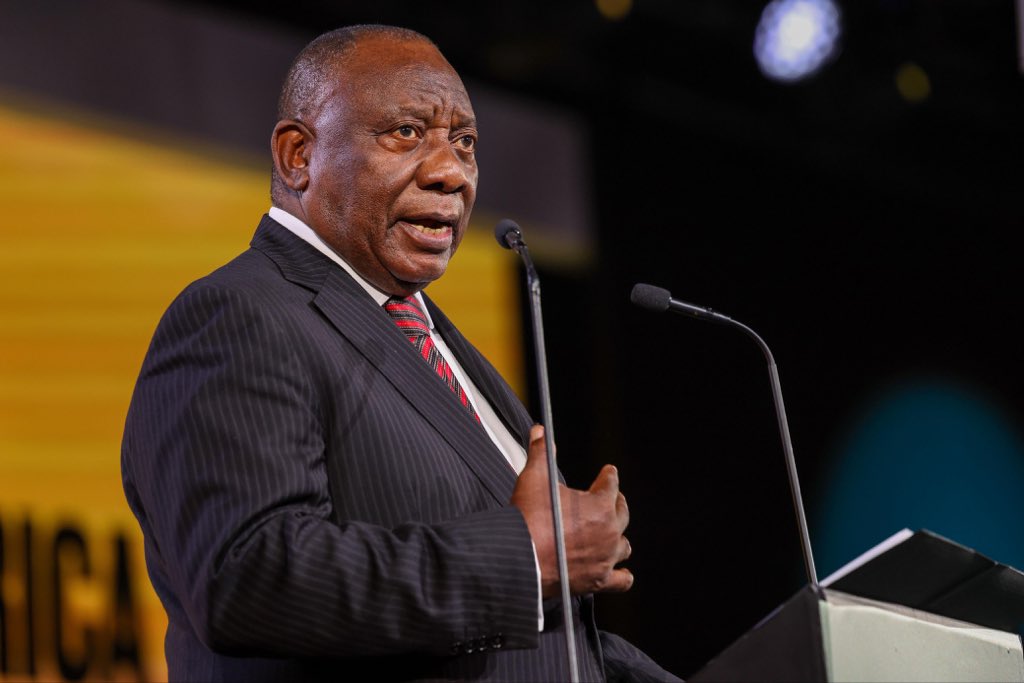
Ramaphosa made the announcement during his State of the Nation Address (SONA) delivered at Cape Town City Hall on 12 February.
He said the deployment was aimed at strengthening law enforcement operations in areas experiencing high levels of violent crime.
“To strengthen our fight against gang violence, I will be deploying the South African National Defence Force to support the police, as we did to great effect in addressing illegal mining,” said Ramaphosa.
“I have directed the Minister of Police and the SANDF to develop a tactical plan within the next few days on where our security forces should be deployed in the Western Cape and Gauteng to deal with gang violence and illegal mining.”
He said that he will inform the National Assembly and the National Council of Provinces of the timing and location of the deployment of our soldiers, as well as the costs involved.
“We have to act to rid our country of gang violence.”
The President said the SANDF would play a supportive role, including assisting with securing high-risk areas, which would allow police to focus on investigations and arrests.
He added that the deployment would be reviewed regularly.
National Water Crisis Committee
Ramaphosa has announced the establishment of a National Water Crisis Committee to help address the ongoing water supply problems.
The committee will be chaired by the president himself, as national government moves to intervene in the water crisis in many of the country’s municipalities.
He said the government has set aside R156 billion in public funding for water and sanitation infrastructure over the next three years.
In recent weeks, residents of Johannesburg, Tshwane and other municipalities have been experiencing prolonged water cuts.
A number of protests took place in Johannesburg this week, due to frustrations over inadequate and unreliable access to water.
Water and Sanitation Minister Pemmy Majodina and Cooperative Governance and Traditional Affairs Minister Velenkosini Hlabisa were ordered by the President to address the water issues in Gauteng instead of attending the SONA.
“Poor planning and inadequate maintenance of water systems by many municipalities are the main cause of the problems we are going through now and are the reason that taps often run dry,” Ramaphosa said.
“There is no silver bullet to address this challenge, which has its roots in systemic failures and many years of neglecting infrastructure.”
The water issue featured prominently in his speech, where he said government is undertaking bold reforms that will address the root causes of the water crisis.
Fixing dysfunctional municipalities
The president said water outages were “a symptom of a local government system that is not working” and confirmed that a “far-reaching overhaul” of local government was underway.
Citing the Auditor-General’s assessment of weak accountability, poor financial management and instability, Ramaphosa said government would finalise a revised White Paper on Local Government in the coming months to “reimagine the way that local government works”.
The reforms will introduce a differentiated approach to municipal powers, professionalise senior appointments and strengthen ability of national government to intervene where councils fail. These changes may be difficult. But they must be done,” he said.
Eskom restructuring and energy reform
While load shedding has ended, Ramaphosa said the focus had shifted to securing long-term energy stability and lowering electricity costs.
“We are establishing a level playing field for competition, so that we are never again exposed to the risk of relying on a single supplier to meet our energy needs. We are restructuring Eskom and establishing a fully independent state-owned transmission entity.”
Ramaphosa said the entity will have ownership and control of transmission assets and be responsible for operating the electricity market.
High Speed Trains
Ramaphosa says the government is pressing ahead with plans to introduce high-speed rail in South Africa, with initial routes expected to link some of the country’s major provinces.
The president indicated that the first phase of the project would focus on strategic corridors connecting Gauteng, KwaZulu-Natal and Limpopo.
“Now this I’ve been saying that we would like this to cover routes such as Johannesburg and Musina, and eThekwini to Johannesburg,” he said.
Ramaphosa argued that South Africa cannot afford to lag behind global trends, and pointed out that high-speed rail has become standard in many parts of the world.
“High-speed trains are happening in many parts of the world,” he said, and added that they dramatically cut down the time of travel.
He criticised the current long-distance travel times between major cities and said they are no longer acceptable in a modern economy.
“In my book, it should no longer take five to six hours to travel from eThekwini or Durban to Johannesburg,” Ramaphosa said.
He also highlighted the journey north from Gauteng, noting that it currently takes “4.5 hours from Johannesburg to Musina, when it can be done in a much shorter space of time”.
According to the president, there is strong public support for the project. “Our people want it, and progress is now being made,” he said.
The government has already tested market appetite for the ambitious infrastructure drive.
Ramaphosa revealed that nearly 30 companies indicated their willingness to participate in high-speed rail corridors in response to a request for information last year.
In the final part of his address, Ramaphosa turned to South Africa’s place in a shifting global order, stressing that foreign policy would be guided by sovereignty, equality and national interest.
“We are building mutually beneficial relationships with all countries on terms of equality and respect,” he said, adding that South Africa’s “commitment to sovereignty and self-determination is sacrosanct. It is not negotiable”.
Ramaphosa said the country would continue to respect the sovereignty of other nations, but warned that “we must be equally clear that we will not be bullied by any other country”.
He said South Africa would forge stronger partnerships with like-minded states to improve resilience to global disruptions, while advancing the priorities of the Global South through multilateral platforms such as the G20.
Those priorities include “inclusive growth, debt relief, climate action, reform of global governance institutions and the beneficiation of critical minerals at source”, he said.
Striking a positive note, Ramaphosa said the country was “leaving behind an era of decline and turning towards an era of prosperity and growth”, pointing to progress made in rebuilding institutions and stabilising the economy.