
By Kevin Rademeyer, Sports Journalist.
South Africa’s breathless victory over Afghanistan in Ahmedabad will be remembered for its historic double Super Over finish. Yet beneath the theatre and tension, the defining subplot belonged to Kagiso Rabada.
Few expected the drama that unfolded in the final over of regulation time. Afghanistan required 13 runs with one wicket in hand. Rabada, South Africa’s premier fast bowler and the man entrusted with closing out the contest, struck with his first delivery. Noor Ahmad was dismissed. The Proteas began to celebrate.
Then came the siren. No ball.
What followed was a rare wobble from a bowler of Rabada’s stature. A wide. A towering six. Another ball. In the space of a few deliveries, a match that seemed sealed was thrust back into uncertainty.
In T20 cricket, margins are merciless. A fraction over the line becomes a free hit. A minor miscalculation swells into a potential turning point. Rabada’s over, already charged with pressure, became a crucible.
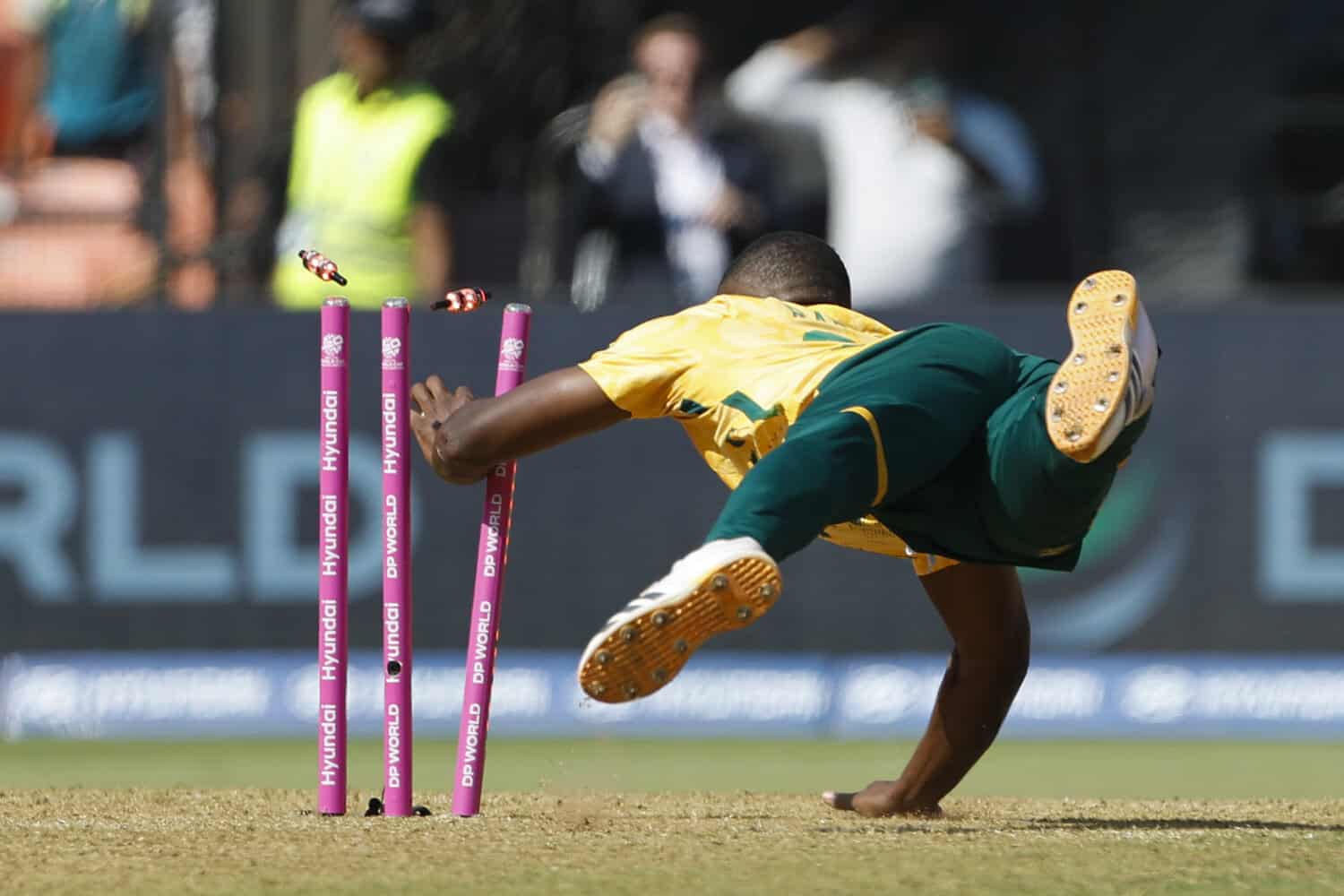
Yet it was in that same over that his resolve surfaced. With Afghanistan pressing for the winning run, Rabada reacted sharply, combining with Marco Jansen to complete a vital run out that prevented defeat and levelled the scores at 187.
Afghanistan surged out of the blocks in the Super Over, striking 10 runs from the first two deliveries and immediately placing South Africa on the back foot. Another maximum appeared certain moments later, only for Rabada to launch himself full stretch in the deep. While he could not hold onto the catch, he made sure it only went for four. In a contest ultimately decided by the narrowest of margins, those two saved runs proved invaluable.
The drama refused to subside. Tristan Stubbs produced a moment of audacity, dispatching the final ball for six to force an unprecedented second Super Over and keep South Africa’s hopes alive. From there, composure defined the outcome. David Miller and Stubbs supplied authority with the bat, while Keshav Maharaj held his nerve with the ball to seal a four run victory in one of the most absorbing matches in T20 World Cup history.
Rabada’s final over in regulation time will attract scrutiny, as it should. Expectations of a bowler of his standing are exacting. Yet to reduce his contribution to a pair of no balls would be simplistic. His intervention in the field, his role in the decisive run out, and his broader body of work for South Africa offer a fuller picture. Throughout his career, Rabada has met criticism with resolve. Ahmedabad may yet be remembered as another chapter in that pattern rather than a deviation from it.
Former Proteas seamer Vernon Philander believes the issue is less technical than mental. Overstepping, he suggests, often stems from rhythm and pressure rather than flawed mechanics. In a tournament defined by short turnarounds and heightened stakes, there is little time for technical reconstruction. There is, however, space for recalibration.
Rabada’s teammates were unequivocal in their backing. Ryan Rickelton spoke of rallying around him. Keshav Maharaj described him as a world class performer. The faith is not misplaced. Even in an imperfect over, Rabada ensured South Africa did not lose. That distinction matters.
The wider context is equally significant. The Proteas have been forced to adapt during this campaign. Rickelton and Stubbs were late additions to the squad, yet both have delivered under pressure. Lungi Ngidi and Maharaj have been incisive. The squad has shown resilience.
As South Africa prepare for a pivotal Group D clash against New Zealand on Valentine’s Day, the Afghanistan thriller may prove invaluable. It was, in Rickelton’s words, a wake up call. A reminder that games are not won until the final ball is bowled. A lesson in composure when momentum swings.
For Rabada, who stated on his Instagram earlier this morning “Gotta love SPORT”, Ahmedabad could become a turning point rather than a blemish. Great fast bowlers are defined not by the absence of error but by their response to it. If history is any guide, criticism will serve as kindling.
The Proteas will hope that the fire it ignites burns brightly against New Zealand.