
By Lehlohonolo Lehana.
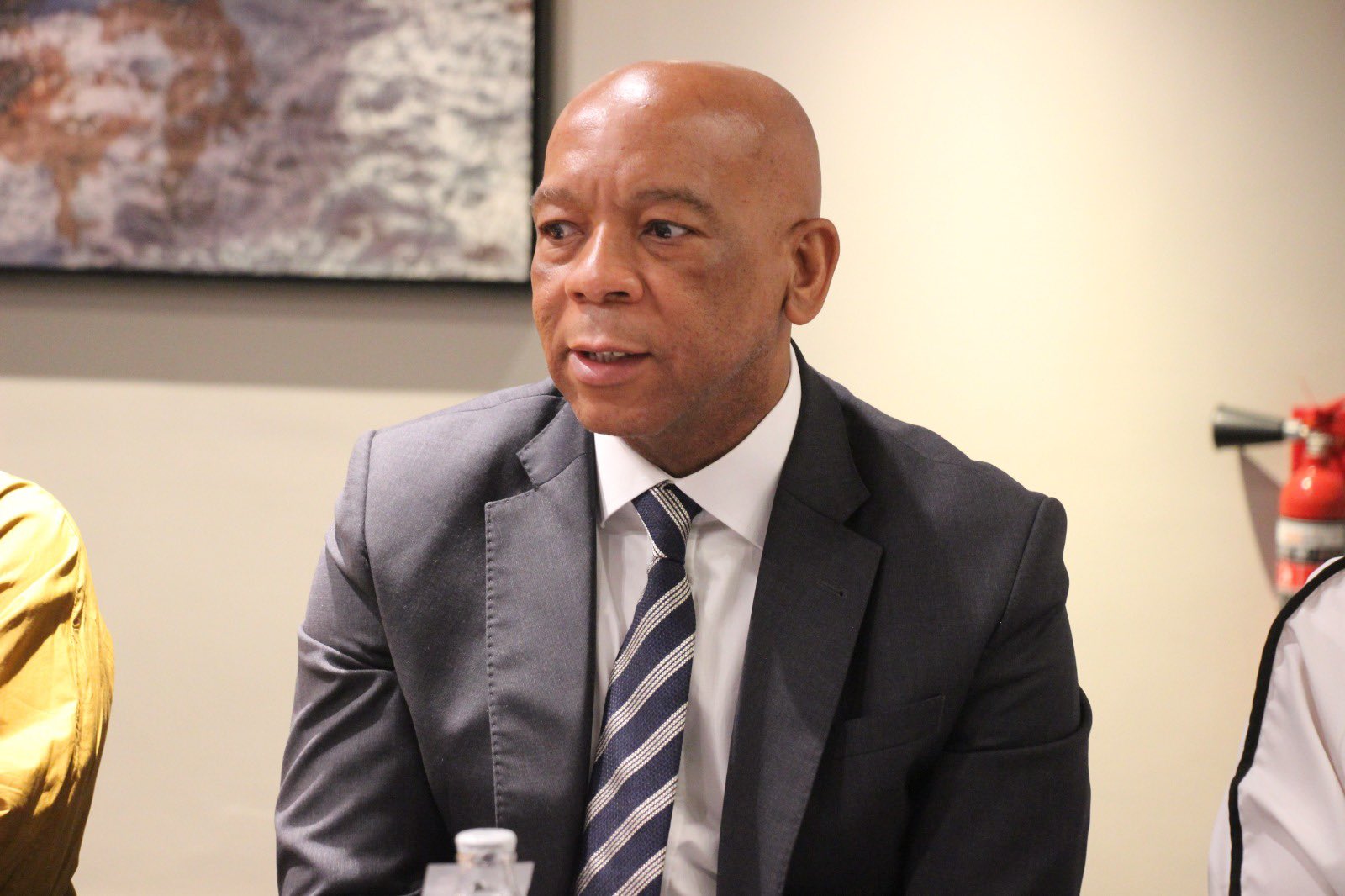
The Minister of Electricity and Energy, Dr. Kgosientsho Ramokgopa, delivered the official opening address at the Africa Energy Indaba in Cape Town on Tuesday.
The 2026 agenda focuses on strengthening regional power markets and cross-border trade, unlocking gas-to-power and domestic gas development, accelerating transmission and grid expansion, mobilizing blended finance and private capital, and advancing regulatory certainty and investment readiness.
In advancing energy transformation for Africa, Ramokgopa emphasised the importance of energy security, regional integration, and sustainable investment to power industrialisation and unlock inclusive economic growth across the continent.
Ramokgopa said the global energy system is being reshaped by geopolitical competition and industrial policy.
“We assemble here at a moment of profound historical consequence,” he said, adding that “energy has become the silent architecture of global power.”
Ramokgopa argued that while Africa is structurally central to the global energy transition because of its critical mineral resources, it must avoid repeating a pattern of exporting raw materials without building domestic value chains.
“If minerals are the inheritance of our geology, electricity is the instrument through which we convert that inheritance into enduring industrial strength,” he said, stressing the need for reliable, affordable, and regionally integrated power systems.
Africa had to localise the production of transformers, generators, transmission lines and the other key elements of electrical infrastructure. “Transmission has emerged as the defining constraint, and the defining opportunity, of the [energy] transition,” he affirmed.
Energy justice must be understood not as a slogan but as a practical programme, rooted in industrialisation and regional cooperation, to unlock scale and enable cross-border industrial corridors. “Energy justice is continental integration made operational!”
An issue was the cost of capital for African projects. “The cost of capital shapes the cost of power.” Risk premiums put on African projects drove up the cost of capital for these projects. Yet often these risk premiums were uncalled for. This had to be addressed.
“Energy security is not accidental, it is designed,” he asserted. He cited South Africa’s Integrated Resource Plan 2025 as an example. “Forward planning reduces uncertainty and strengthens investor confidence.”
“Africa possesses unparalleled renewable [energy] potential,” he summed up. The continent could become a centre of green industrialisation.
The Indaba has drawn 1,662 conference delegates from 37 African countries, including 15 African energy ministers and 173 expert speakers. More than 4,300 visitors are expected to visit the Africa Energy Indaba Exhibition held along with the main conference.