
By Lehlohonolo Lehana.
The South African Reserve Bank (Sarb) has left its benchmark repo rate unchanged at 6.75% following its latest Monetary Policy Committee (MPC) meeting.
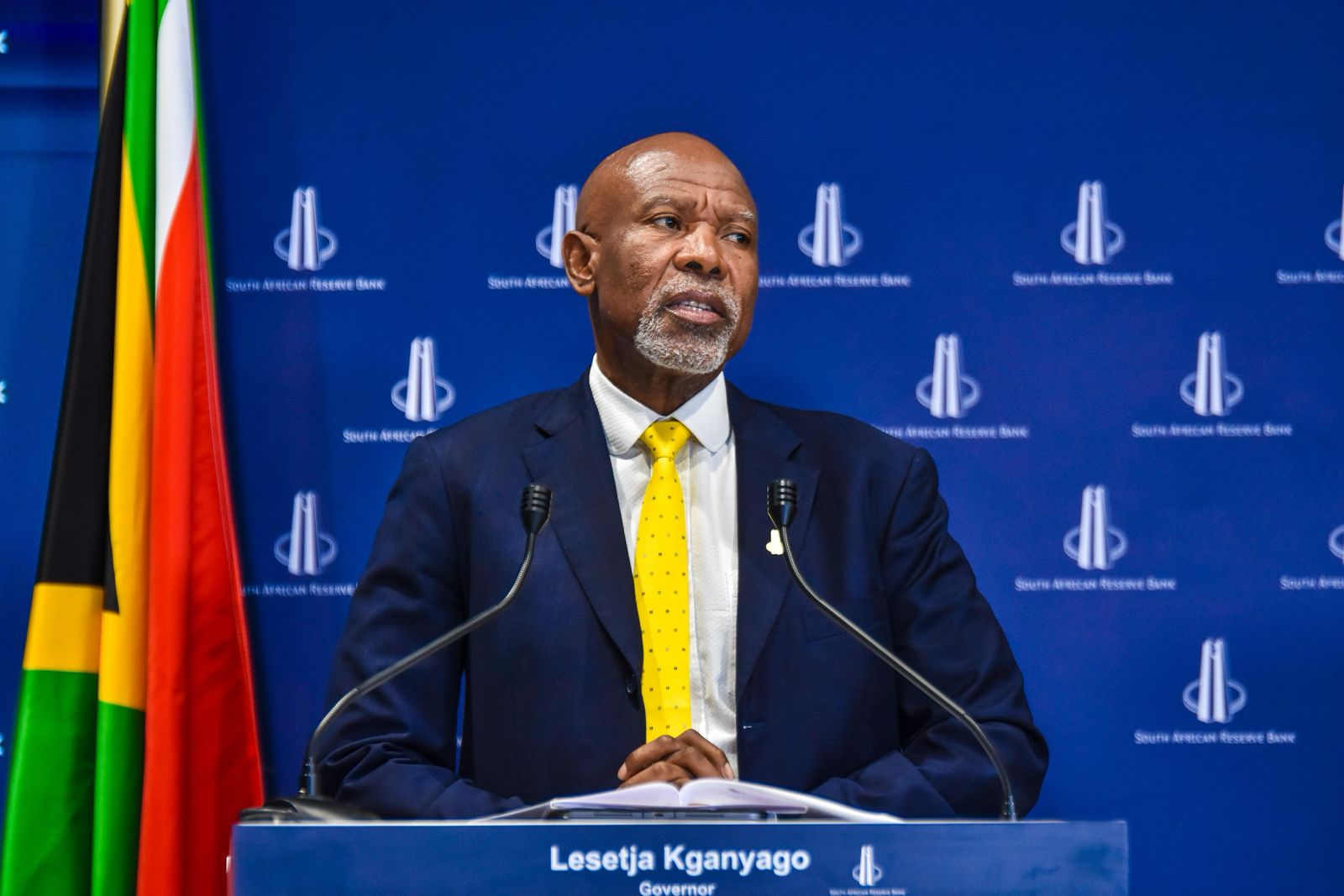
Governor Lesetja Kganyago announced on Thursday and said it was an unanimous decision.
The MPC chose to keep rates on hold due to rising inflation risks, driven by higher oil prices and a weaker rand.
Twenty-one of 28 economists polled by Reuters expected the SARB to keep its main lending rate steady at 6.75% with a hawkish outlook.
The central bank’s governor said earlier this month that the bank will revise its risk scenarios as the Middle East conflict continues to push oil prices higher.
South Africa’s annual inflation slowed to the central bank’s target of 3% in February, but analysts said the slowdown could be temporary as the ripple effects of the Iran war will show up in upcoming releases.
Kganyago said in his MPC statement that the world is only a few weeks into the “shock” and that conditions remain “extremely uncertain”.
“At this stage, it is obvious that global inflation will be higher in the near term, while growth will probably suffer from supply-chain disruptions and rising costs. But the longer-term outlook is less clear.”
The governor added that the central bank’s growth projections for South Africa remains “largely unchanged”.
“There have been data revisions which lowered 2025 growth, making 2026 look a bit stronger in comparison. This offsets some of the impact from the current shock. We still have growth rising to around 2% over the next few years, but we now see downside risks to the outlook.”
Kganyago said higher energy prices will soon lead to higher inflation, with headline inflation accelerating to 4%. Fuel inflation will however be over 18% for the second quarter.
“Our baseline forecast then has a gradual unwinding of the shock, taking inflation back to 3% late next year,” he said.
The Sarb’s latest projections point to a more prolonged period of unchanged interest rates, delaying the easing cycle previously anticipated, Kganyago said.
Reaction: Economic
Frank Blackmore, Lead Economist at KPMG South Africa
The Reserve bank has kept the interest rates unchanged at 6.75%. The reason for this is obviously the global uncertainty caused by the war in Iran and the fact that the bank doesn’t know how long this war is going to last.
If it’s going to be more persistent, obviously the inflationary impacts will be more. If it’s transitory, those inflationary impacts will be less. What they are focused on is the second round effects through things such as wages – that would not be a good thing for inflation. Whereas, if there was a quick turnaround in the war, that didn’t pass through to second round effects, one could see a continuation of the moderation of interest rates by the Reserve Bank.
The governor did iterate that the latest inflationary figure of 3% in February, and 1.8% in terms of the PPI, show that inflation was exactly on target. But of course, this didn’t take into account the impacts of the war in Iran, which will push inflation likely to around the 4% level.
The underlying conclusion here is that rates are said to remain constant or at this level for longer and therefore will not provide that boost of lower interest rates to economic growth at this.
Consumer
Tando Ngibe, Senior Manager at Budget Insurance
As anticipated, the Reserve Bank has opted to keep the repo rate unchanged at 6.75%. This decision comes amid ongoing global uncertainty, with recent geopolitical tensions continuing to place pressure on consumers’ finances and the clear indication that global inflation will be higher in the near term.
As a result, the prime lending rate will also remain unchanged at 10.25%. For consumers with home loans and long-term debt or debt in general, this means monthly repayments will stay the same – while not offering financial relief, it is positive in terms of the prospect of further increases.
While this is a neutral outcome, consumers should remain cautious. Upcoming cost pressures, such as potential fuel price increases, are likely to strain household budgets. It is therefore important to prioritise paying down high-interest debt to create more financial flexibility.
Now is not the time to take on additional debt; rather, consumers should focus on careful budgeting and protecting their current income while they prepare for the months ahead that are still very much uncertain.