
By Lehlohonolo Lehana.
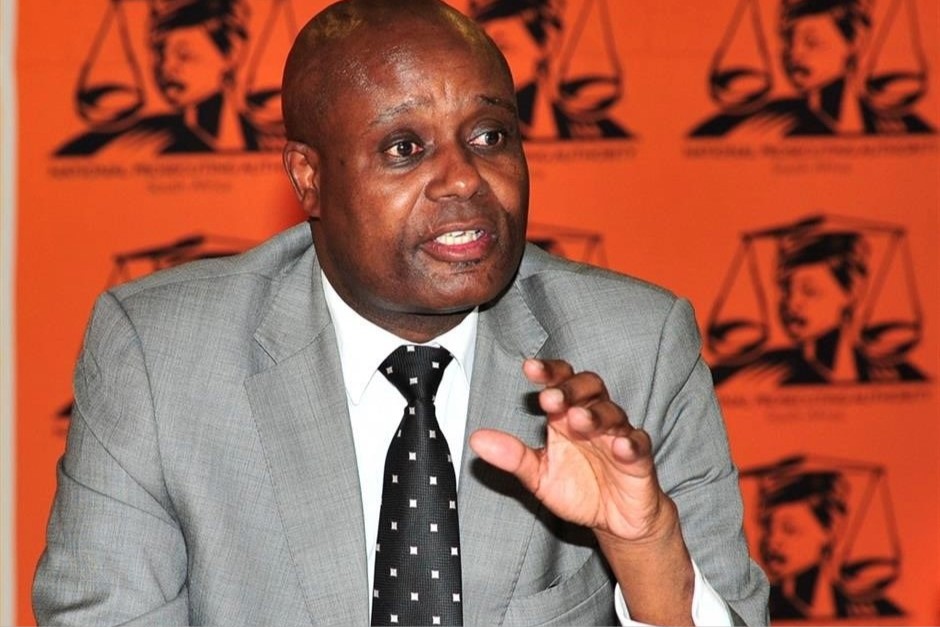
The suspended South Gauteng Director of Public Prosecutions Adv. Andrew Chauke took the stand at the Nkabinde Commission of Inquiry on Thursday afternoon.
Chauke’s much-anticipated testimony is expected to address issues relating to prosecutorial discretion, legal compliance and internal governance.
Chauke responded to questions from his attorney, Advocate Tembeka Ngcukaitobi.
He told the Nkabinde Inquiry in Pretoria that six black prosecutors, including himself, faced disciplinary processes under former NDPP boss Shamila Batohi.
The inquiry is probing Chauke’s fitness to hold office.
President Cyril Ramaphosa appointed retired Justice Bess Nkabinde as chair of the inquiry, set up in terms of section 12(6) of the National Prosecuting Authority Act. She is assisted by advocate Elizabeth Baloyi-Mere and attorney Thenjiwe Vilakazi as panel members.
Chauke’s decision to pursue racketeering charges against former KwaZulu-Natal Hawks Head, Major General Johan Booysen, and the Cato Manor Organised Crime Unit, despite a court setting aside the racketeering certificate, and his decision to discontinue murder charges against former Police Intelligence Head, Richard Mdluli, are at the centre of the inquiry into his fitness to hold office.
Chauke has testified that he never authorised racketeering charges against Booysen and the Cator Manor Organised Crime Unit in 2012. Booysen and the unit were accused of targeting members of the Kwa Maphumulo Taxi Association following a feud over routes with the rival Kwa Dukuza taxi operators.
Chauke was accused by the now-retired Batohi of instituting racketeering charges against Booysen based on insufficient evidence. Batohi withdrew the charges.
Chauke said that after the Supreme Court of Appeal (SCA) ruled on a matter in which he had been accused of acting irrationally, Batohi sought legal opinions to strengthen her case against him.
He testified that although the SCA did not find his actions or decisions irrational, Batohi went to great lengths to build a case against him, despite what he described as clear evidence to the contrary.
Chauke said, it was Batohi’s claim that he had forced then KwaZulu-Natal Director of Public Prosecutions, Advocate Simphiwe Mlotshwa, to sign an indictment charging members of the now-disbanded Cato Manor organised crime unit.
However, Mlotshwa’s affidavit, read into the record on Thursday, does not state that Chauke forced him to sign. Instead, it indicates that the decision to sign off on the indictment was taken by former NDPP, Advocate Nomcebo Jiba.
Chauke maintained that Batohi nonetheless persisted with the allegation that he had pressured Mlotshwa.
He also disputed Batohi’s claim that he lacked jurisdiction to work in KwaZulu-Natal because he was based in Gauteng, saying there was no law or policy prohibiting prosecutors from operating across provinces.
“Even now, while I am suspended, there is a DPP from the Northern Cape working in my office in Gauteng,” he said.
Chauke further alleged that when Batohi asked Ramaphosa to institute the inquiry, she withheld an internal report by Advocate Rodney de Kok, which had concluded that Chauke should not be investigated for misconduct.
He said he only became aware of the report when Ramaphosa asked him to explain why he should not be suspended and subjected to an inquiry.
The inquiry has also heard testimony from KwaZulu-Natal DPP Advocate Moipone Noko and former North West DPP Advocate Sello Maema, who described how Batohi frustrated them out of their positions.