
By Kevin Rademyer, Sports Journalist.
Photo: Estea Rademeyer ( Prescience Media// Fullview).
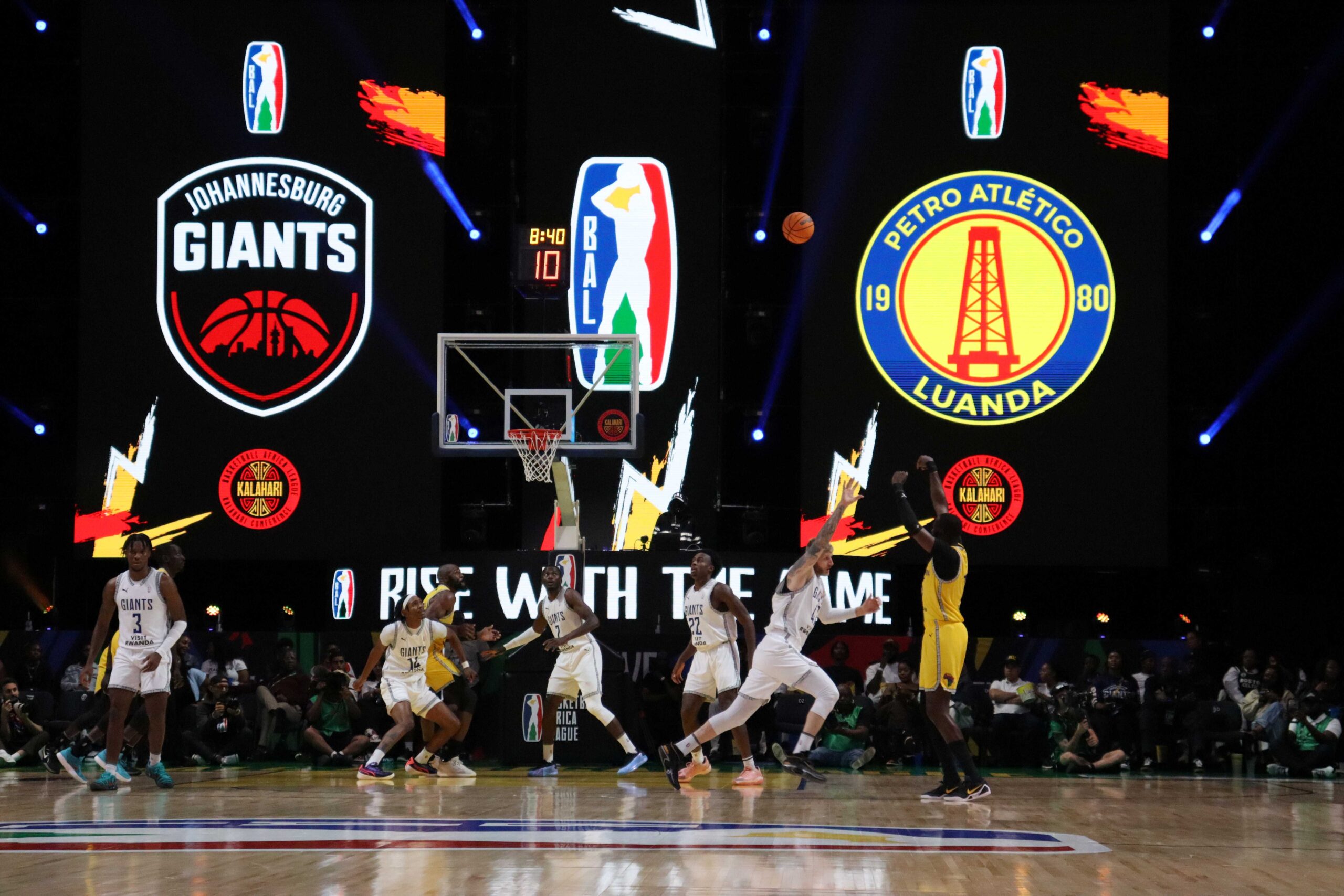
There is a particular kind of paradox in sport that numbers struggle to capture cleanly. The Johannesburg Giants exit the Basketball Africa League Kalahari Conference with five losses from five games, rooted to the bottom of the standings, and yet inside their camp the assessment is unexpectedly generous.
Head coach Florsheim Ngwenya gives them ten out of ten. Not for results, but for context, for growth, for simply surviving a level they have only just been introduced to.
“We are a team of one year. Other teams have been around for over 50 years and are not here,” Ngwenya said, a line that reframes the entire campaign. It is not deflection. It is a reminder that the Giants are operating on an accelerated timeline, thrown into a competition where continuity and institutional memory tend to decide outcomes before tipoff.
At the SunBet Arena, that gap revealed itself in layers. Possessions that almost worked. Defensive rotations a half step late. Moments of real fight, followed by stretches where execution simply dissolved. The failure to execute at important times.
The numbers tell a harsh version of the story. A 105 to 61 loss to Petro de Luanda to close out the conference. Earlier defeats to Dar City and Nairobi City Thunder that hinted at competitiveness but ultimately exposed inexperience. A points differential deep in the red. No wins to show for the effort. And yet, within those games, there were fragments of identity forming in real time.
One of the more telling moments came after the loss to Nairobi, when forward Joshua Ozabor focused less on the scoreboard and more on what it looked like to lose. Heads dropped. Energy dipped. A young team wearing defeat too visibly. “That’/s actually our bad. We shouldn’t have our heads down,” he said. “The coaches always preach good body language. Obviously, we lost the game and we were angry about that, but at all times we should keep our heads up and move forward because there are still more games to be played.” It is a small correction, but at this level, small things accumulate quickly. Body language becomes belief, and belief often dictates whether close games stay close.
Ngwenya felt the same tension. He apologised to supporters after losing to Al Ahly Ly Libya, in their penultimate game on Saturday night. He acknowled that the team had not matched the expected level of fight. It was less about the loss itself and more about how it was absorbed. For a club still constructing its culture, these are not side notes. They are foundational moments.
Ozabor, still only 23, framed the pressure of playing at home with a perspective that suggests the group understands the opportunity even as results slip away. “It’s a lot of pressure but it’s also an opportunity… it’s a blessing,” he said, pointing to the chance to perform in front of friends and family not as a burden, but as a privilege.
Veteran presence was supposed to stabilise those swings, but even that came with its own complications. Pieter Prinsloo was candid about the adjustment required. “We didn’t lack chemistry. We simply had to lift to a different level that we were not used to, and we need to adapt.” That distinction matters. Chemistry suggests cohesion. Level suggests exposure.
The Giants were not disjointed. They were outpaced by the demands of elite continental basketball. There is no escape in a sport where fine margins are determined by milliseconds. There is no place for doubt. Prinsloo also pointed inward, noting how his own struggles to impose himself offensively had a ripple effect. When a leader cannot set the tone, the margin for error narrows across the roster.
The closing day of the conference underlined the broader competitive picture. Nairobi City Thunder finished strongly with a win over RSSB Tigers, handing them their first defeat, while Petro de Luanda dismantled the Giants with a kind of composure that comes from repetition at this level. The final standings were decisive: RSSB Tigers and Petro both at four wins and one loss, Al Ahly Ly advancing at three and two, Dar City taking the final playoff spot, and the Giants closing without a victory. The top four move on to Kigali and the BK Arena. The Giants go back to the drawing board.
Still, reducing their campaign to a winless column misses the broader significance. This is a team built deliberately around South African talent, a rarity in a space often shaped by imports and short-term fixes. Their emergence creates something the local game has lacked, a Johannesburg centric basketball identity that fans can attach to in the same way they do in more established codes. It also establishes a visible pathway. Young players in Gauteng, and other provinces, can now see a direct line from local courts to continental competition without leaving the country. That visibility matters as much as any single result.
There is an economic and cultural dimension as well. The BAL’s presence in Pretoria brings with it the influence of the NBA, not just in branding but in standards, presentation, and expectation. It turns games into events, blending sport with music, fashion, and a broader lifestyle appeal. The Giants are part of that ecosystem now, even if they are still learning how to compete within it.
Ngwenya is already looking ahead. Preparation, he suggests, must evolve to match ambition. Longer camps, possibly time away from home, a deeper focus on the finer details that separate competitive stretches from complete performances. The talent, he believes, is there. The readiness is still catching up.
And so the contradiction holds. A team that did not win a single game leaves with a perfect internal score. It sounds illogical until you consider where they started, how quickly they arrived, and what they were asked to confront. The hope now is that in a year’s time, the visual language of South African basketball fandom begins to shift, that supporters trade in their Chicago Bulls, Los Angeles Lakers and Miami Heat jerseys for Giants colours, not out of novelty but belief, recognising a team that, with time, could become both competitive and a genuine beacon for the game in South Africa.