
By Lehlohonolo Lehana.
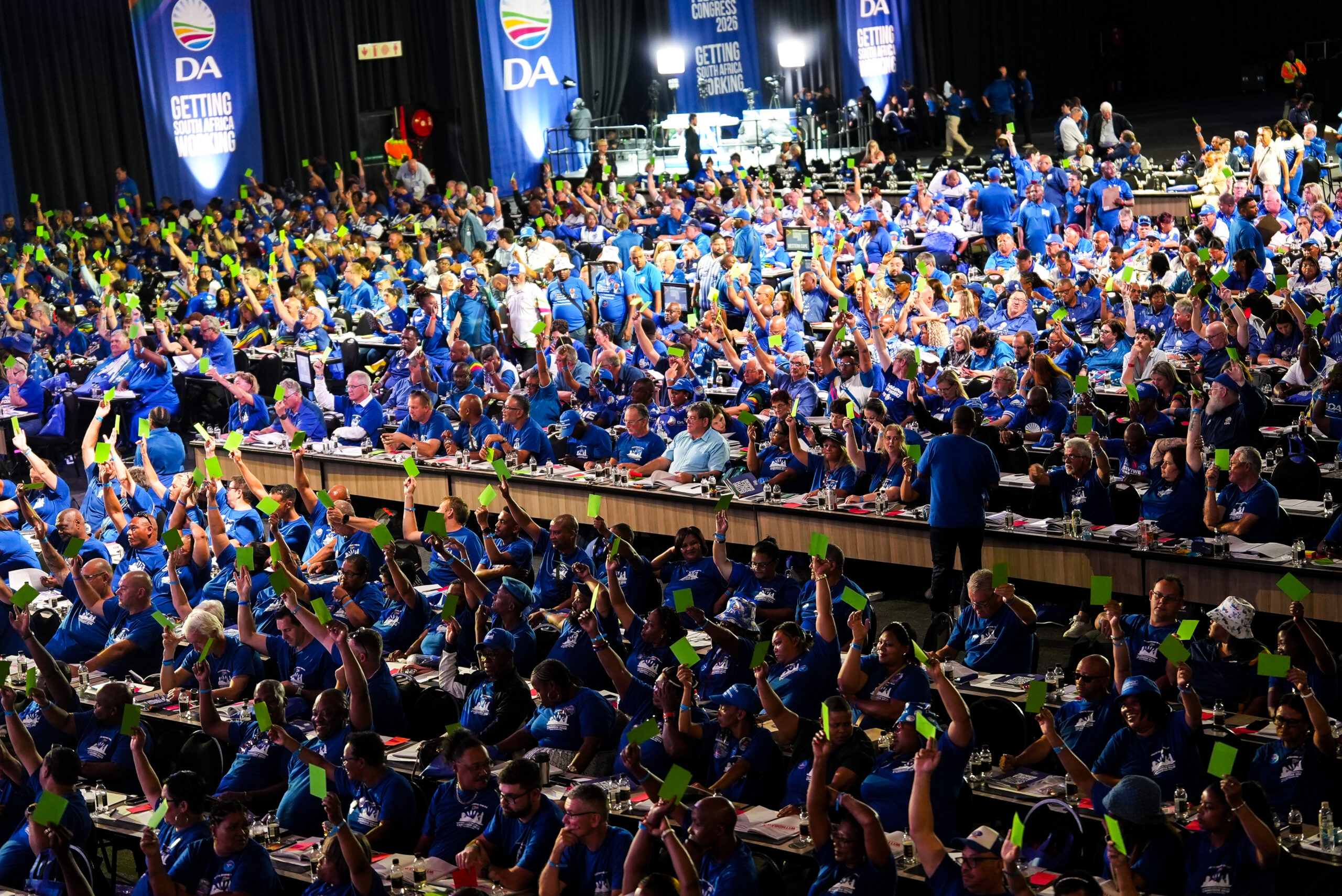
Geordin Hill-Lewis has been elected as the Democratic Alliance (DA) federal leader at the party’s congress at Gallagher Convention Centre in Midrand in Johannesburg.
Over 2,000 delegates voted, at what has been dubbed the DA’s biggest Federal Congress to date.
Hill-Lewis is the current mayor of Cape Town and succeeds former party leader John Steenhuisen, who has been credited with growing the party’s popularity and ushering it into power through the government of national unity (GNU).
The congress also saw the election of several other members to the party’s federal structures:
Federal Chairperson: Solly Msimanga
Deputy Federal Chairpersons: Three individuals were elected to these positions:
- Solly Malatsi (Communications Minister)
- Cilliers Brink (Tshwane Mayoral Candidate)
- Siviwe Gwarube (Basic Education Minister)
Deputy Finance Minister Ashor Sarupen has been elected as the new Federal Council Chairperson.
This role is responsible for the day-to-day administration of the party and is informally referred to as the Secretary General.
Sarupen will be supported by three deputies:
- JP Smith
- Thomas Walters
- Carl Pophaim
Additionally, the DA’s finance spokesperson, Mark Burke, will now chair the party’s Federal Finance Committee.
In his victory speech on Sunday, 12 April 2026, Hill-Lewis said he accepted the responsibility of federal leader with “humility, gratitude and with a deep sense of duty”.
“I stand before you as your newly elected leader with one promise: however long I have the privilege of serving in this job, I will be dedicated to the mission of building a strong South Africa for everyone. Because South Africa is truly worth it.”
He said that each generation of DA leaders has built something that the next generation will expand on.
“Each generation deserves our gratitude,” he added.
“And now, the question before me – the question before us – concerns what the next chapter in our party’s story will be. The question is not whether we can oppose or whether we can govern. The question is whether the DA can lead South Africa – whether we can become the largest party in [the] national government in future.
Founded in 2001, the DA controls Cape Town, the country’s second-biggest city, and the surrounding Western Cape province outright.
Its leadership shakeup comes before municipal elections that are expected to take place later this year and will be a key test of whether it can capitalise on public anger over a collapse of water provision and other basic services in ANC-run municipalities.