
By Antoinette Slabbert.
The issue arises against the backdrop of several court cases that resulted in the way Nersa has for years determined municipal electricity tariffs being declared unlawful.
Nersa must now follow the law, which requires that municipal tariffs, like those of Eskom, be based on the actual, efficient cost of supplying electricity.
Consumers cannot be expected to pay for costs arising from poor planning, waste, corruption and theft.
In addition to costs, municipalities are also legally entitled to a reasonable return on assets or margin. This is often regarded as a percentage equivalent to debt financing costs
The regulator also has discretion to reduce the return if it believes the full return is unaffordable for consumers.
Figures must be accurate, made public
Nersa is now also compelled to make municipalities’ tariff applications and cost studies public so that stakeholders can meaningfully comment during the mandatory public participation processes.
Nersa did this for the first time this year in respect of municipal electricity tariffs that must come into effect on 1 July. However, there are concerns about the quality of the cost studies and the accuracy of the information on which they are based.
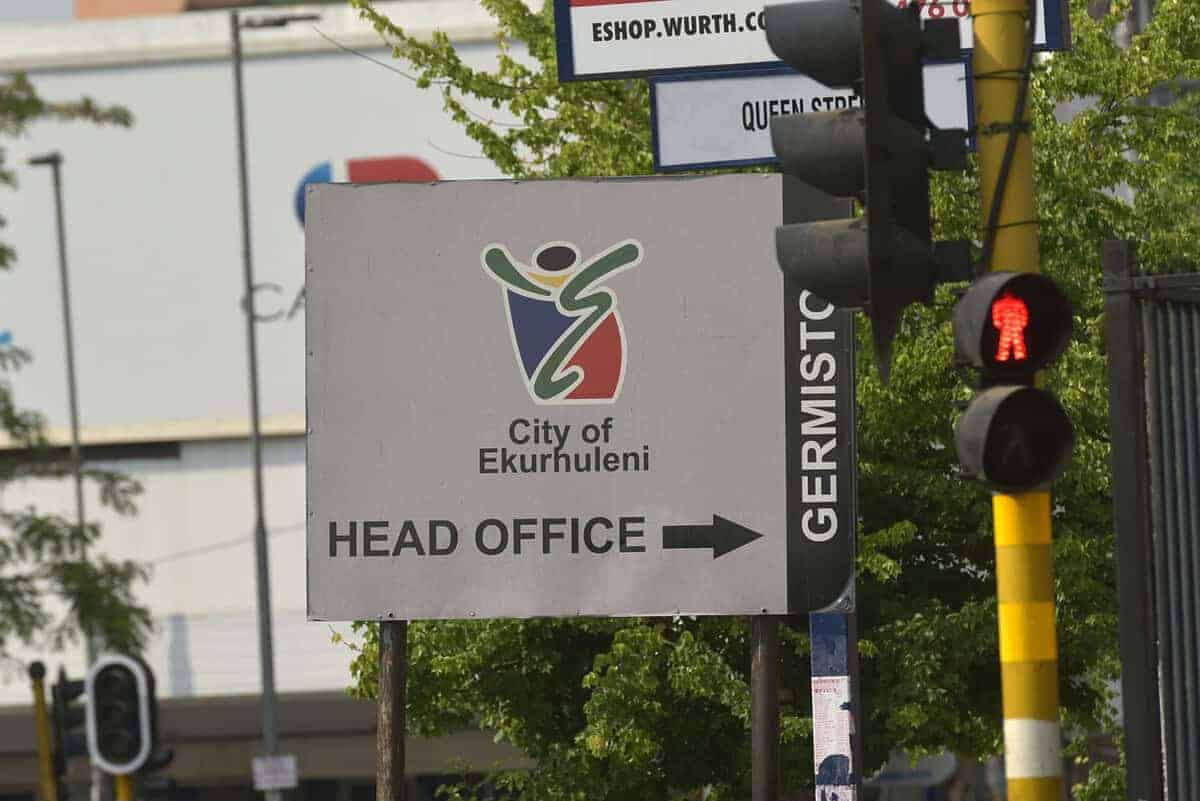
In redetermining Ekurhuleni’s tariffs for 2024/25, Nersa had made the documents available to stakeholders in February.
A representative of MPact, a listed packaging company with a facility in Springs, said during the public hearing that he had pointed out the major error in his written submission to Nersa on 9 March.
Ekurhuleni amended its application accordingly on 18 April.
However, Nersa never informed those who had already submitted their representations, and they therefore did not have the opportunity to study the revised application.
This correction reduced the estimated Eskom bill from R32.68 billion to R25.5 billion and lowered the gap to be filled by a tariff increase from 53.9% to 19.1%.
MPact pointed out several other shortcomings in the application, including a R2.1 billion contribution by the metro’s electricity division to “shared” costs, without any explanation of how this relates to licensed electricity distribution, as well as the absence of a regulated asset register on which the return should be calculated.
Steve Jardine, managing director of RSA Clusters, which represents several manufacturers and was involved in the initial litigation, confirmed many of the shortcomings and pointed to the lack of audited financial statements for Ekurhuleni’s electricity service, separate from those of the municipality.
Ekurhuleni not alone
Veness told the Nersa panel that the Msunduzi application is also riddled with major errors. The required revenue was markedly overestimated, because of the significant understatement of base amounts.
One material error on its own reduces the required increase calculated by the municipality to balance the books from 30% to 13.6%.
Correcting others would further significantly reduce the required tariff increase.
Moreover, Msunduzi’s own figures show an over-recovery of 151% from conventional commercial consumers, with no attempt to restructure tariffs to correct this.
According to David Mertens of manufacturer Autocast, which has a plant in Brits, 61% of the electricity purchased by the Madibeng municipality is lost. This drives costs up significantly.
If the percentage is reduced to the allowable level of 12%, and the incorrect tariff used to calculate Eskom purchases is corrected, the municipality’s expected Eskom bill drops by R107 million.
Madibeng’s over-recovery from industry and manufacturers amounts to 85%, and its tariff application does not reflect the outcome of the cost study, he adds.
In general, says Mertens, the application is so poor that “it cannot form the basis of a lawful tariff”.
In related news …
Eskom announced on Tuesday (5 May) that nine non-paying municipalities have adopted council resolutions to sign Distribution Agency Agreements (DAAs) with Eskom, which will see the power utility basically take over their electricity distribution functions as an agent.
They are Nketoana, Mpofana, Masilonyana, Nala, Ngwathe, Renosternberg, Thembelihle, Govan Mbeki and Kgetlengrivier local municipality.
Eskom has agreed on a pre-payment agreement with the Inxuba Yethemba Local Municipality, while the Dr Beyers Naudé, Kai Garib and Mamusa local municipalities will face power interruptions for failing to make “representations that provide a solution to continue supplying them with electricity” after Eskom put them on notice.