
By Salma El Wardany, Fiona MacDonald and Jeff Mason.
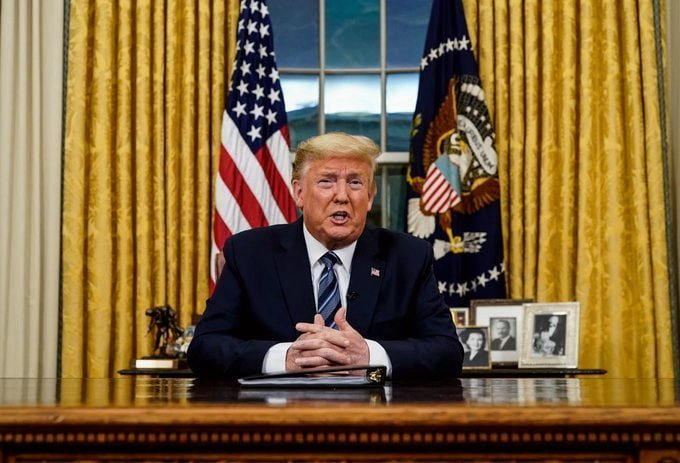
The US and Iran were circling around a fresh proposal to end the war on Wednesday, as US President Donald Trump searches for an exit from a conflict that has spiked energy prices and damaged his political standing.
Washington has presented a one-page memorandum of understanding that would gradually reopen the Strait of Hormuz and lift the American blockade on Iranian ports, according to a person familiar with the measure, who asked not to be identified discussing sensitive information.
Detailed negotiations over Iran’s nuclear programme would come later in the process, the person said, adding that nothing has yet been agreed.
The initial offer capped off a chaotic 48 hours that illustrates the bind Trump faces as he looks to defuse an energy crisis he helped create by attacking Iran alongside Israel in late February.
The move came after Trump suspended a short-lived US mission to offer safe passage for commercial ships through the strait, a vital waterway for oil and gas.
Adding to his urgency is a summit scheduled next week with Chinese President Xi Jinping, which was already postponed in the early days of the conflict due to the Middle East backdrop.
Polls show Americans’ distaste for the conflict is growing six months from midterm elections where affordability will be a central focus.
Gasoline prices breached $4.50 a gallon for the first time since July 2022, according to the American Automobile Association. The trajectory has challenged predictions from Trump, who has vowed costs at the pump will plummet when the war ends.
Stocks rose and oil retreated on Wednesday, with US crude slipping below $100 a barrel, as investors weighed developments in negotiations over the war.
Trump on numerous occasions throughout the conflict has indicated that a deal is near, though none has materialised. He acknowledged to the New York Post that it might be “too soon” to think about face-to-face talks to lock up such an agreement.
Iran is expected to send a response via mediator Pakistan in the next two days, the person familiar with the matter said.
State media, meanwhile, have signalled that parts of the US proposal remain unrealistic to Iran’s leadership.
The US will end its military campaign and lift its blockade of Hormuz “assuming Iran agrees to give what has been agreed to, which is, perhaps, a big assumption,” Trump posted on social media on Wednesday, without giving details of the proposal.
“If they don’t agree, the bombing starts.”
In Israel, the prospective deal caused concern, with Prime Minister Benjamin Netanyahu’s government pledging to keep pressure on Iran until it’s totally defeated and its nuclear, missile and proxy militia programmes dismantled.
Netanyahu is holding talks with US officials to better understand the situation, CNN reported, citing an Israeli source it didn’t identify.
More related to the war:
- The US military disabled an Iran-flagged tanker that tried to dock at an Iranian port on the Gulf of Oman in violation of the blockade, Central Command said in a statement on Wednesday.
- The new peace plan includes provisions for the removal of sanctions on Iran and a moratorium on the country’s uranium enrichment programme, according to the person familiar. All conditions could be reversed if a wider nuclear deal can’t be reached, they said. Axios first reported on the proposal earlier on Wednesday.
- At a meeting in Beijing, China’s Foreign Minister Wang Yi urged Iranian counterpart Abbas Araghchi to keep negotiating, saying “a resumption of hostilities is inadvisable”. Araghchi said Iran appreciated a four-point proposal China offered on resolving the war.
- Trump and Xi are due to meet in Beijing on 14-15 May, with the US leader acknowledging on Tuesday that the conflict would be on the agenda. Trump told PBS News that the US would offer sanctions relief to Iran if the deal is secured, which could render unnecessary any potential US penalties on Chinese banks buying Iranian oil.
© 2026 Bloomberg.