
By Kevin Rademeyer, Sports Journalist.
Photo Credit: Fullview/ Prescience Media.
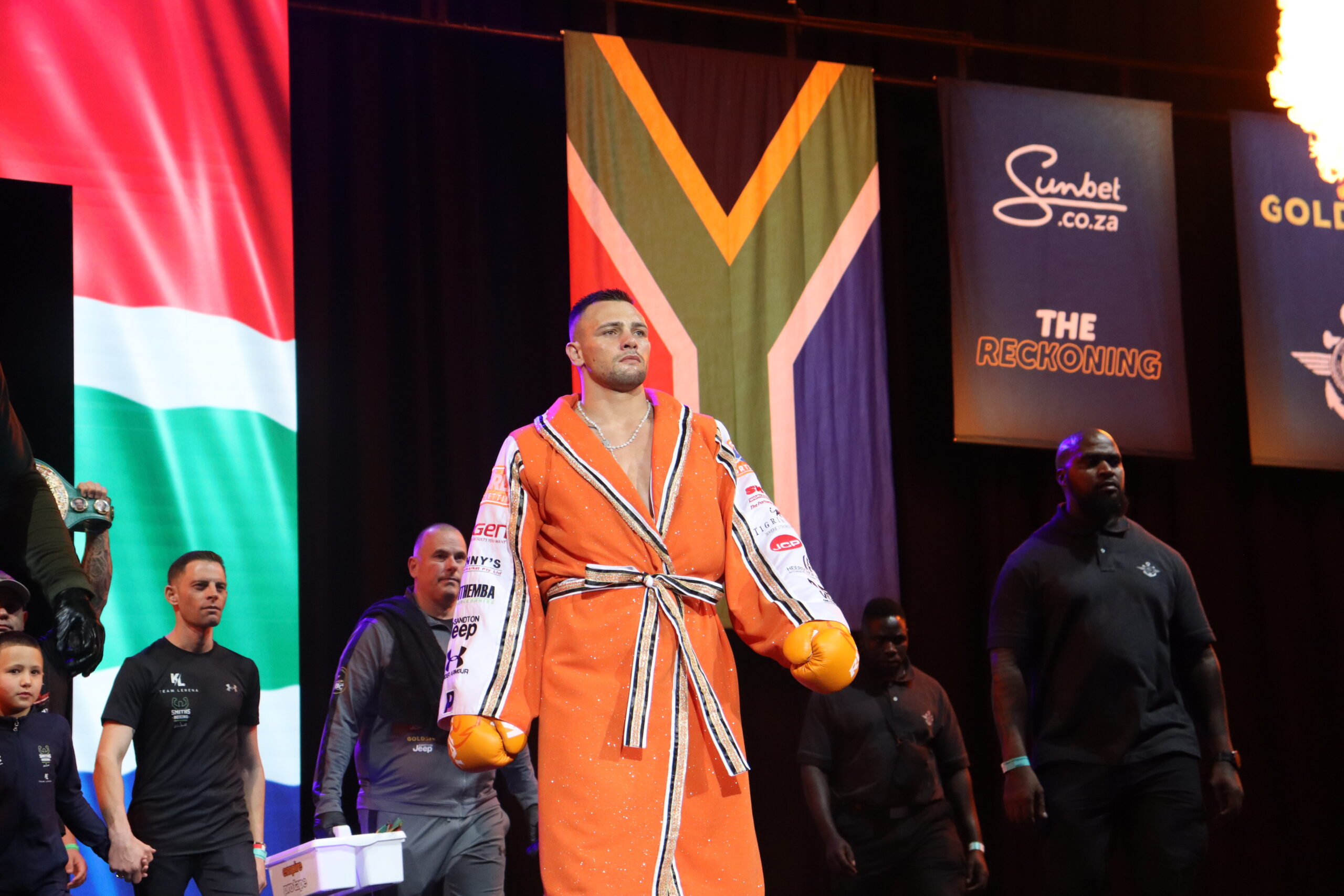
There is a calmness to Kevin Lerena these days that feels earned rather than manufactured. Fighters often speak about sacrifice and hardship because boxing almost demands those clichés from them, but Lerena’s life has become a balancing act between violence, responsibility, ambition and survival in a way few South African athletes can truly understand.
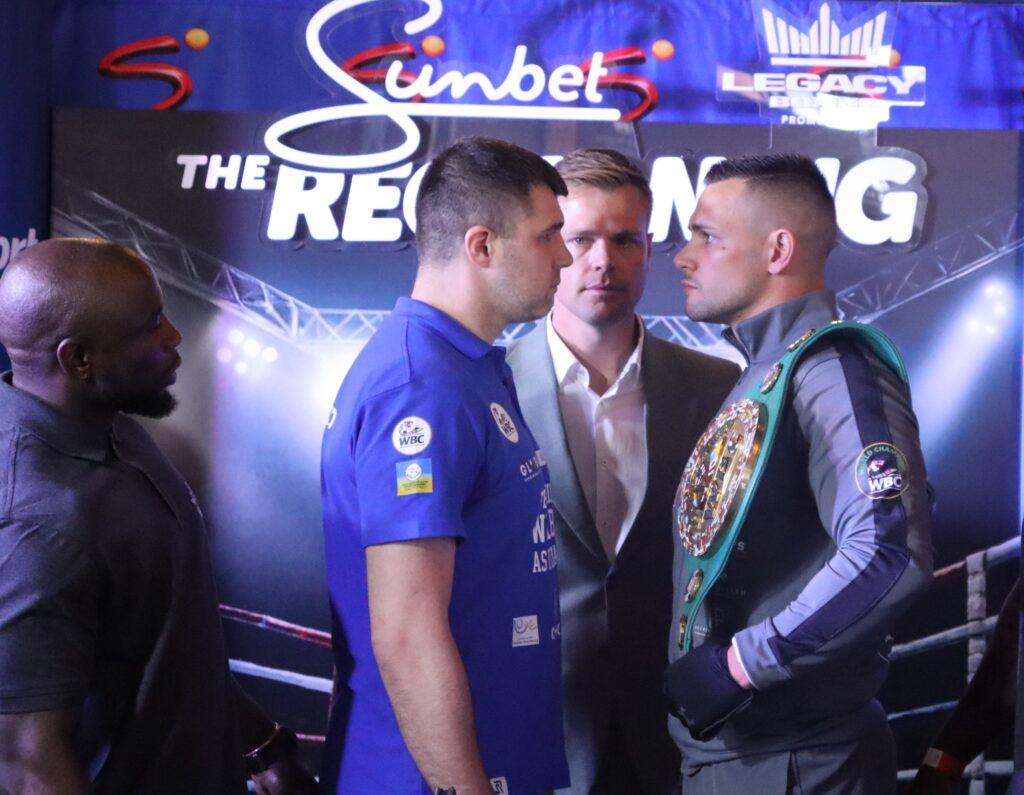
At 34, the reigning WBC Bridgerweight champion is preparing to defend his title against Ryad Merhy in Charleroi, Belgium on May 30, returning to the scene of one of the most important divisions in his career. It is a fight layered with pressure because Lerena is expected to win. He already beat Merhy once before over 12 physically draining rounds in Kempton Park, controlling the pace and outworking the Belgian to secure a unanimous decision victory in their clash.
But boxing rarely allows comfort, particularly for smaller heavy men navigating the dangerous space between bridgerweight and heavyweight. Lerena knows that better than most.
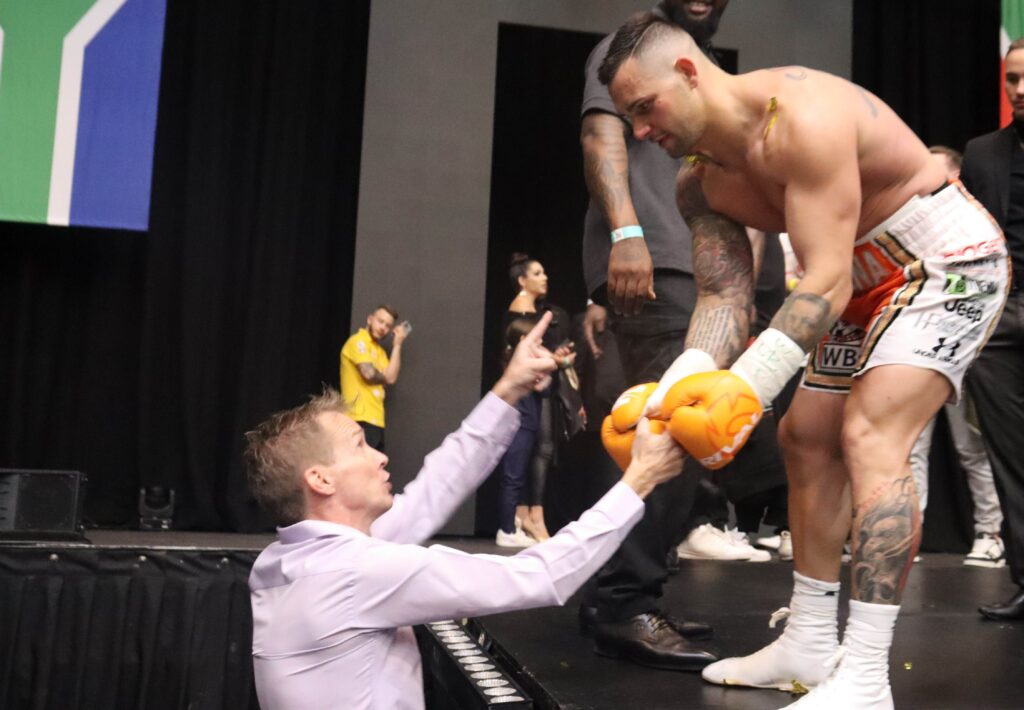
His career has become a constant exercise in adaptation. Too skilled and explosive for many natural bridgerweights, too undersized for the biggest giants of heavyweight boxing, the Johannesburg southpaw has spent years existing in the uncomfortable middle ground of modern boxing. His walking weight hovers around 101 kilograms, right on the edge between divisions, allowing him to move between categories with relative ease. Yet against elite heavyweights, size eventually becomes a cruel equaliser.
That reality revealed itself in London last September when Lerena lost to Lawrence Okolie in a WBC Silver Heavyweight contest. It was another reminder that heavyweight opportunity often comes attached to heavyweight danger. It is also why the Merhy defence matters so deeply. A successful title defence keeps Lerena firmly at the summit of bridgerweight while preserving his ability to chase lucrative heavyweight opportunities when they arise.
And Lerena speaks openly about the financial realities now shaping the final stretch of his career. Speaking exclusively to Fullview Kevin stated “I’d love to defend the title back in South Africa at some point. It is going to be my goal to defend my world title in South Africa again at the end of the year. However, if I do get a big fight at heavyweight, I can never turn down the opportunity to go up because the monetary offers at heavyweight are a lot better”.
There is no pretence in his honesty. Boxing remains brutal economics dressed up as sport. Lerena reportedly earned close to R10 million for his dramatic challenge against Daniel Dubois at Tottenham Hotspur Stadium in London, where nearly 90,000 spectators watched him drop Dubois three times before ultimately being stopped himself. He later travelled to Saudi Arabia for another significant payday against Justis Huni. Fighting abroad simply makes financial sense in a sport where South African promoters often cannot compete with overseas resources.
That is part of the reason this title defence is taking place in Belgium rather than his beloved South Africa, despite Lerena producing one of the country’s standout boxing events at SunBet Arena last May, promoted by Legacy Boxing Promotions.
Yet beneath the financial calculations sits a fighter still deeply invested in the craft itself. He informed Fullview that this training camp was different to his previous ones. He said “My training remained consistent throughout the 10 to 12 week training camp, in the sense of, even though I’m always training, I never had any niggles, I never had a lot to worry about other than just training and getting my sessions done. So I’d say the consistency and the quality of my work was a lot more precise in this camp.”
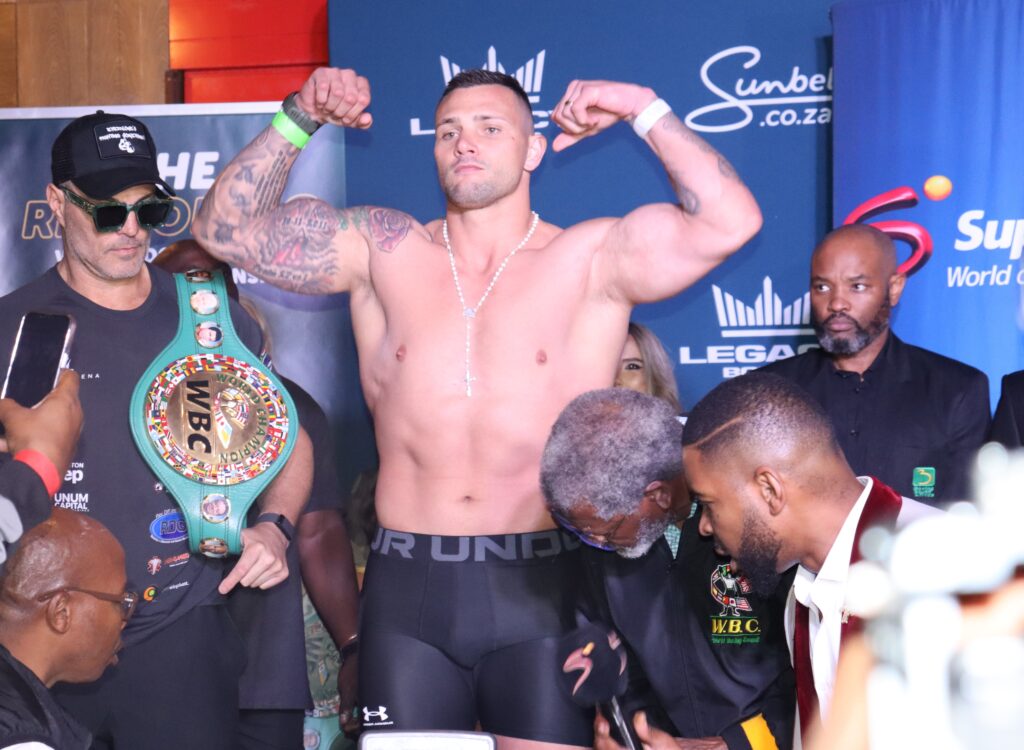
It sounds clinical because much of Lerena’s preparation now is exactly that. His camps are built around sports science, monitored through advanced conditioning systems and specialised performance testing designed to maximise output while reducing injury risk. Wattbike ramp protocols, neuromuscular fatigue monitoring and metabolic conditioning have become part of his everyday routine. It is one of the reasons he has managed to sustain himself at elite level while moving between weight divisions that demand entirely different physical responses. But the science only tells part of the story.
Away from boxing, Lerena spends time working alongside tactical medical teams in Johannesburg, assisting in volatile emergency situations where gunshot wounds, violent crime and trauma scenes become grim nightly realities. While boxing provides him with titles, purses and international recognition, tactical medic work strips life back to something harsher and more immediate. It is difficult to feel overwhelmed by fight week nerves after spending nights treating victims on Johannesburg streets.
Those experiences have also shaped him into one of South Africa’s most respected sporting voices beyond the ring. Lerena has developed a strong reputation as a motivational speaker, discussing resilience, pressure and mental toughness with a perspective rooted in something deeper than sporting slogans.
At the same time, he is trying to build a future beyond fighting through Aquila Boxing Promotions, the company he operates alongside his wife Geraldine. Lerena insists, however, that the businessman and the boxer remain separate battles in his mind. “In terms of objectives in boxing, for me it’s about just to keep winning and stay at the top of my game. To be honest, ABP is an entity on its own, separate to Kevin Lerena. It runs on its own, it runs parallel to my boxing career. And you know, I’m focusing on my boxing career as well as ABP , the business entity, but Kevin Lerena is a standalone entity. And I’m focused on driving both as much as I can.”
There is something revealing in that answer because it captures the tension that defines fighters entering the later stages of their careers. Lerena is still chasing victories, still defending world titles, still willing to test himself against larger heavyweights for the right opportunity. Yet he is also building infrastructure for the next generation while trying to secure long term stability for his family.
Against Merhy, none of that broader context will matter once the opening bell sounds. The Belgian remains dangerous despite losing their first encounter. With 29 knockouts in 35 victories, Merhy carries genuine stopping power and enough experience to punish mistakes. Fighting at home only sharpens the challenge further. Lerena understands that travelling champions are rarely given favours. Still, there is a sense that this moment fits him perfectly. The road fighter. The undersized heavyweight. The bridgerweight champion who has spent years proving he belongs despite physical disadvantages.
For South African boxing, Lerena has become something increasingly rare: a globally respected champion who still feels deeply connected to home. He informed Fullview that, his desire and hard work is routes in the support he gets. “I just want to appreciate all the fans, all the supporters who’ve reached out to me, you know. I’ve got great fans and it’s testament to, you know, my performances and my appreciation to all of them. It’s unparalleled. I’m very grateful.”
One defeat can change everything. It can shift momentum, close doors that once felt wide open, and alter the trajectory of a fighter’s life in ways that go far beyond belts and rankings. It can affect the ability to secure the biggest nights, the biggest names, and yes, even the ability to provide for a family built on sacrifice and discipline.
Lerena understands that reality as clearly as he understands distance, timing, and danger. He will not want that future. Not here. Not now.
For all his versatility, intelligence, and composure outside the ring, there remains something uncompromising at his core. When the ropes close in and the crowd fades into noise, Lerena is still what he has always been: a fighter in the purest sense, a calculated but ruthless force capable of ending nights with precision and authority. A relentless warrior.
He is not going to Belgium to survive. He is there to assert, to defend, and to remind the division that he remains the man standing at the top. And he will stop at nothing to remain the champion of the world.
South African fans will be able to witness it all unfold live on SuperSport on 30 May, as Kevin Lerena carries the weight, pride, and fighting spirit of the nation with him into Europe once again. He does not arrive alone; he arrives with a country behind him, with the quiet defiance and resilience that has long defined South African champions on the world stage. As one great champion and close friend of Lerena once put it, “Hulle weet nie wat ons weet nie.” Those words still echo with meaning, and they still ring true.