
By Kevin Rademeyer, Sports Journalist.
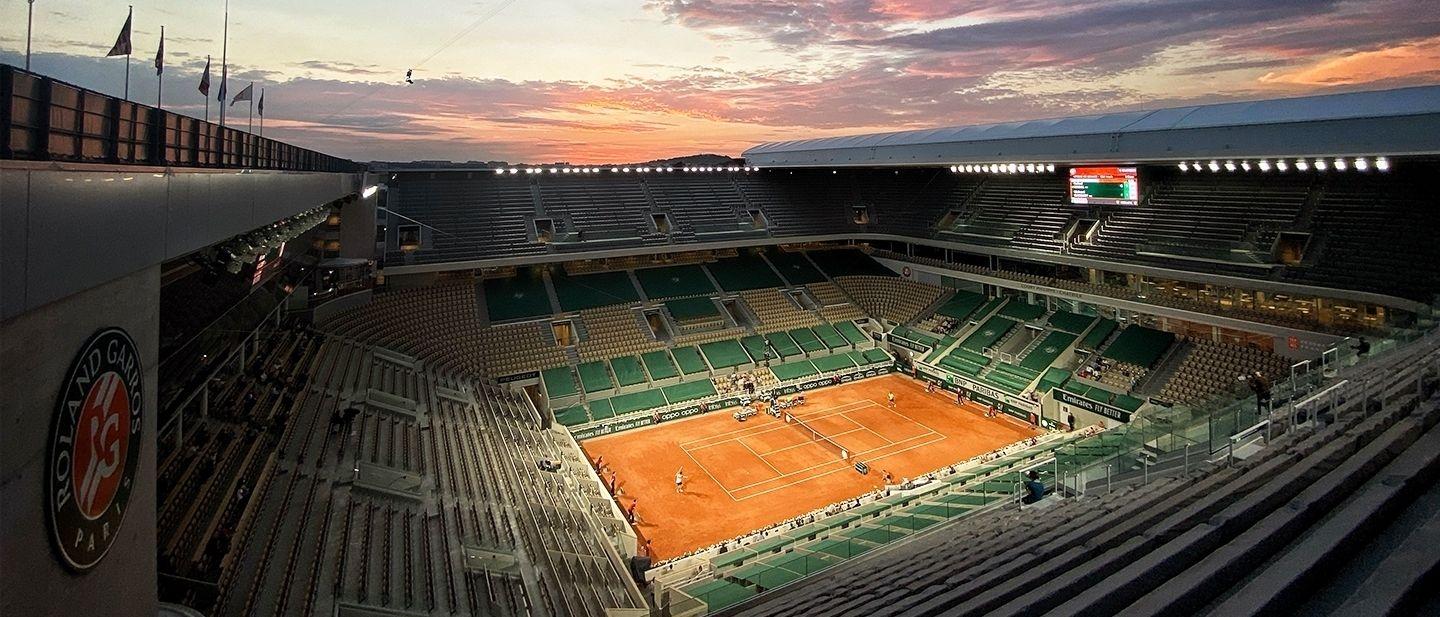
Photo Credit: Christophe Guibbaud_FFT.
The strange thing about the eve of a Grand Slam is how carefully tennis usually tries to present itself. Roland Garros media day is typically choreographed noise: sponsor obligations, smiling photo shoots, long press conferences, and players carefully rationing honesty before two punishing weeks begin on the red clay.
This year, though, the tension at Porte d’Auteuil felt different. More brittle. More political. For 15 symbolic minutes on Friday, the world’s best players attempted to remind the sport who actually drives its economy.
Led publicly by world No. 1 Aryna Sabalenka and men’s top seed Jannik Sinner, a coalition of leading players sharply reduced their media commitments ahead of the French Open in protest over prize money distribution, player welfare, and what many perceive as a persistent refusal by the Grand Slams to meaningfully involve players in decision making.
The protest itself was understated. No dramatic walkouts. No boycotts. Just clocks ticking visibly across interview rooms.
Sabalenka cut her media obligations almost exactly at the agreed limit, pausing briefly to acknowledge the awkwardness of the moment before ending her session. “I feel like the whole point here, it’s not about me,” Sabalenka said. “It’s about the players who are lower in the ranking, who are suffering. It’s not easy to live in this tennis world with that percentage that we are earning.”
The number matters. The players chose 15 minutes intentionally because the French Open currently allocates roughly 15% of tournament revenue toward prize money, a figure many players now openly consider unacceptable in a sport generating escalating commercial returns.
The demands are broader than appearance fees. Players want pension support, healthcare contributions, maternity protections, and a formal Grand Slam player council capable of influencing scheduling and tournament conditions. In other words, this is not merely a money fight. It is a control fight.
And what made Friday significant was not necessarily the protest itself, but the unusual unity behind it. Coco Gauff literally timed her own press conference with her phone sitting on the desk. Daniil Medvedev spoke of unprecedented solidarity. Taylor Fritz admitted players felt “ignored.”
Even Novak Djokovic, while not formally participating, publicly aligned himself with the broader message. “We tend to forget how little the number of people that live from this sport is,” Djokovic said. “I will never stop mentioning or talking about that.”
That undercurrent now hangs over a tournament already entering a fascinating competitive transition. Because on the men’s side, Roland Garros suddenly feels like a major revolving around one gravitational force.
With defending champion Carlos Alcaraz sidelined by a wrist injury, the draw has opened into something bordering on a coronation opportunity for Sinner. The Italian arrives in Paris carrying a 29 match winning streak and perhaps the clearest tactical identity in men’s tennis right now.
Sinner’s game on clay has evolved subtly but critically over the past 12 months. The easy explanation is improved movement. The more important adjustment is positional. He now takes the ball earlier on clay than almost anyone in the field, flattening opponents’ recovery windows before rallies fully develop. Against most players, clay traditionally creates breathing room. Against Sinner, it increasingly feels claustrophobic.
John McEnroe summarized the tournament bluntly. “To me, ultimately, it’s Sinner against the field.” The draw mostly supports that idea.
Sinner opens against French wild card Clement Tabur before likely navigating a manageable early section featuring either Jacob Fearnley or Juan Manuel Cerundolo in round two. The first genuinely awkward tactical test may come against the unpredictable Corentin Moutet, whose left handed angles and improvisational shot making briefly disrupted Sinner last year.
But the larger question is less about matchups and more about pressure. Last season, Sinner held three championship points in the Roland Garros final against Alcaraz and left Paris devastated. Now Alcaraz is absent, the draw has softened, and the expectations have multiplied accordingly. That changes the emotional geometry of the tournament. For years, Sinner hunted majors. In Paris this fortnight, he becomes the hunted.
Potential quarterfinal opponent Ben Shelton possesses the power to rush anyone off the baseline, but Sinner has beaten the American in all nine of their meetings. A semifinal against Felix Auger-Aliassime or perhaps Daniil Medvedev feels plausible, though neither currently appears capable of consistently attacking Sinner’s backhand corner with enough sustained depth to force him off balance over five sets. The intrigue lies further down the draw where Djokovic and Alexander Zverev loom as possible finalists.
Djokovic enters under unusual uncertainty. At 39, his clay season has been sparse and uneven, culminating in a troubling defeat to world No. 79 Dino Prizmic in Rome. The issue is not simply physical decline. It is that Djokovic’s depth through the middle of the court has occasionally shortened, allowing younger opponents to redirect rallies before he fully establishes control.
On slower clay, that becomes dangerous. Still, Paris has long operated differently for Djokovic. He remains perhaps the greatest tactical problem solver the sport has ever produced.
The women’s draw, meanwhile, feels almost entirely untethered. Defending champion Coco Gauff arrives with inconsistent clay form but retains the movement profile best suited to the long defensive exchanges Roland Garros demands. Sabalenka remains the most explosive player in the field, though lingering physical concerns around her lower back and hip introduce uncertainty into a surface that constantly tests balance and recovery movement.
Then there is Iga Swiatek, the four time champion navigating both a coaching transition and renewed pressure after an uneven spring. The margins feel unusually thin everywhere except perhaps at the very top of the men’s draw.
Which leaves Roland Garros entering opening weekend balancing two competing realities simultaneously. On one side, a sport confronting growing internal fractures over money, governance, and player influence.
On the other, a tournament that still produces the rarest thing in modern sport: the slow unfolding tension of clay court tennis, where championships are often decided not by brilliance alone, but by patience, positioning, and the willingness to suffer one rally longer than everyone else.