
By Kevin Rademeyer, Sports Journalist.
Photo: Armand Lenoir and Matthieu Metivet.
The Basketball Africa League has spent six years searching for permanence. In Kigali this week, inside a roaring BK Arena that now feels less like a neutral venue and more like the league’s spiritual headquarters, the BAL may finally have found it.
The games themselves were chaotic, emotional, and tactically fascinating. But hovering above the opening playoff weekend was something larger: the unmistakable sense that African basketball is accelerating into a new phase.
NBA Deputy Commissioner Mark Tatum confirmed as much before the quarterfinals tipped off, announcing that the BAL is preparing to evolve into a franchise based system built around permanent clubs in major African cities. “We think we are at this great inflection point where now we are going to start entering into this phase of having franchises — permanent teams in the largest African cities across the continent, “Tatum said.
The timing felt fitting because Friday’s playoff action showcased exactly why the league believes it is ready for that leap. The basketball was fast, skilled, unpredictable, and increasingly sophisticated in ways casual viewers might miss on first watch.
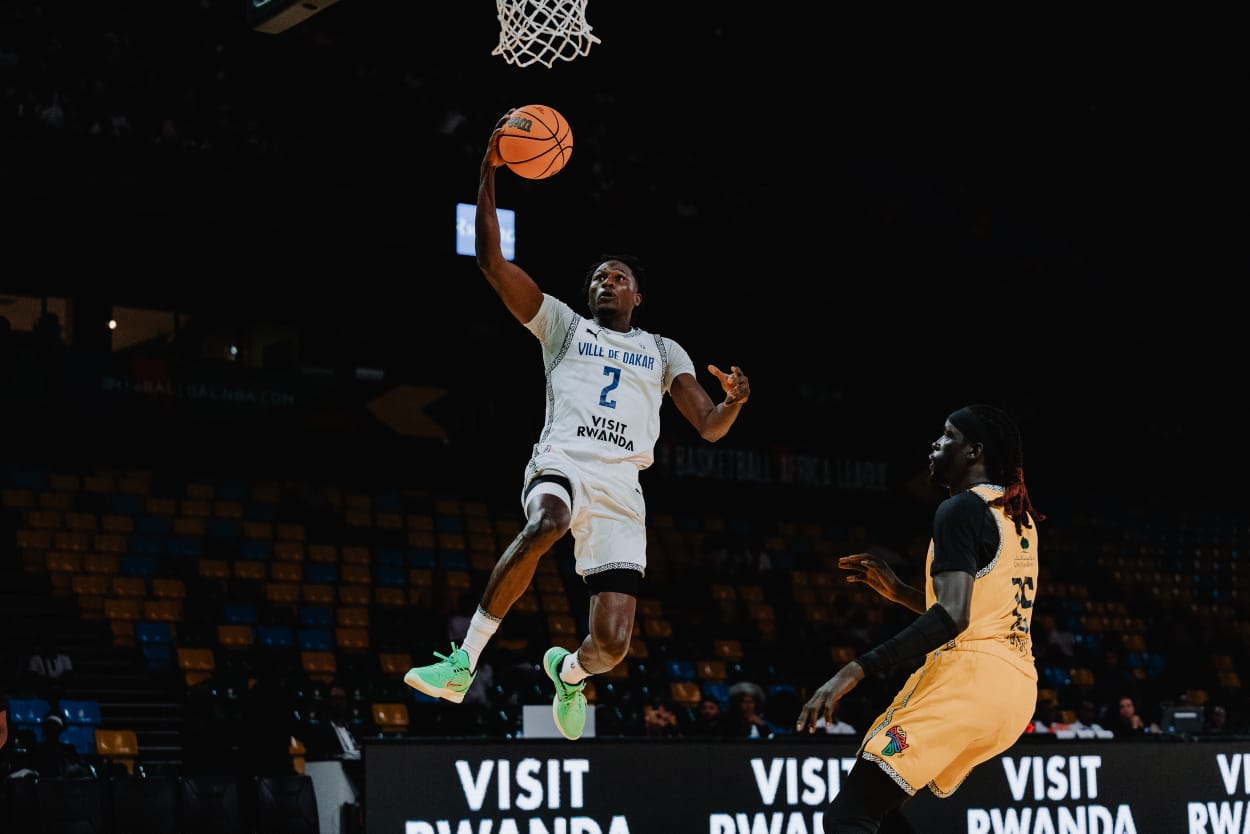
Take ASC Ville de Dakar’s stunning 93 to 90 comeback win over Al Ahly SC. At first, the game looked headed toward a familiar Al Ahly victory. The Egyptian giants controlled tempo for long stretches behind the scoring of Nuni Omot and Kevin Murphy, who combined for 45 points. Midway through the third quarter, Al Ahly led by 10 and seemed comfortable attacking Dakar’s scrambling weak side defense. Then the geometry of the game changed.
Dakar began flattening Al Ahly’s half court offense by shrinking driving lanes and sending early help toward the elbows, daring Al Ahly’s secondary shooters to make quick decisions. The turnovers followed immediately. Al Ahly coughed the ball up 19 times overall, but the damaging sequence came late in the third quarter during Dakar’s devastating 13 to 0 run.
It wasn’t just transition scoring. It was how Dakar generated those opportunities. Their guards started jumping passing angles one possession earlier. The wings pinched inward to cut off middle penetration before exploding back into passing lanes. Suddenly every loose dribble became a runway. The result: 24 fast break points for Dakar compared to just eight for Al Ahly.
That is where Axel Toupane took over. The former NBA champion finished with 21 points, nine rebounds, and seven assists, but the stat line only partially captured his influence. Toupane repeatedly manipulated Al Ahly’s defensive rotations by initiating offense early, forcing mismatches before the Egyptian side could set its shell coverage.
“We stuck to our game plan, and you can see the results,” Dakar forward Will Tavares said afterward. At times, we played harder than them, which gave us the win.”
The BAL has increasingly become a league where depth changes playoff games, and Dakar’s bench advantage proved decisive. Their reserves outscored Al Ahly’s second unit 26 to 12, repeatedly winning the energy battle whenever the starters rotated out.
Al Ahly guard Zack Lofton admitted the defending champions were physically second best. “This is not the start we wanted,” Lofton said. “They came out and played harder than us. We just need to play better defensively.”
A few hours later, RSSB Tigers delivered a completely different kind of statement. Where Dakar relied on collective pressure and pace, RSSB simply detonated FUS Rabat behind another absurd scoring eruption from Craig Randall.
Randall dropped 38 points in a 95 to 72 blowout, his fourth 30 plus point performance of the season, and the terrifying part for opponents is how sustainable it suddenly looks. His shot diet would appear reckless in a box score — 28 field goal attempts and 19 threes — but watching the spacing reveals why RSSB keeps empowering him.
They run Randall through staggered actions high above the break, often dragging two defenders into soft traps before slipping screeners into open space. Once Rabat started overhelping toward Randall’s left hand, RSSB punished them with cuts behind the defense and weak side kickouts. It became a stress test Rabat simply could not survive.
Meanwhile, RSSB welcomed back Teafale Lenard Jr. from injury, and even in limited minutes his presence stretched Rabat’s defensive structure further. Playing through an ankle sprain, Lenard still scored nine points in under nine minutes before exiting.
“Craig woke up,” Lenard said with a grin afterward. “Once he wakes up there is nobody that can really beat us.” That confidence now mirrors the mood surrounding the BAL itself.
According to NBA Africa CEO Claire Akamanzi, the league has reached more than 200 countries and territories this season while recording 1,000 percent year over year growth in audience engagement.
The ambition now extends beyond basketball. “We are on a path to becoming the preeminent sport and entertainment product of the continent,” Akamanzi said. And for the first time, that vision no longer feels overly ambitious. Because inside BK Arena this week, the BAL looked like a league discovering exactly what it wants to become.
The Arena will see a double header take place today as Al Ahly Ly take on Club Africain, followed by Tanzania Dar City Basketball Club versus Angola Petro de Luanda.