
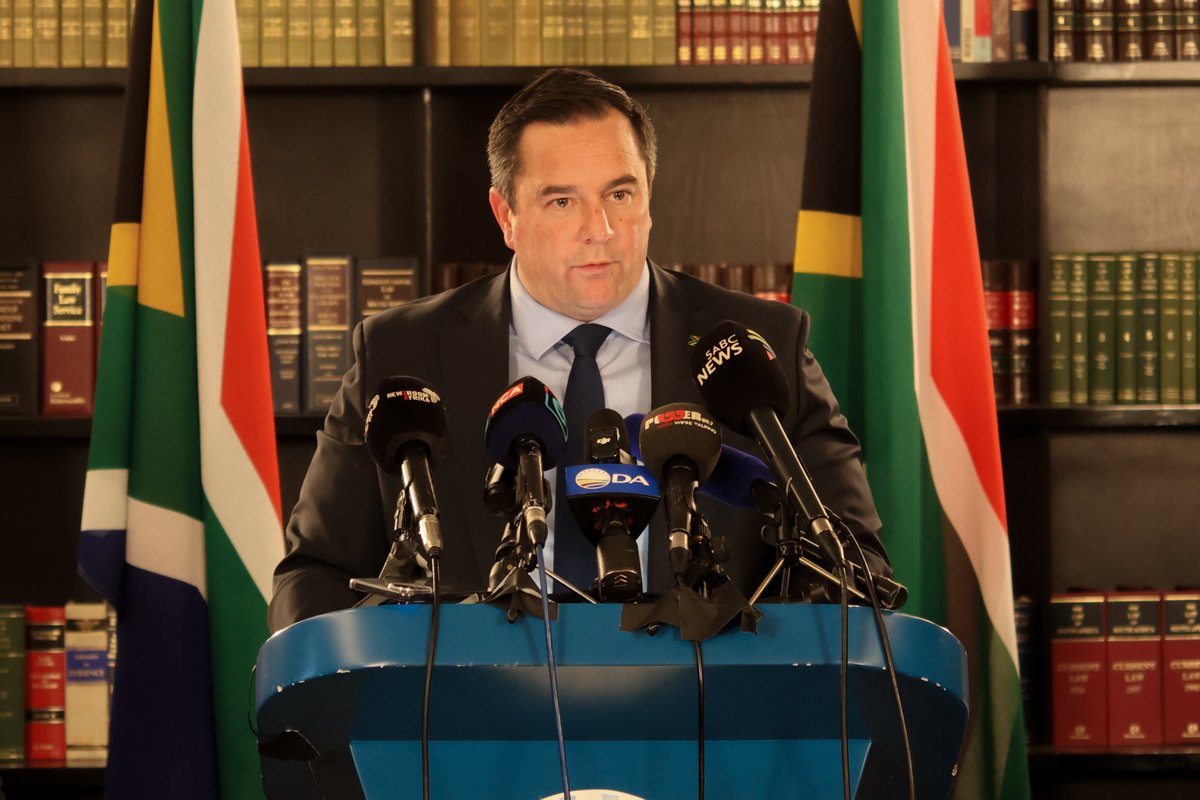
By Lehlohonolo Lehana.
The Gauteng Division of the High Court today, Monday 25 May, ruled in favour of the business organisation, Sakeliga, and agricultural groups seeking permission for private procurement and administration of Foot-and-Mouth Disease (FMD) vaccines.
The FMD outbreak started in April 2025 and has since spread to all nine provinces in South Africa, with farmers across the country battling the highly contagious disease.
So far, the government has responded through export-certification requirements and restricting the movement of animals.
Minister of Agriculture John Steenhuisen and the Department of Agriculture have also introduced a multi-pronged approach to securing the vaccines needed to treat the national herd.
As the government currently lacks the capacity to produce all of the vaccines it needs, with vaccine manufacturing capacity at Onderstepoort gutted over the past few years, it has relied heavily on imports from countries like Argentina, Turkey, and Botswana.
The court previously ordered that if the Minister wanted to start a vaccination plan, he must have it ready by 17 April. It also ordered that farmers and experts, who were previously locked out, can now help finish the plan.
The court made it clear that the government could no longer ignore the urgency of the crisis.
It ordered Steenhuisen to publish his delayed section 10 vaccination scheme by May 5 and set May 11 for argument in an urgent application brought by Sakeliga, South African Agri Initiative (SAAI) and Free State Agriculture.
The business organization argued that government was insisting on exclusive control over vaccinations despite the rapid spread of the disease and limited state capacity.
In his ruling Judge Cornelius J van der Westhuizen found that the government had failed to show any valid law or regulation prohibiting private livestock owners from obtaining and administering FMD vaccines outside officially controlled areas.
The court found that no properly gazetted prohibition existed against private vaccination.
Furthermore, the government could not rely on internal policy documents and the newly gazetted vaccination “scheme” in terms of Regulation 10 of the Animal Diseases Act did not amount to enforceable law.
The government’s argument that private vaccination would result in a lack of record-keeping and reporting by livestock owners also did not hold water as existing animal disease regulations already provide mechanisms for record-keeping and reporting by livestock owners.
Furthermore, allowing private vaccinations would assist, rather than hinder, efforts to contain FMD as government argued.
The judge found the applicants had established a prima facie right to relief, reasonable prospects of success in future declaratory or review proceedings, risk of irreparable harm if vaccination access remained restricted, and that the balance of convenience favoured the applicants.
The court granted interim relief allowing the private procurement and self-administration of lawful FMD vaccines, pending further proceedings.
The Minister of Agriculture, the Department of Agriculture and the Directorate of Animal Health – the main opposing respondents – were ordered to pay costs.
In response, Steenhuisen said, he has noted the interim order handed down by the court relating to the procurement and administration of FMD vaccines.
“We remain unwaveringly committed to ensuring the success of the strategy and ensuring this outbreak is the last major outbreak of FMD and becomes a turning point in strengthening South Africa’s long-term biosecurity capability and defeating FMD once and for all, the minister said.”