
By Lehlohonolo Lehana.
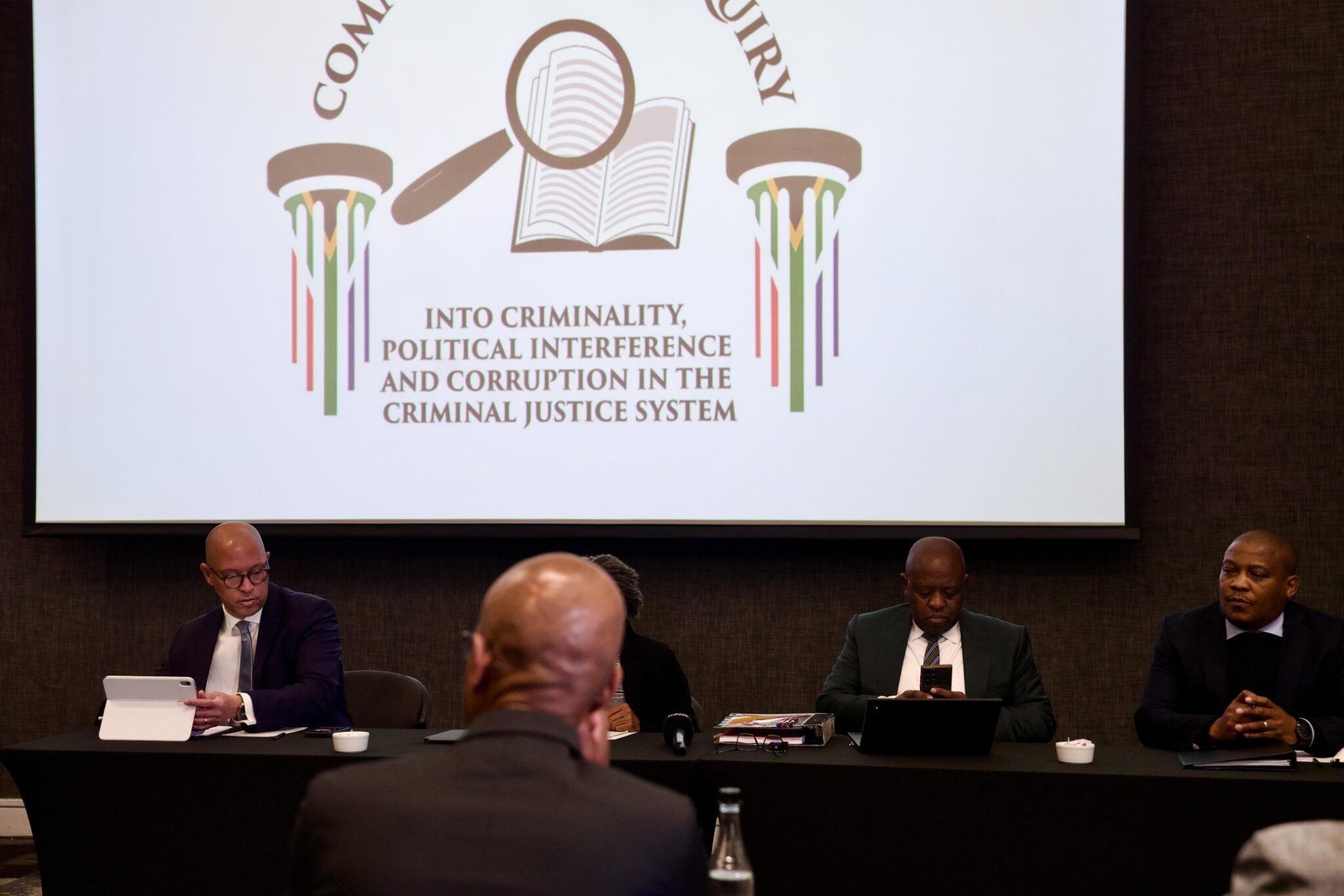
Public Service Commission (PSC) Chairperson Professor Somadoda Fikeni testified before the Madlanga Commission of Inquiry on Friday, September 18, 2026, warning that South Africa has become a “cemetery of best policies” due to poor implementation and weak accountability.
Fikeni was testifying about the role of the PSC in promoting ethical and accountable governance within the public service.
His testimony placed the protection of officials at the centre of a wider debate about accountability, political oversight and the implementation of government policy.
Fikeni said clearer rules defining political and administrative responsibilities, greater public vigilance over unlawful instructions and stronger oversight could help limit political interference.
He also pointed to coalition government arrangements as another potential layer of accountability, arguing that officials and ministers could face scrutiny from political actors outside their own parties.
But Fikeni stressed that legal protections would not be enough.
He said whistleblower safeguards, protected disclosures and intensive training were also necessary to ensure officials understood their obligations when confronted with potentially unlawful demands.
He raised challenges with vetting processes as well as so-called ‘political inefficiencies’ hampering policy implementation.
On Thursday Correctional Services Commissioner Makgothi Thobakgale called for vetting of junior officers at prisons.
Fikeni echoed that such officers across the criminal justice system should be probed.
“If you have a society which is the most unequal in the world, you’re bound to have people who are at lower levels lot more vulnerable to be enticed. That’s why conditions of service should be looked at. They’ll be lot more vulnerable to be enticed with all these different things so that they just make a living.”
Fikeni also told the commission that the “political economy of inefficiency” involves a deliberate facade of implementation.
He cited the Border Management Authority receiving only 4 drones instead of the requested 80, while billions in funds remain unused in other departments.
“In fact, when I talk of the political economy of inefficiency, the unwillingness to implement but the presentation of a facade that we want to implement is exactly at the core of that political economy of inefficiency, “added Fikeni.
He has further said the challenge is not a shortage of policies or legislation, but the failure to translate them into effective implementation and service delivery.
Fikeni also warned that the momentum generated by commissions of inquiry can quickly disappear once public hearings have ended and the final report has been released.
He said the success of a commission should therefore not be measured by the prominence of its hearings or the size of its final report, but by what happens afterwards.
“Their democratic value, however, is not measured by the prominence of the hearings or the volume of the final report. It is measured by what happens after the report: who owns each recommendation, what legal or administrative action follows, what resources are committed, what obstacles arise, who reports progress and who verifies closure.”
Fikeni used the experiences of several previous commissions to demonstrate the different challenges that can emerge once inquiries have concluded.
He pointed to the Seriti Commission into the Arms Procurement Programme as a warning about the importance of the integrity of the inquiry itself.
The Gauteng High Court set aside the commission’s findings in 2019 after finding that the inquiry had failed to conduct the investigation required by its terms of reference.
Fikeni said the answer is to establish a formal implementation architecture for commissions of inquiry.
He proposes that every material recommendation should, once accepted or otherwise lawfully dealt with, be placed on an implementation register.
The register would identify the institution responsible for implementing the recommendation, the legal basis for the action, what needs to be done, the deadline, available resources, dependencies and the evidence required to confirm that the recommendation has been completed.