
By Kevin Rademeyer, Sports Journalist.
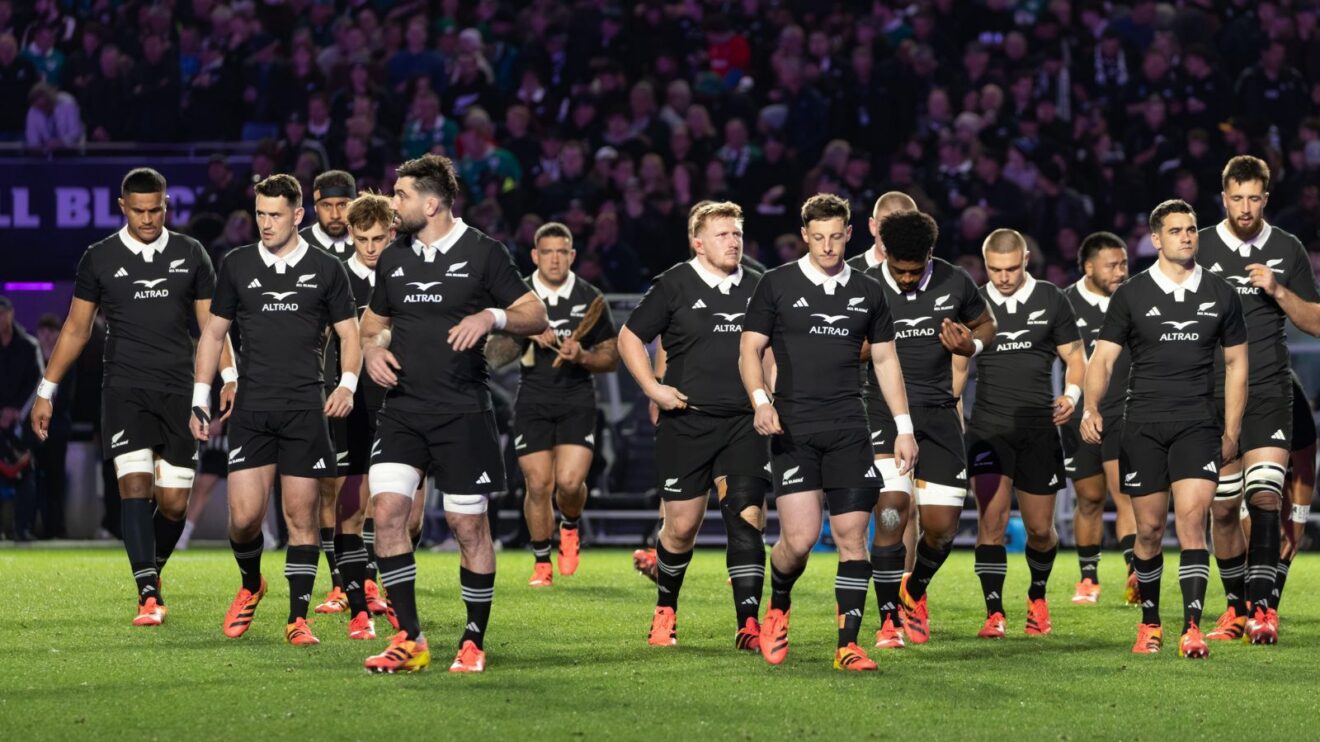
There are easier ways to begin a tour of South Africa than playing the Stormers in Cape Town. The All Blacks discovered that on Friday night.
New Zealand won 38-21 at DHL Stadium, which sounds comfortable enough. It was anything but. With 15 minutes remaining, the scores were level at 14-14 and the Stormers, increasingly depleted and improvising in positions they would never normally occupy, had the All Blacks wondering whether their first game of this extraordinary tour might end with an embarrassing defeat.
In the end, four late tries turned a difficult evening into a respectable scoreline. For Dave Rennie, that may actually have been the best possible outcome.
The All Blacks needed to win, of course. But they also needed to be challenged, and preferably challenged in places they did not expect. They were. “This was a good introduction for us to South African rugby,” Rennie said afterwards.
That is probably the most important sentence to take from the evening.
The opening game of a long South African tour is often the awkward one. The players have travelled, the conditions are different, the opposition plays a different brand of rugby and, crucially, the coaching staff are still trying to work out which combinations can survive the demands of what lies ahead.
And this was not the All Blacks at anything close to full strength. Their captain, Ardie Savea, was not even in South Africa. He has been given an extended break after an extraordinary workload stretching back to the start of 2025 and is expected to join the squad before the Bulls match in Pretoria on 15 August. The decision was deliberate: New Zealand want their captain fresh for the four-Test confrontation with the Springboks rather than burning him out before the serious business begins.
There were other absentees and players being managed too. This was, in many respects, an All Blacks side being asked to find its feet rather than the finished article.
That makes the performance more interesting, not less.
New Zealand arrived in Cape Town having averaged 40.3 points and six tries in their opening three Tests of the year. They had beaten France, Italy and Ireland and looked every inch a team capable of scoring from anywhere.
Then they met a Stormers side with nothing to lose. For an hour, the home team made the All Blacks look rather more ordinary.
The warning signs were obvious. New Zealand conceded 16 penalties and received three yellow cards. At one point they were down to 13 men. Their discipline was poor, their set piece was not dominant and they struggled to deal with the Stormers’ aerial game.
Rennie admitted as much. “They came at us with their set-piece and we need to be better in those areas,” he said. “We expected a lot of aerial attacks and we probably did not handle that as well as we could have.”
That is the part of the performance that will concern him. Because the Stormers will not be the biggest set-piece examination New Zealand face on this tour. Nor will they be the most physically demanding.
The Springboks are coming. And if the All Blacks concede 16 penalties against South Africa, they will not be waiting until the final 10 minutes to discover the consequences.
Yet there was another side to the performance which should please Rennie. When the game became uncomfortable, the All Blacks did not panic. They kept carrying. They kept cleaning out. They kept looking for space. And eventually the Stormers ran out of answers.
That is where the scoreline became misleading. The Stormers had been outstanding for long periods, but they were also running on fumes. They lost scrumhalf Imad Khan after three minutes and later lost Dewaldt Duvenage. By the final quarter, Seabelo Senatla was operating at scrumhalf and Hacjivah Dayimani had been moved to the wing.
That is not an ideal way to finish a match against the All Blacks. The visitors recognised it. Rieko Ioane’s try finally broke the deadlock, before Leroy Carter and Josh Moorby struck in quick succession. Asafo Aumua’s late maul try completed the rout.
Four tries in the closing stages made a match that had been genuinely competitive for 65 minutes look rather more comfortable than it was.
That should not take anything away from the Stormers. Deon Fourie, approaching his 40th birthday, was magnificent. He was everywhere. His turnover helped create the position from which Seabelo Senatla scored, and the veteran flanker seemed determined to make a point about his relevance to the wider South African rugby picture.
Young Yaqeen Ahmed, meanwhile, looked remarkably comfortable at first five-eighth against one of the best international teams in the world.
And that is another reason why this was such a useful opening match for New Zealand. They were not playing a Test. They were playing a very good South African side, in a South African stadium, against players who desperately wanted to beat them.
That is precisely the environment Rennie wanted. The All Blacks’ statistics tell a similar story. They had six tries to three, but the Stormers enjoyed 57% of the territory and forced New Zealand to make 122 tackles. New Zealand’s attacking numbers were eventually decisive, but they had to work for them.
Rennie called it “a heap of character” and said the side’s conditioning helped them finish the match strongly. There is something important in that.
New Zealand are not simply here to win eight matches. They are here to find out what they have. The four matches against South African franchise opposition are effectively the laboratory before the experiment becomes serious.
And Cape Town has already produced some answers. Peter Lakai looks increasingly comfortable as a major figure in the loose forwards. Taukei’aho was powerful. Ioane remains capable of changing a game in a handful of touches. Josh Jacomb got valuable exposure. The All Blacks showed that even when their rhythm disappeared, they had enough pace, fitness and individual quality to find another gear.
But Rennie also leaves Cape Town with a check list. The discipline has to improve. The aerial contest has to improve. The set piece has to improve.
And perhaps most importantly, the All Blacks need to become more comfortable when the game stops being played on their terms.
That is what South African rugby does particularly well. It makes you uncomfortable.
The remarkable thing about this tour is that New Zealand have deliberately signed up for eight matches in this environment. They will play the Sharks in Durban next, then the Bulls in Pretoria, before the Test series begins.
Some of the big names will be back. And the All Blacks will have a much clearer idea of what this tour requires. That is why Friday night should not be judged simply by the 38-21 scoreline. The All Blacks won. They scored six tries. They finished strongly.
But for 65 minutes they were made to sweat by a Stormers team that was missing several of its own leading players and had been forced into positional improvisation by injuries.