
By Lehlohonolo Lehana.
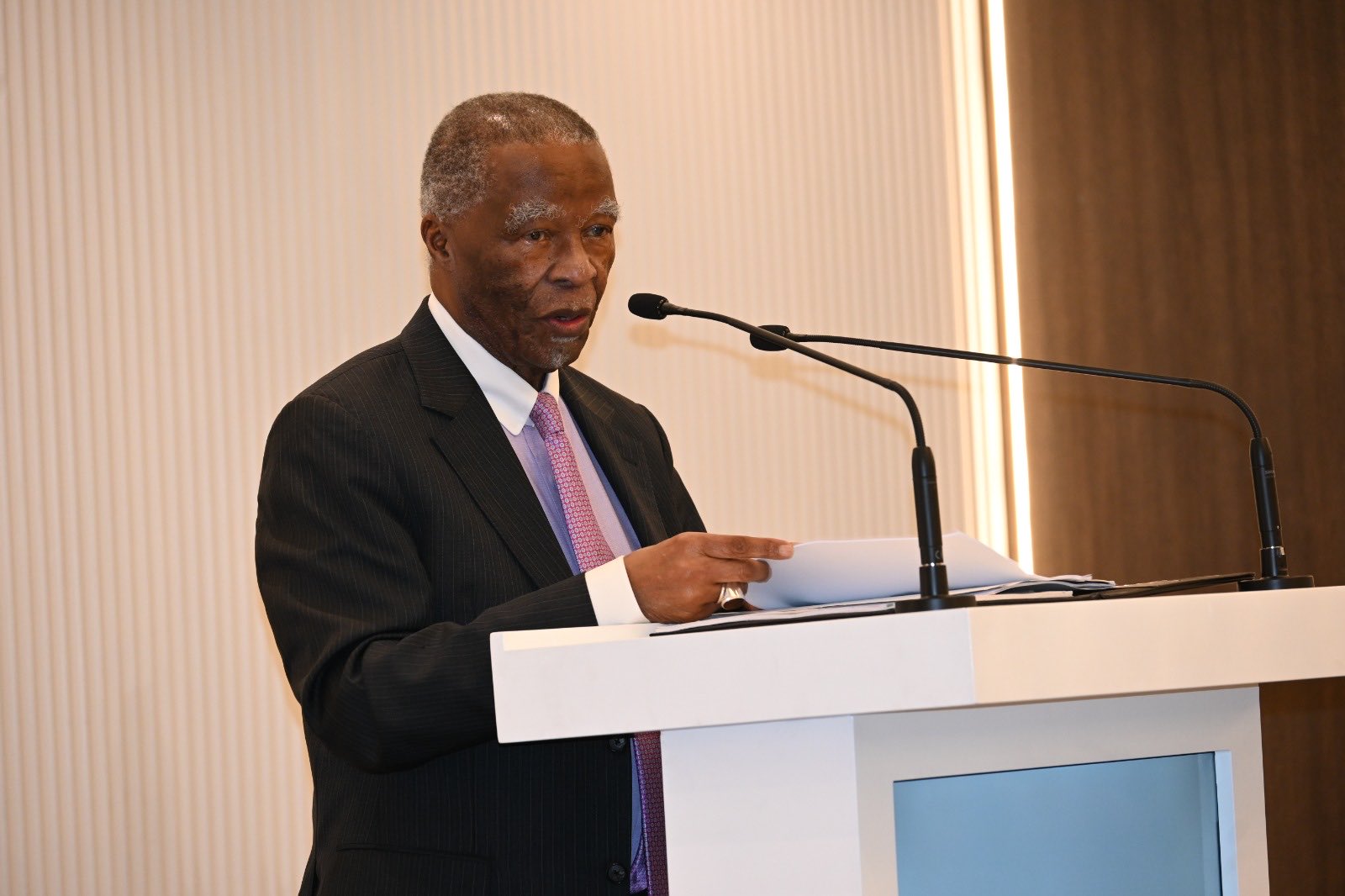
Former President Thabo Mbeki delivered the main address at the SIDSSA26 Leaders Forum at the Century City Conference Centre in Cape Town on August 24, 2026.
The forum focused on “Shaping the Future of Municipal Infrastructure” across South Africa and the wider continent.
It brought together political principals, Ministers, Mayors, senior government officials and private-sector leaders to consider the future of municipal infrastructure and its role in building more connected, resilient and prosperous African communities.
Mbeki stressed that infrastructure development requires strong regional cooperation, legitimate and elected leadership, and collective action to drive sustainable economic growth.
He cautioned against a rising inward focus or isolationism in South Africa. He emphasized that the country cannot exist in isolation from the rest of Africa.
He said Africa would not be able to play its full role globally unless it remained united, arguing that no country could achieve true sovereignty in isolation from others on the continent.
“The continent would not be able to play its proper role in terms of its own responsibility to itself and its own role globally unless the continent is properly united,” Mbeki said.
“In May 1963, Kwame Nkrumah told the leaders gathered to establish the Organisation of African Unity that Africa’s economic independence resided in its union. His warning was unambiguous: the continent had to unite or remain vulnerable to forces beyond its control.”
“The OAU Charter gave institutional expression to that conviction. It committed African states to promote unity and solidarity and to coordinate their efforts to secure a better life for the peoples of Africa.”
“The Constitutive Act of the African Union renewed the objective of greater unity between African countries and peoples. The 2013 Solemn Declaration marking the 50th anniversary of the OAU/AU again affirmed the ultimate goal of constructing a united and integrated Africa.”
Agenda 2063 carried this historical commitment forward. Its message is as urgent today as it was in 1963: Africa must unite if it is to realise its Renaissance, added Mbeki.
The former president said, this history is not separate from infrastructure debate. The Infrastructure is one of the means through which African unity becomes practical.
“Municipal infrastructure is where the continental vision meets everyday life. It is where political commitments are translated into reliable water, safer roads, functioning public transport, productive local economies and communities able to withstand economic and environmental shocks.”
He concluded by saying, Africa’s continuing infrastructure deficit is not only a financing or technical problem. Its Achilles heel is the absence of sufficiently strong and genuinely Pan-Africanist leadership.