
By Lehlohonolo Lehana.
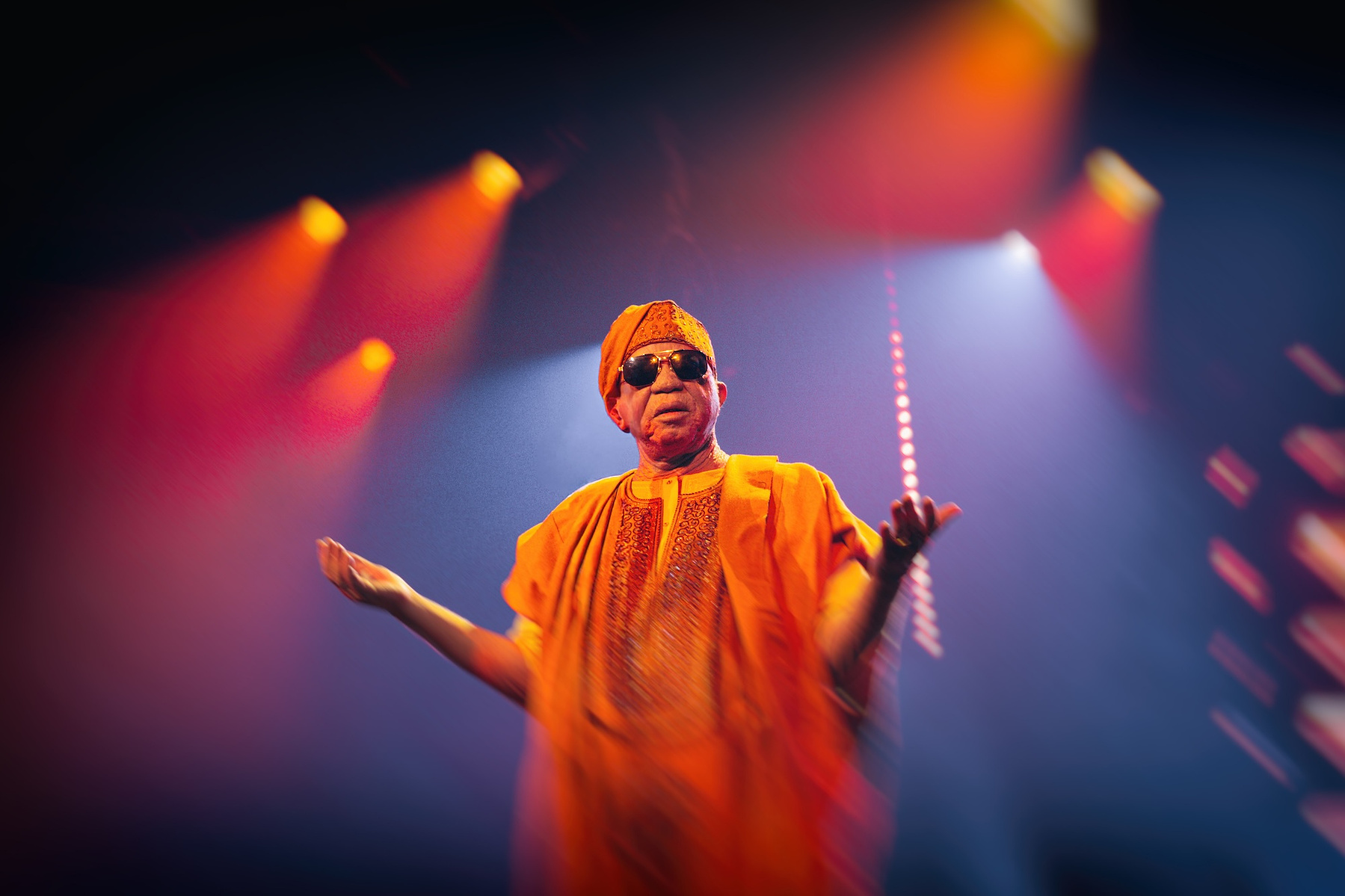
Legendary Malian musician Salif Keita cancelled his upcoming performances at MACUFE cultural festival in South Africa in response to rising xenophobic violence and anti-immigrant campaigns targeting African migrants.
In recent months, groups such as Operation Dudula and March and March have led aggressive anti-immigration campaigns, blockaded public services and demanded that undocumented foreigners leave the country.
Several African countries including Ghana, Nigeria, Malawi and Mozambique have stepped in to coordinate emergency repatriations for thousands of their citizens.
MACUFE is scheduled to run from September 3 to September 13, 2026, with the main events taking place in Mangaung/Bloemfontein.
The Free State Department of Sport, Arts, Culture and Recreation had initially announced the legendary “Golden Voice of Africa” as a headline act for the 2026 main festival lineup.
In a deeply emotional open letter, the “Golden Voice of Africa” stated that the ongoing hostilites represent a painful departure from the principles of unity and shared struggle that once defined the nation’s liberation movement.
Keita, who famously stood against apartheid by performing at the historic 1988 Nelson Mandela 70th Birthday Tribute concert at Wembley Stadium, explained that the same moral conscience forces him to distance himself from commercial stages in South Africa today.
Emphasising that his decision is a firm stance against targeted violence rather than a rejection of the South African people, Keita declared.
“I close the door on hate, but my heart remains open to the vision of an Africa where every human being can live without fear.”
While acknowledging the severe economic and social hardships facing local citizens, Keita stressed that domestic frustrations must not be weaponised against fellow Africans, reminding his audience that colonial borders are merely artificial divisions that should never compromise shared humanity.
Although stepping away from commercial venues, Keita clarified that he is not abandoning the country entirely.
He expressed a willingness to perform in non-commercial settings, such as local townships, or any venue where music can foster community dialogue, healing, and the spirit of ubuntu, hoping to return when solidarity and peace prevail.