
By Lehlohonolo Lehana.
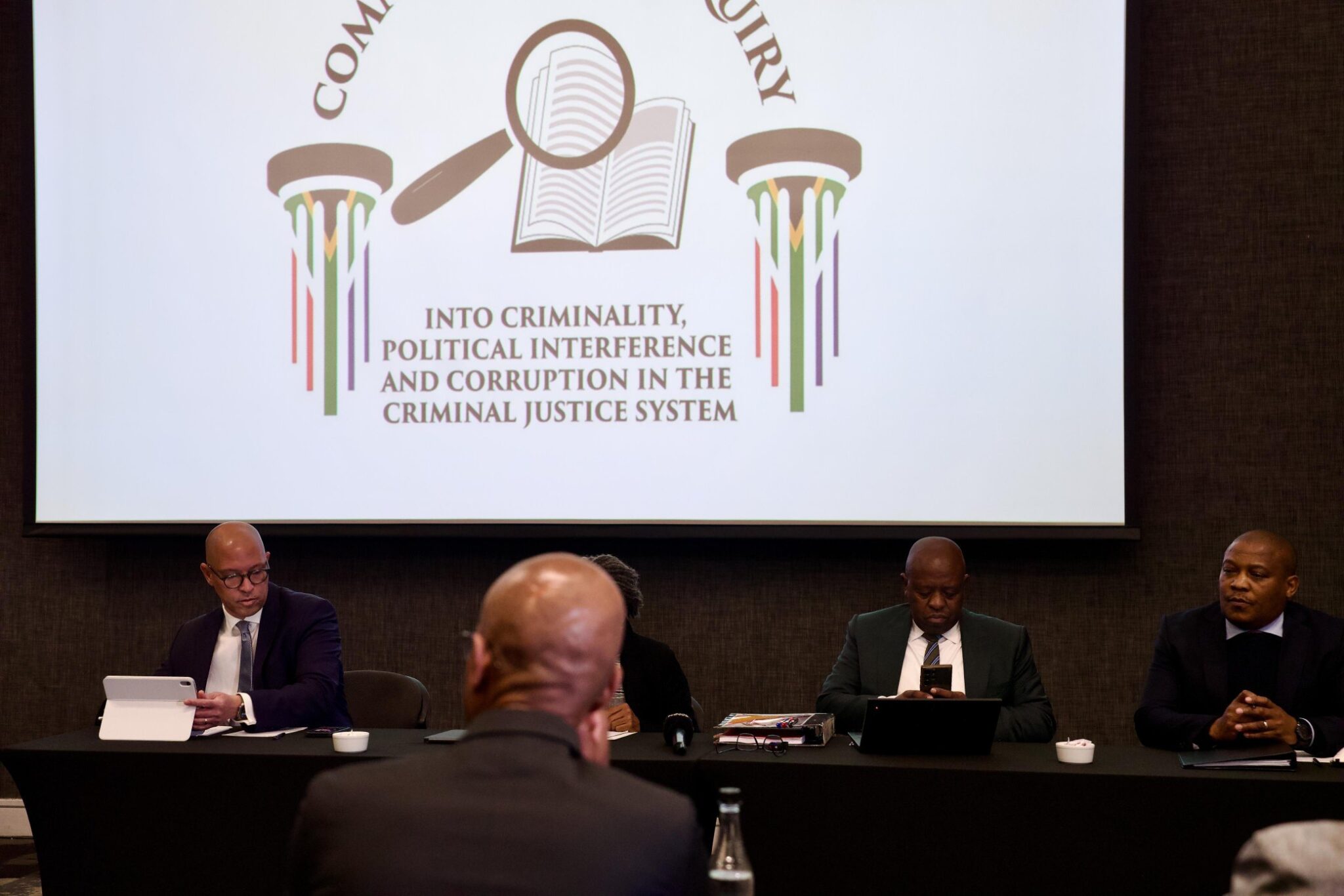
The controversial Mpumalanga taxi boss Joe “Ferrari” Sibanyoni appeared before the Madlanga Commission of Inquiry on Friday, 28 August 2026.
He spoke confidently, at times passionately, and repeatedly distanced himself from any notion that he was a crime boss.
Sibanyoni is facing charges in an extortion case involving more than R2-million and a Mpumalanga businessman who was allegedly targeted.
The matter is due to return to the Gauteng High Court in Pretoria on 31 August, when the trial is scheduled to resume.
During his testimony, Sibanyoni went into granular detail about his background, his confirmed and denied associations with various individuals previously named at the commission, and the volatile taxi industry.
He also explained the genesis of his nickname – “Ferrari.”
“The nickname arose originally from my lifestyle and personality over many years,” Sibanyoni said.
“It is a social nickname. It carries no criminal connotation whatsoever.”
Among the titles he held were president of the South African Local and Long Distance Taxi and Bus Organisation, and the founder of the Joe Sibanyoni Foundation.
There had been attempts on his life in 2006 and 2022, which Sibanyoni said were linked to the minibus taxi industry.
He alleged that fellow taxi boss Jothan Msibi was behind the 2006 attempt.
This fits narrative of South Africa’s unprecedented law enforcement scandal, because several police officers identified Msibi as heading a cartel, known as the Big Five and also the Firm or the Farm, which infiltrated South Africa’s criminal justice system, politics and private security.
Sibanyoni testified that Msibi’s farm, north of Tshwane, was the “operational and political command centre of an organisation that wielded power far beyond the boundaries of the minibus taxi industry”.
That power, according to Sibanyoni, extended deep into the state.
Sibanyoni further told the commission that he had raised concerns about criminal networks operating alongside law enforcement officials with former police minister Bheki Cele, particularly in May 2022.
But Cele dismissed his concerns
He said that after Msibi’s 2024 death, KwaZulu-Natal Police Commissioner Nhlanhla Mkhwanazi arranged to meet him around April that year. (Mkhwanazi went public last year, warning about the cartel – the Big Five – that had allegedly infiltrated the state.
“The meeting took place during a period of significant instability following Msibi’s death,” Sibanyoni said.
“A period in which the taxi industry faced renewed violence and a dangerous vacuum of leadership.”
Sibanyoni said that in his capacity as a senior police officer, Mkhwanazi had understood “the significance of the post-Msibi environment”.
According to Sibanyoni, he and Mkhwanazi had discussed the threat that izinkabi – a term that commonly refers to contract killers, but that can also refer to guards – posed to the taxi industry.
Sibanyoni said, Mkhwanazi’s involvement made a difference by leading to visible movement in stalled criminal prosecutions related to taxi violence. He is expected to return to the Madlanga Commission of Inquiry on 21 September 2026.