
By Kevin Rademeyer, Sports Journalist.
Photo Credit: US Open.
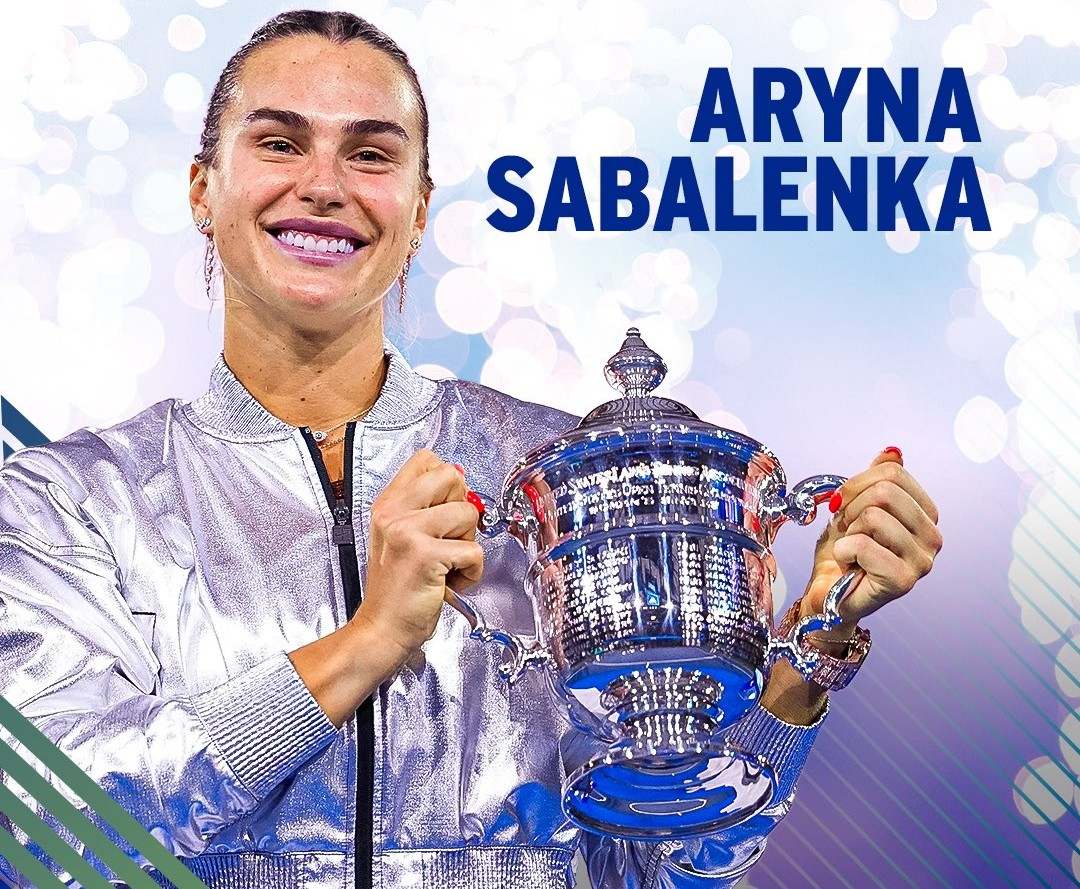
Aryna Sabalenka knows exactly what awaits her when she walks into Arthur Ashe Stadium.
The defending champion has won 20 of her past 21 matches at Flushing Meadows and is chasing something only Serena Williams has managed in the Open Era: three successive US Open titles.
But Sabalenka arrives in New York with a curious problem. The tournament that has become her sanctuary comes at a time when her tennis has lost some of its certainty.
She hasn’t reached a final since March. There have been early defeats at Roland Garros, Wimbledon, Toronto and Cincinnati, and the defeats have often carried the same uncomfortable feature: she has had matches within her grasp before allowing them to slip away.
“She struggled a bit winning the big points. She’s lost a couple big leads in some events,” said ESPN analyst Mary Joe Fernandez. “She’s vulnerable.”
That makes the draw particularly interesting. Sabalenka has a manageable opening before the potential arrival of former Wimbledon champion Barbora Krejcikova in the third round. Diana Shnaider could await in the last 16, with Linda Noskova or the in form Marta Kostyuk possible quarter final opponents.
There is no obvious soft passage.
Yet this is Sabalenka at the US Open, where she has become remarkably difficult to beat. She also knows what the New York crowd can do for a player. “If they cheer for you, this is the best feeling I have ever experienced in the big stadiums,” she said.
There are many players in the draw that can create a huge challenge for the defending champion.
Coco Gauff has spent much of the year rebuilding parts of her game that had become unreliable, particularly her serve. The work appears to be paying off. After reaching the latter stages in Toronto, she won Cincinnati and arrives with the sort of momentum that makes a home crowd even more significant.
Fernandez has gone further, calling Gauff the player in the best form.
The American’s route, however, is hardly straightforward. Daria Kasatkina or Paula Badosa could await in the second round, with Sara Bejlek, Iva Jovic or Alexandra Eala lurking later. Mirra Andreeva is a potential quarter final opponent.
Gauff won the US Open in 2023. She knows what it takes to survive the noise. “You’re going to experience failure at some point in your life,” she said. “You just have to know how to take it with your chin held up high and give that person their props and try again next time.”
Jessica Pegula is another American with a genuine chance, although her route is littered with awkward opponents. Elena Gabriela Ruse awaits first, followed potentially by Sofia Kenin or Venus Williams. Leylah Fernandez could come in the third round and Karolina Muchova in the quarter finals.
Pegula reached the final in 2024 and has never quite stopped believing another run is possible. “I would love to get myself back into that position,” she said.
Then there is Iga Swiatek, whose season looked increasingly uncomfortable before she found something on the North American hard courts. Her Toronto title, including a victory over Elena Rybakina in the final, changed the mood around her. “The journey has been bumpy this season,” Swiatek admitted. “Sometimes I was impatient throughout the season. I was, like, seeking a win while maybe my game was not ready.”
Now it is.
And Swiatek and Rybakina find themselves in the most unforgiving quarter of the draw, alongside Naomi Osaka, Madison Keys and Belinda Bencic. It is difficult to find another section of the 128 player field carrying quite so much proven pedigree.
Rybakina, the Australian Open champion and second seed, has another concern. A leg injury forced her out of Cincinnati, and although she has the game to win in New York, she has never progressed beyond the fourth round here.
That leaves the No. 1 ranking hanging over the tournament as well.
Rybakina can take it by reaching the semi finals. Gauff or Pegula need to win the title while Rybakina exits earlier. Sabalenka, meanwhile, must defend her championship points if she is to retain her long standing position at the top.
Behind them is a field that feels unusually deep.
Mirra Andreeva already owns a major title after winning Roland Garros. Linda Noskova arrives as Wimbledon champion. Naomi Osaka, twice a US Open winner, remains one of those players nobody wants to meet when she is striking the ball cleanly.
Amanda Anisimova was last year’s finalist. Marta Kostyuk has reached the semifinals at the past two majors. Muchova, when healthy, has the variety to dismantle almost anyone.
Patrick McEnroe put it rather neatly: “There’s probably six to eight players that could win it.” That may be the defining feature of this US Open.
Sabalenka has history within reach, but her form leaves the door open. Gauff has momentum and a crowd behind her. Swiatek has rediscovered belief. Rybakina has the power, if her body cooperates.
And somewhere among them, there’s a player waiting for the draw to open just enough. At Flushing Meadows, that’s often all it takes.