
By Lehlohonolo Lehana.
The Judicial Commission of Inquiry into Criminality, Political Interference and Corruption in the Criminal Justice System, commonly known as the Madlanga Commission marked one year since the first hearings after it was announced by President Cyril Ramaphosa.
Its establishment came after KwaZulu-Natal (KZN) Police Commissioner, Lieutenant General Nhlanhla Mkhwanazi, made a series of serious allegations about an alleged criminal syndicate that has spread influence into law enforcement agencies, the NPA and intelligence services.
110 witnesses have given testimony since the first hearings including law enforcement officers, Investigating Directorate Against Corruption and National Prosecuting Authority (NPA) officials, experts, Members of Parliament and private individuals.
The commission paid tribute to Marius van der Merwe, who testified as Witness D and was assassinated on 5 December 2025 in front of his family. The commission described his death as a reminder of the dangers faced by people who provide evidence.
Commission Chairperson Justice, Mbuyiseli Madlanga, marked the inquiry’s first anniversary by reflecting on a year of testimony that he said has exposed serious challenges within South Africa’s criminal justice system.
“The fact that a number of players within the criminal justice system have been charged criminally with some dismissed from their employment and others facing disciplinary [action], lands credence to these indications. It is commendable that what appears to be criminality within the criminal justice system is coming out. This is commendable because hopefully that will help towards turning the tide,” Justice Madlanga said.
Madlanga also thanked those who have supported the inquiry over the past year, saying the overwhelming public backing will not go unnoticed.
The Commission is expected to hand its final report to Ramaphosa in November.
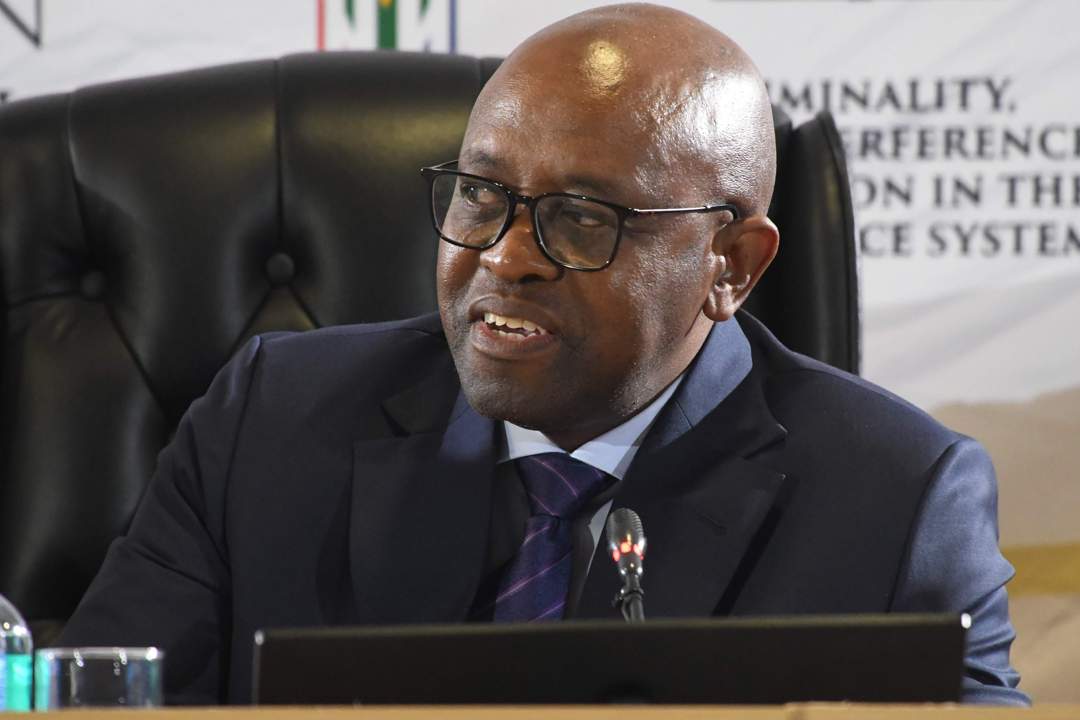
Meanwhile Makgothi Thobakgale, the National Commissioner of the Department of Correctional Services was in the witness stand on Thursday, 17 September 2026.
Thobakgale told the commission that former Minister of Tourism Lindiwe Sisulu and Reverend Allan Boesak were denied visitation access to former Northern Cape Premier John Block.
He clarified that while he did not authorise the visit, the decision did not constitute political interference.
He also told the Commission that the illicit trade operates through established chains of command, generating significant proceeds while strengthening criminal syndicates and prison gangs.
Thobakgale said gangs from the Western Cape and KwaZulu-Natal can exploit relationships with officials to gain access to inmates.
“Gangs and syndicates infiltrate the the correctional environment by breaking down professional boundaries between officials and inmates. The process typically begins with minor requests and favours, for example, sharing a cigarette and then it escalates to personal conversations designed to establish familiarity and identify an official’s vulnerabilities, most commonly, financial attachment,” Thobakgale said.
He said officials may eventually be persuaded to “look the other way” during parcel deliveries, visits and searches – in exchange for kickbacks.
According to Thobakgale, some officials are gradually groomed to facilitate smuggling of contraband, drugs, with newly recruited officers particularly vulnerable because of their inexperience. But it is not only officials who are applying pressure.
Thobakgale said inmates regularly attempt to influence officials to advance their own interests, sometimes using money to build relationships.
He cited convicted rapist, Thabo Bester, as an example, saying Bester made repeated attempts to get his attention before being directed to the department’s formal complaints process.
The increasing use of prisons as a safety net for gang members is impacting the department’s budget – which Thobakgale insists should be spent on high-level security systems instead.
“The ISS system, you need, on average, around R65 million per annum. Per facility. For the past five years, our budget was cut by R11 billion.”
The commissioner has also called for vetting of frontline officers. A new witness is set to testify on Friday, 18 September 2026.