
By Lehlohonolo Lehana.
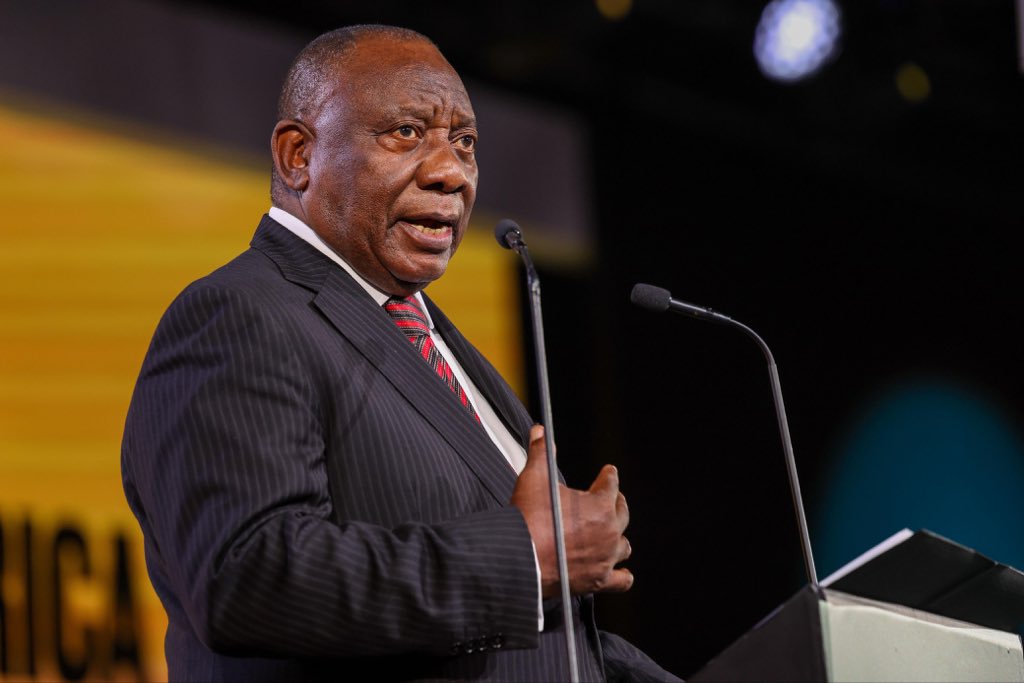
President Cyril Ramaphosa says the Revitalised Agreement on the Resolution of Conflict in South Sudan remained the only internationally recognised framework for implementing the country’s political transition.
The AU’s C5 committee on South Sudan, chaired by Ramaphosa, held a virtual meeting on Tuesday, 29 September, to review the country’s readiness for elections, which have been postponed since 2015.
The other members of the committee are Algeria, Chad, Nigeria and Rwanda, but Ramaphosa was the only president of the C5 members present.
South Sudan’s President Salva Kiir also attended.
South Sudan is due to hold general elections on December 22, its first national vote since gaining independence in 2011.
Ramaphosa said the primary responsibility for implementation of the agreed measures lay with the government and parties of South Sudan. But he said the C5 countries and the AU would support South Sudan.
He urged South Sudan’s political leaders to address outstanding shortcomings ahead of the election and continue dialogue despite their differences.
“Inclusive dialogue is a vital guarantor of the future of South Sudan and its people,” he said.
Ramaphosa said the call came amid significant developments in South Sudan over the past week, including the dissolution of the Transitional Government on 22 September 2026, amendments to the National Elections Act of 2012 and the commencement of the Inter-Party Political Dialogue on 24 September 2026.
“These developments take place against the backdrop of preparations for the first general elections since attaining independence,” the President said.
He said the C5 Plus looked forward to receiving further information from President Kiir on the impact of these developments.
Ambassador Selma Malika Haddadi, the Deputy Chairperson of the African Union Commission (AUC), said at the meeting that South Sudan was entering a “decisive stage” of its political transition and stressed the need to preserve the ceasefire, strengthen political confidence through inclusive dialogue and create conditions for a peaceful and credible election.
“The forthcoming election is crucial to the security and political stability of South Sudan,” she said.
Haddadi further said AU support for the electoral process in South Sudan would remain anchored in the implementation of the 2018 peace agreement, which it described as the principal framework for completing South Sudan’s political transition.
One of the main obstacles to free, fair, credible elections is that President Kiir last year placed his arch-rival, First Vice-President Riek Machar, under house arrest. Several other political opponents are also in detention.
Kiir has resisted several previous appeals by the AU to free Machar and other political prisoners, so he is unlikely to agree to do so.
Ramaphosa stressed that AU Member States had a collective responsibility to support South Sudan in overcoming its challenges and advancing its national vision of unity, peace and prosperity.