
By Lehlohonolo Lehana.
Lobby group AfriForum has submitted a PAIA application to the office of President Cyril Ramaphosa, demanding transparency and key details pertaining to former President Jacob Zuma’s special remission.
This follows Correctional Services Commissioner, Makgothi Thobakgale announcement that Ramaphosa had approved the remission of non-violent offenders in prisons across the country. Zuma reported to the facility as part of the remission process and was released less than two hours later.
Thobakgale said the remission process kicked off earlier this year and was signed hours before Zuma reported to the Estcourt prison.
He said despite his meeting with Zuma at his homestead, he did not inform the former president of the remission as he was only there to deliver the Supreme Court of Appeal judgment.
He said it was only when Zuma arrived at the facility on Friday did he find out he had been granted remission.
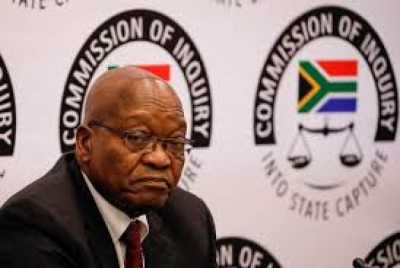
Zuma was sentenced to 15-month prison sentence in 2021 for contempt of court amid failing to appear before the State Capture Commission. He served two months at the correctional facility. He was later released on medical parole but it was declared unlawful.
The Constitutional Court upheld a Supreme Court of Appeals ruling that Zuma’s early release from prison on medical parole was unlawful.
AfriForum’s Ernst van Zyl say it all seems too coincidental.
“We can see if everything is above board, we will see how the decision process was followed, how are people selected to qualify surrounding the situation that I think anyone would think is quite suspicious.”
In its PAIA application, AfriForum has requested:
* A comprehensive list of all individuals who benefited from the special remission, including their original sentences, charges, and the date of release.
* Detailed guidelines or criteria used in determining which inmates were granted the special remission.
* Any assessments, reports, or studies conducted to evaluate the potential social and security impacts of releasing such a significant number of inmates simultaneously.
* Records of any consultations or meetings involving key stakeholders (such as community leaders, crime prevention organisations, etc) leading up to the decision of the special remission.
* For those released, information about any previous convictions or parole violations.
* Details of any rehabilitation or reintegration programmes that the released inmates underwent during their incarceration.
* Mechanisms in place to monitor or track the behaviour and activities of released inmates to ensure community safety.
* Any internal communications, memos, or reports that detail the rationale or justification for this specific special remission.
* Detailed statistics or reports showing the expected v actual impact of the special remission on prisons.
All sentenced offenders, those under correctional supervision and parolees, are being granted a remission of 12 months. Sexual offenders, those sentenced for tampering with, destroying or damaging essential infrastructure, offenders declared as dangerous by the court and those serving life sentence are excluded.