
By Lehlohonolo Lehana.
Four main political parties began the final weekend of campaigning Saturday before a possibly pivotal election that could bring the country’s most important change in three decades.
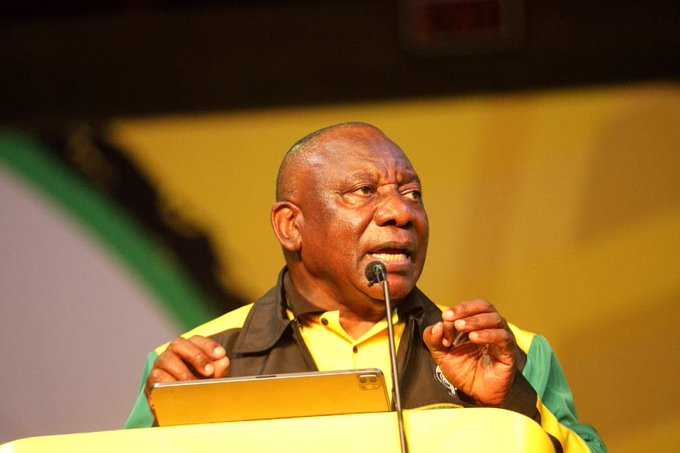
Supporters of the African National Congress (ANC) gathered at a soccer stadium in Johannesburg to hear a speech by party leader President Cyril Ramaphosa.
The ANC is under unprecedented pressure to retain its parliamentary majority in Africa’s most advanced country.
It was the governing party’s final election rally before the elections on 29 May.
Ramaphosa recognized some of the grievances of South Africans, which include high levels of poverty and unemployment that mainly affect the country’s Black majority.
“We have a plan to get more South Africans to work,” Ramaphosa said. “Throughout this campaign, in the homes of our people, in the workplaces, in the streets of our townships and villages, so many of our people told us of their struggles to find work and provide for their families.”
Ramaphosa said it was particularly clear that young people are struggling to find employment.
Out of a population of 62 million, 32.9 percent are unemployed — far more than when the ANC came into power — and 28 million rely on welfare grants to survive.
The rise of unemployment has been fuelled by the country’s almost stagnant economy over the last decade and only grew 0.6% in 2023.
Ramaphosa said while on the campaign trail, South Africans told him that they wanted the R350 social relief of distress grant increased to R700, which led to the loud cheers of the crowd.
But the optimism was quickly dampened among many as he said the government would in the immediate future increase it to R370.
With many people still unemployed, the ANC would continue to provide income support to those who needed it the most. “We will maintain the existing social grants, which have been so important in reducing poverty and providing poor children with opportunity,” he said.
“At the same time, we will also implement a basic income support grant for employed people based on the SRD [Social Relief of Distress Grant] grant.”
Ramaphosa said it was also outrageous that some political parties planned to scrap the national minimum wage if they got elected, adding that this was an attack on workers and efforts to build a fairer society.
He added that the party would also not scrap the much-criticised black economic empowerment policy as it was a policy of the ANC. This also led to the loud cheers of the crowd.
Ramaphosa said the ANC would focus on getting more South Africans into work, tackle the high cost of living, maintain existing social grants and progressively implement a basic income support grant for the unemployed.
He said, should the party be voted back into power, they will build industries and invest in an inclusive economy.
“We will also support new industries like new energy vehicles, renewable energy, and information and technology. [The ANC] will undertake a balanced just transition to a cleaner, greener future that will lead to new jobs and make our exports more competitive, “said Ramaphosa
Meanwhile numerous organisations, including the South African Police, BMI, and Oxford Economics, have warned of a higher risk of violence and unrest amidst the 2024 general elections.
The 2024 general elections take place on 29 May. It is the first time since the democracy that the ruling ANC is at risk of getting under 50% of the vote.
The new uMkhonto weSizwe (MK) Party, closely linked to former president Jacob Zuma, is a dark horse in the race.
Uncertainty linked to the elections’ outcome and the government port-election heightens the risk of violence and unrest in South Africa.
On Monday, FirstRand warned of an increased risk of social unrest, looting, and clashes in May and June linked to the 2024 elections.
The group issued an internal medium-risk security notice, warning that it anticipates some uMkhonto we Sizwe Party (MKP) protest action during May/June.
This risk is related to possible dissatisfaction over former President Jacob Zuma’s ineligibility to stand for Parliament in the 2024 elections because of a recent contempt of court conviction.
FirstRand circulated the memo to various operating entities, such as First National Bank, WesBank and Rand Merchant Bank.
The fact that the country’s 18.4 million welfare grant recipients far outstrip the 7 million income taxpayers represents a risk to the country’s fiscus and social cohesion.
South Africans vote for parties and not directly for their president in national elections. Parties then get seats in Parliament according to their share of the vote and the lawmakers elect the president — which is why the ANC losing its majority would affect the 71-year-old Ramaphosa’s hopes of being reelected smoothly for a second and final five-year term.