
By Lehlohonolo Lehana.
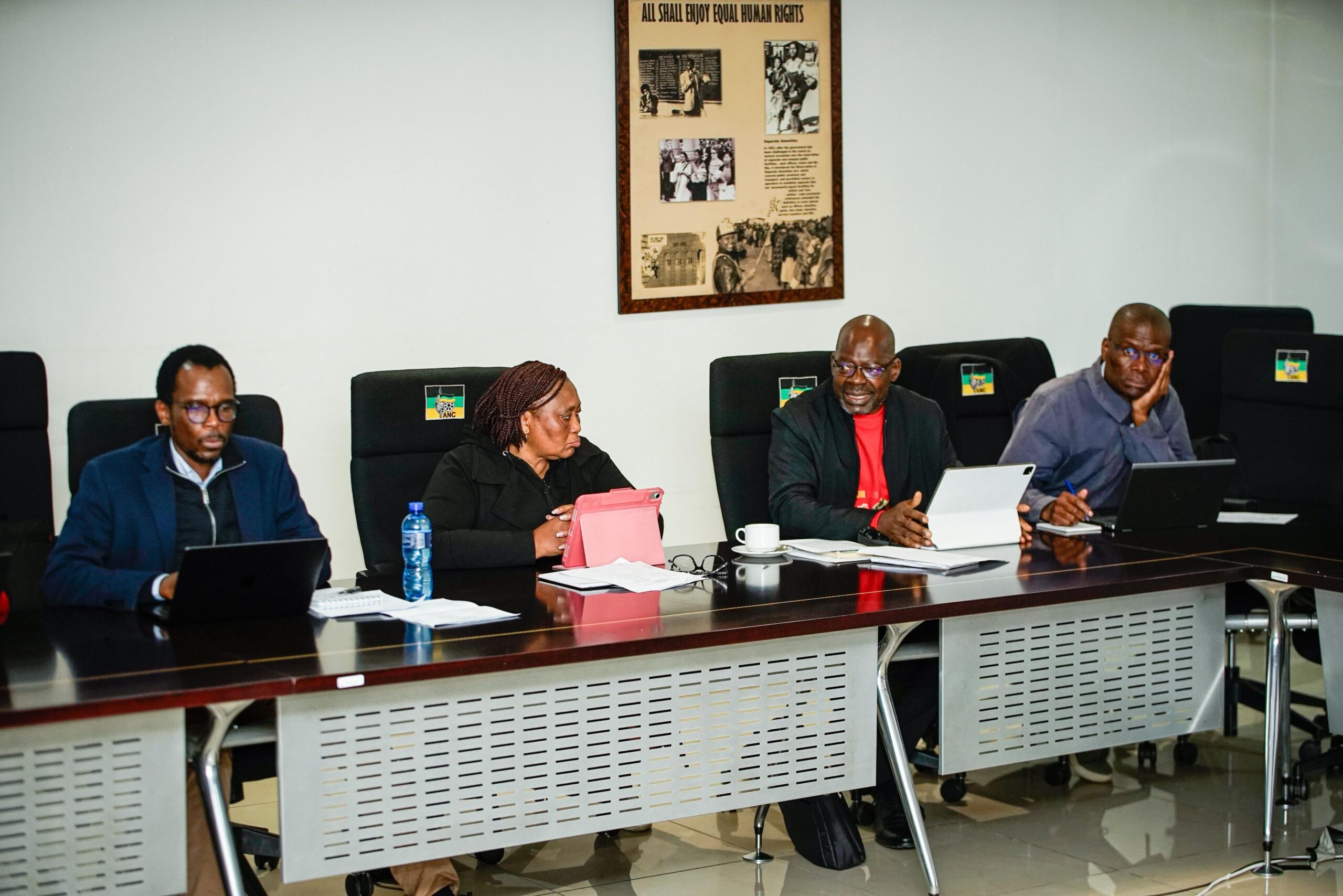
The African National Congress (ANC) has re-affirmed that the meeting with its alliance partner, the South African Communist Party (SACP) is part of ongoing efforts to consolidate unity of purpose in advancing the National Democratic Revolution (NDR).
NDR is the central ideology of the governing tripartite alliance consisting of the ANC, the SACP and COSATU.
Both parties held a meeting in Johannesburg on Monday (24 November 2025).
The SACP has long been a central partner in the Tripartite Alliance, alongside the ANC and Cosatu. Over the years, it has supported the ANC during elections, had access to its election strategies, participated in workshops and played a role in processes such as the selection of public representatives.
Mounting tensions within the alliance, particularly under the presidency of Jacob Zuma, led the SACP to begin re-evaluating its position.
At its congress in July 2017, the party resolved to explore the possibility of contesting elections independently, especially in areas where the alliance was seen as dysfunctional or where the ANC was no longer viewed as representing the interests of the working class.
The SACP contested its first by-election in the Metsimaholo Local Municipality in the Free State. The party secured three out of 21 council seats and garnered about 6,000 votes. The by-election followed the dissolution of the 2016 municipal council due to political instability.
The party contested yet another by-election, this time in Polokwane, and garnered only 70 votes, representing just 1%.
Speaking to the media on the sidelines of the meeting, SACP spokesperson Mbulelo Mandlana, said the decision was taken by SACP members in a Congress, “and our members consider the decision to be a correct one.”
He added that they are working hard in preparation for the elections, and added that the SACP remains committed to the future of the Tripartite Alliance between it, the ANC and COSATU.
ANC Secretary-General Fikile Mbalula stated that the SACP “has a right to contest elections alone, just like the ANC does,” while stressing the need for discussions on this “new dynamic” to maintain alliance unity.
Mbalula appeared to suggest that there would still be engagements with the SACP, possibly to reverse the decision, but this would be possible only once the party held its next congress.
He added that the meeting strengthens the shared commitment of the Alliance to defend democracy, deepen working-class leadership, and drive the programme of transformation across society.
The ANC is under immense pressure after the SACP’s decision to contest the 2026 local elections, a move that deepens vulnerabilities already exposed by the poor showing in the 2024 national vote.
That slump forced the party into a Government of National Unity (GNU) with the Democratic Alliance (DA). The GNU has been fragile since its formation, as well as ongoing policy differences.