
By Lehlohonolo Lehana.
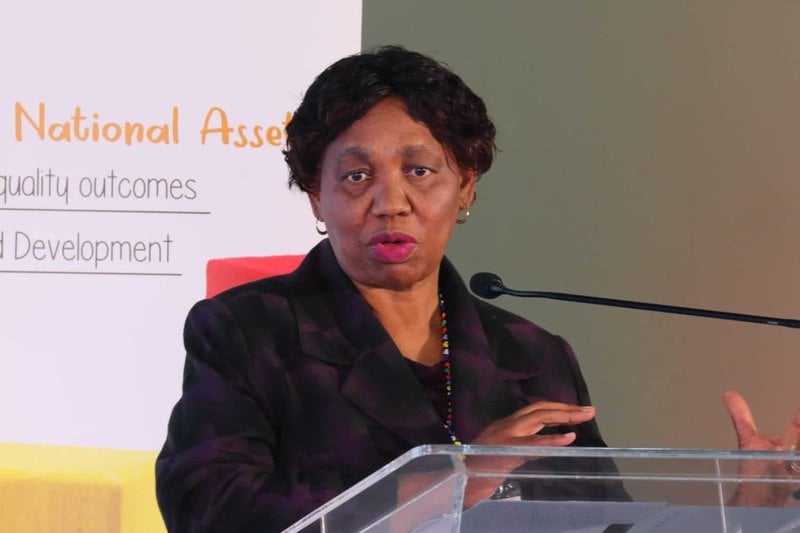
Minister of Basic Education Angie Motshekga has welcomed the adoption of the controversial Basic Education Laws Amendment (BELA) Bill.
Motshekga was speaking during a media briefing hosted by the department on Sunday to celebrate Teachers’ Month.
She says the BELA Bill has been in the pipeline for almost ten years.
“The aim of the bill is to bring about certain technical and substantive adjustments in the South African Schools Act and the Employment of Educators Act. The bill also seeks to clarify certain existing provisions and to insert certain provisions to cover matters which are not provided for in the existing legislation,” said Motshekga.
Motshekga said the Bill is meant for the protection of every child to have access to education.
“You can’t have a situation where you say government has to give full access to schooling as law, and then say there is a governing body that has the right to say who gets admitted or not.”
The minister said she was involved in the drafting of the basic education laws at the dawn of democracy. During that time, Motshekga said compromises were made with schools about how they ran them and what language they used.
“We have past that stage now,” she said.
“We’ve had situations where black kids cannot go to a school in front of their gate because powers have been given to governing bodies.”
Motshekga said when she tries to intervene and get a child admitted to a particular school, governing bodies say she is breaking the law and threatens to take her to court.
Some of the proposals in the Bill include making Grade R the new compulsory school-starting age for school.
The Bill also proposes penalties for parents who do not ensure that their children are in school and confirmation that corporal punishment is no longer allowed at schools with penalties for those found guilty of such offences.
The Democratic Alliance (DA) has previously said its concerns about the BELA Bill have been ignored. It also said its questions about “the wording of clauses, the impact of clauses on schools and communities, and the feasibility of the planned centralisation remain unanswered”.
“The BELA Bill disempowers school governing bodies (SGBs) from determining their own admission and language policies and places final authority in the hands of the heads of provincial departments, making them both players and referees who could abuse this power to further destroy quality education,” said DA MP Baxolile Nodada.
He added that the Bill should instead focus on overcrowded classrooms, dangerous infrastructure and the quality of teaching.
Motshekga has also warned that schools are bearing the brunt of the ongoing water supply problems especially in Gauteng.
She said a lack of drinking water and proper sanitation at schools around the country is a recipe for disaster.
The worst affected provinces are flood-hit Western Cape, as well as Gauteng.
Motshekga said while the department is yet to receive an update from the Education Department in Gauteng, the Western Cape has been providing the necessary information.
“Schools can deal with water outages the same way we dealt with Covid. Teachers can send schoolwork to learners at home so that they are kept engaged and there is ongoing communication between them,” said Motshekga.
Motshekga also addressed the issue of power cuts.
She said schools cannot be exempted from load shedding during exam season due to the fact that, unlike other institutions, the buildings are located within communities.