
Staff Reporter.
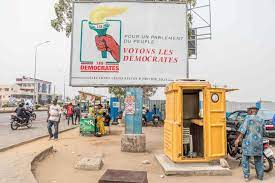
Voters in Benin are heading to the polls for a parliamentary election seen as a test of democracy as opposition parties are back on the ballot after boycotting or being excluded from the most recent presidential and legislative votes.
Benin’s image as a bastion of democracy and stability in West Africa has been dented under President Patrice Talon, who went back on a pledge not to run for another term and oversaw a crackdown on the opposition since coming to power in 2016.
In the vote on Sunday, about 6.6 million voters are eligible to elect 109 deputies, including at least 24 women – at least one per constituency – according to a new electoral code.
Seven parties are competing in the vote, including the Les Democrates party linked to Talon’s predecessor and rival Thomas Boni Yayi.
Boni Yayi’s supporters led protests in 2019 after opposition parties were blocked from the legislative vote for failing to meet strict new eligibility criteria.
“I will vote for this party [Les Democrates] for the rebalance of power,” civil society activist Isidore Odountan, 31, told Reuters news agency in the largest city Cotonou.
Preliminary results, which are expected on January 11, may also be an indicator of the strength of the various political forces jostling to succeed Talon. The next presidential election is due in 2026 when the next parliamentary vote will also be held.
Talon does not belong to any party but is supported by the two parties currently in power in parliament – the Bloc Republicain and Union Progressiste le Renouveau.
There is no immediate sign the vote will see protests like in 2019 or those that broke out in 2021 against Talon’s decision to seek re-election, said political analyst Expedit Ologou, head of Beninois think tank Civic Academy for Africa’s Future.
“The atmosphere seems calm, peaceful, friendly, fraternal in most areas of the country,” he told Reuters.
Sources: News Agencies.