
By Lehlohonolo Lehana.
With many households and businesses still under financial pressure, National Treasury will not be increasing taxes to keep money in the taxpayer’s pocket.
Finance minister Enoch Godongwana said this when he tabled his maiden budget speech before a sitting of Parliament on Wednesday.
“Households and businesses are still under financial pressure and are coping with higher obligations, the effects of Covid-19 and increased fuel prices.
“Now is not the time to increase taxes and put the recovery at risk. Accordingly, we have decided to keep money in the pockets of South Africans, “he said.
The proposal in the budget includes R5.2 billion in tax relief to help support economic recovery, provide some respite from fuel tax increases, and boost incentives for youth employment.
National Treasury tax proposals for 2022/23 are as follows:
- The personal income tax brackets and rebates will be adjusted by 4.5%, in line with inflation. The adjustments will mean that the annual tax-free threshold for a person under the age of 65 will increase from R87,300 to R91,250;
- Medical tax credits will increase from R332 to R347 per month for the first two members, and from R224 to R234 per month for additional members;
- The employment tax incentive will be expanded through a 50% increase in the maximum monthly value to R1 500. It is anticipated that the expansion will provide additional support worth R2.2 billion.
“In 2021, the inland petrol price breached R20 per litre. The higher prices have put pressure on the cost of transport, food and other goods and services.
“To provide some relief to households, no increases will be made to the general fuel levy on petrol and diesel for 2022/23. This will provide tax relief of R3.5 billion to South Africans.”
Godongwana said there will also be no increase in the Road Accident Fund levy.
“[Mineral Resources and Energy] minister [Gwede] Mantashe and I have agreed that a review of all aspects of the fuel price is needed. Our teams have already begun to engage on this critical work.”
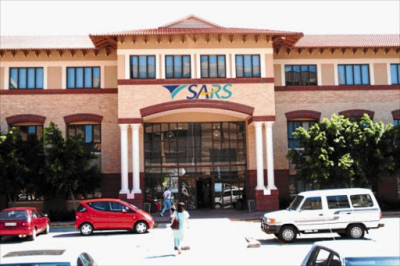
Meanwhile the South African Revenue Service (SARS) says it welcomes the upwardly revised revenue collection estimate announced by Minister of Finance, Godongwana.
“The 2021/22 revenue yield is expected to result in the tax-to-GDP ratio reaching 24.7%, which is higher than the pre-COVID-19 level and that indicates that the extraction rate is on a positive trajectory,” said SARS on Wednesday.
The 2021/22 financial year revenue collections have been trending well above the estimated revenue, as set out in the 2021 Budget review and Medium Term Budget Policy Statement.
“Commodity prices have been thriving in the past few months and therefore, key SARS segments and regions have benefited from higher global demand for commodities. The extra income earned by commodity producing and exporting companies accompanied by SARS’ deliberate and targeted tax compliance work have resulted in a better than expected increase in tax revenue.”
SARS said it continues to make encouraging strides in compliance-related activities. There is a notable year-on-year increase of 18%.
“This comprises focused and deliberate work audits of large business, which has generated an additional revenue in excess of R4 billion. The Illicit Economic Unit has seen finalised investigations and conducted a number of search and seizures that have netted nearly R6 billion.
“While focusing on facilitating trade, we have also undertaken audit work that has realised above R5 billion. In light of the revised estimate by the Minister, this work will continue and be expanded.
“Pursuant to the above, our focus will also continue on a number of revenue generating priorities, which include the expansion of the use of data and intelligence to prevent leakages resulting from fraudulent VAT and PIT refunds claimed by syndicates operating within the tax ecosystem.
“Prominence is also on increasing capability to maximise debt collections; implementing the Davis Tax Committee recommendations on the key work streams to impact the corporate and High Wealth Individual compliance landscape; accelerating criminal investigations and counter illicit practices, and shaping the policy and approach on heightening revenue collections and service to the informal economy.”
The revenue service said the momentum of this compliance work will continue and accelerate.
“We are committed to enhancing our taxpayer service experience. It is critically important that we continue to provide a seamless service to taxpayers in order to assist them meet their legal obligations without any difficulty.”
As at 31 January 2022, SARS collected R1 252.2 billion, yielding a prior year growth of R275.1 billion (28.2%) and growth of R169.6 billion (15.7%) against 2019/20 collections.
The majority of collections against printed estimates show an upward trend, with the growth mainly driven by net corporate income tax (R91.4billion, 55.8%), net personal income tax (R30.5billion, 7.4%), and net value added tax (R15.0billion, 5.0%).
Collections of excise duties are recovering from the trade restrictions imposed due to the COVID-19 ban on sales, especially on alcohol, with companies now paying duties deferred during the pandemic.
The service said risks of higher inflation and tighter monetary policy, the evolution of the COVID-19 pandemic and delayed implementation of structural reforms remain.
Also, continued electricity supply constraints and high inflation – with a dire impact on consumer demand and disposable income – pose challenges on revenue collections.
“In the near term, commodity prices are expected to ease due to uncertainties in the global economy. Therefore, the outlook for CIT provisional tax for 2022/23 is likely to be lower than current levels as the commodity boom subsides.”
SARS said it is building and entrenching a culture of voluntary compliance, which is intrinsic to nation building and ensuring that all taxpayers pay their fair share.
SARS Commissioner Edward Kieswetter said: “We remain cautiously optimistic that we will meet the new revenue estimate. SARS will continue to work dutifully to fulfil its mandate of collecting all revenue that is due in order to build a capable State that serves the well-being of all South Africans. This is the privileged work that aligns to the higher purpose that SARS serves.”