
By Lehlohonolo Lehana.
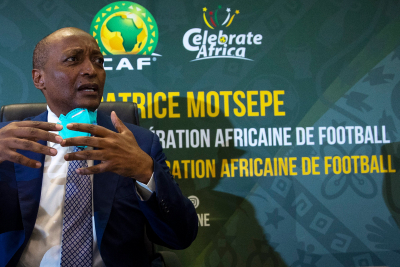
CAF president Patrice Motsepe has officially launched the African Super League, with $100 million (R1.65 billion) up for grabs, in Arusha, Tanzania, on Wednesday.
Motsepe announced that 24 teams will be participating in the tournament, and while the competition’s format and who its sponsors are remain unclear, the idea is for the new contest is to generate enough money to help uplift all facets surrounding the beautiful game in Africa.
During the 44th Caf Ordinary General Assembly on August 10, Motsepe said each member association is set to benefit from the money accrued from the inaugural competition set to begin in 2023.
“We announced on July 3, 2022, that the total prize money of the Caf Africa Super League will be $100 million, with the winner receiving $11.5 million,” Caf said in a statement.
“We intend to pay each member association $1 million per annum from the Caf Africa Super League funds.
“We also intend to allocate $50 million to CAF from these funds for youth and women’s football development and for all its other competitions to ensure that they are globally competitive.”
While addressing the assembly, Motsepe said the inception of the Super League is meant to make African tournaments competitive.
“We also want to use $50 million from the African Super League to make some of our competitions competitive,” Motsepe added.
“The prize money of competitions must be very high to make them exciting and to use some of that money to pay the players, the staff, and administrators.”
Motsepe further conveyed confidence that the money from the inaugural tournament could be used to ease financial pressure on the participating clubs.
Yet with mounting losses in the continent’s governing body, questions remain as to where the $200m (£165m) the new tournament is expected to generate will come from – with some fearing the new league will deplete Caf funds rather than bring in much-needed buoyancy.
Caf’s latest audited accounts, show losses amounting to just under $45m (£37.1m) for 2020-21, a 400% increase on the previous financial year.
At the same time, Caf’s reserves have plummeted by a similar amount as a result, nearly halving to $50m (£41.2m) when they had been $94m (£77.5m) a year earlier.