
By Lehlohonolo Lehana.
A facility in Cape Town could produce Africa’s first vaccines using messenger RNA, the breakthrough science of the global inoculation effort against Covid-19, within 15 months of signing a technology transfer agreement.
The World Health Organization this week announced it will establish its first-ever mRNA technology transfer hub in the city in an agreement with Afrigen Biologics & Vaccines and the Biovac Institute.
The global health body is in talks with potential partners who would work with the South African companies to produce the vaccines to tackle the Covid-19 pandemic in the world’s least-vaccinated continent.
While talks are being held with large companies that already have mRNA Covid-19 vaccines, most negotiations are taking place with smaller firms that are still trialling the shots, Soumya Swaminathan, the WHO’s chief scientist, said.
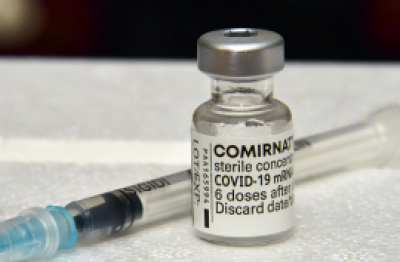
Pfizer, together with its partner BioNTech, and Moderna are the two groups globally with approved mRNA Covid-19 vaccines.
“The target given to us, which is quite ambitious, is 12 months to put the first candidate into clinical trials from the day of technology transfer signing,” and those trials could take about three months, said Petro Terblanche, the managing director of Afrigen, in an interview on Friday.
“That’s only possible if the technology partner is one of the big gorillas” and will take a bit longer if it’s a small company, she said.
The push by the WHO is an attempt to boost vaccine manufacturing in Africa as richer nations have hoarded Covid-19 inoculations, leaving few for the continent, which is in the grip of a third wave of coronavirus infections.
While the US and the UK have fully vaccinated more than 45% of their populations, just more than 1% of Africa’s 1.2 billion people have received a full course of Covid-19 shots.
The South African Medical Research Council (SAMRC} said experts have described the mRNA technology as a viable alternative to the traditional vaccine platforms.
“This is not only because they have been shown to be more effective but also due to their capacity for rapid development, and their potential for low-cost manufacture. Furthermore, the mRNA vaccines were considered some of the most efficacious vaccines for COVID-19.”
As part of the bid process, SAMRC said it joined forces with five top local universities, Biovac and Afrigen to create a sustainable technology and knowledge hub including Africa Centres for Disease Control and Prevention (Africa CDC).
The hub will work with a team of excellent scientists from the Witwatersrand University, University of Cape Town, University of KwaZulu-Natal, University of Stellenbosch and the North-West University, with the Afrigen group.
The consortium aims to bring to clinical trial a COVID-19 vaccine in 12 months, as proof of concept.
In addition, the medical research organisation said the goal is to manufacture and distribute locally developed vaccines for Africa-specific COVID variants, as well as future pathogens threatening the health of people on the continent.
SAMRC President and Chief Executive Officer, Professor Glenda Gray, believes that the organisation has a “traceable” national footprint and proven leadership role in supporting technology development, which may prove to be valuable.
Meanwhile, the SAMRC’s Professor Richard Gordon said: “The announcement was an important first step to establish the mRNA technology in Africa which can allow the continent to leap-frog the vaccine manufacturing gap”.
The hub is also expected to strengthen the genomic surveillance for new variants, as well as start the development of novel vaccine candidates for testing.
According to the SAMRC, the preclinical research capability – one of the critical elements in the establishment of drug development and a pharmaceutical industry – is already in development as well as the laboratory system to evaluate the effectiveness of vaccines.
“The candidate vaccine will be manufactured at the Afrigen facilities and the full-scale commercial production will be at Biovac,” SAMRC explained.