
By Liesl Peyper
Cape Town’s R76.4 billion budget for 2025/26 was passed on Thursday amid heated exchanges in a council meeting and strong public opposition from residents and ratepayers over rising tariffs and the city’s spending priorities.
A total of 126 councillors voted in favour and 66 against, with one abstention.
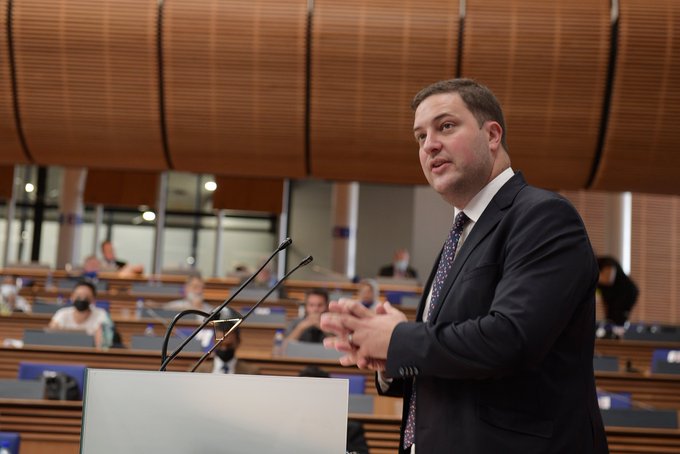
Geordin Hill-Lewis, Mayor of Cape Town, said in his speech before tabling the budget that public engagement has resulted in “meaningful changes” from the initial draft budget tabled in March, resulting in a lower city-wide cleaning tariff and fixed water charge.
The city went back to the drawing board after presenting its draft budget, which included far-reaching tariff reforms that elicited a flood of objections – with more than 14 000 comments received from Cape Town residents.
Even though the city introduced some mitigating measures to soften the municipal bill increases, the new tariff regime, effective 1 July, entails fixed charges for water, sanitation, and a new city-wide cleaning tariff, all based on property value.
Before the reforms, the fixed charges for water and electricity connections were uniform across all households.
Hill-Lewis reiterated on Thursday that the city recognises that not everyone who owns higher value properties is necessarily “wealthy or cash-flush”.
Over and above the relief measures announced in a special council sitting on 28 May, the mayor announced additional relief measures on Thursday.
“We have even further improved this deal – already SA’s best – following the second round of public participation,” he said.
These include:
- A 100% pensioner rebate will be available up to R10 000 monthly income (up from R7 500), and a 50% rebate will be available up to R20 000 income;
- Discounts of 20% are also available up to R24 000 income, and 10% up to the R27 000 maximum threshold; and
- Special debt write-off incentives to encourage more households to enter payment arrangements.
Hill-Lewis stressed that the cross-subsidisation principles “in the form of fixed charges linked to property values” are being retained.
“The only other alternative to property value determining your fixed contribution to infrastructure and fixed service costs is for everyone to pay a flat charge, regardless of whether you are low-income or affluent,” he said.
All households to contribute their fair share
“We must be clear that lower-income and wealthy households cannot make equal contributions to infrastructure and fixed service costs. It’s not fair, nor sustainable, and believe me, households at all levels of the property value spectrum do contribute their fair share within their means,”said Hill-Lewis.
“We’ve structured this budget to ask a little more from those who can afford it, and to protect essential services for those who can’t.”
With the mitigation measures the city announced, “97% of ratepayers” will not experience an increase of more than 20% in their monthly bills, the mayor noted, adding that “virtually no one” will experience a 30% increase on any reasonable household consumption scenario.
The mayor acknowledged that there may be “3% of cases” where tariff reforms may lead to “an unusually steep increase of over 2%”.
However, these are related to homes of high value with very low electricity and water usage – well below the average household. This is likely to these households’ investments in solar energy and boreholes.
During the debate, all opposition parties in the city council objected to the budget.
Anti-poor
The ANC and EFF called the budget anti-poor, while the Cape Independent Party, the Freedom Front Plus, Good, and Al-Jamah said the DA-led city government is placing a disproportionate burden on middle class ratepayers.
Opposition parties also questioned the legality of the city’s new cleaning tariff and fixed charges based on property values, arguing that this goes against the principles set out in the Local Government: Municipal Systems Act and Municipal Fiscal Powers and Functions Act.
Civil rights movement AfriForum holds the same view and indicated recently that it was preparing for a court challenge. Moneyweb reported earlier that the organisation had submitted comments to the city’s amendments tabled on 28 May, but that it was “proactively” preparing for a court challenge should the city persist with the tariffs in their current form.