
By Lehlohonolo Lehana.
President Cyril Ramaphosa says 8.9 million children will be forced into child labour by the end of 2022.
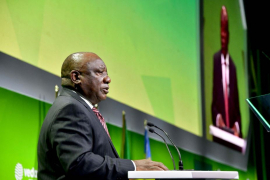
He was delivering the keynote address at the fifth international Labour Organisation Global Conference on the Elimination of Child Labour currently underway in Durban.
According to the International Labour Organisation and UNICEF, there had been substantial progress in addressing the worst forms of child exploitation.
Ramaphosa said the pandemic had deepened poverty, inequality and underdevelopment across the world. This step backwards would affect the progress made to eliminate child labour by 2025.
The president told delegates social reforms implemented in South Africa, social child support grants, and basic fee-free education help to keep children in school.
“We must attain universal access to social protection, with a specific focus on children and the vulnerable. By providing a basic floor of support for families with children, we can reduce the need for children to be put to work, whether in the home or elsewhere,” said Ramaphosa.
Ramaphosa emphasised the exploitation of children is not limited to children working in sweatshops and mines.
In South Africa, the exploitation of children manifests somewhat differently.
“It is the children in domestic servitude to families and relatives, prevented from attending school because they have to do household work,” said the president.
“It is the children of labour tenants on farms fulfilling exploitative agreements with farm-owners, where the entire family must work on the land in exchange for the right to live on it,” he added.
Ramaphosa also highlighted that children sold as sex slaves are the worst form of human exploitation and child exploitation.
One of the complications arising from the pandemic is the fragmentation of global supply chains, which has affected child labour in countries with extractives-based economies.
Ramaphosa addressed the reality that prospects for eliminating child labour and achieving decent work were limited unless the structure of the global economy and the institutions that support it were changed.
Among other things, this required patterns of trade and investment that were more inclusive, creating opportunities for developing economies to become more integrated into global value chains, he said.
Livestream Video Below
Video Courtesy of SABC.