
By Kevin Rademeyer, Sports Journalist.
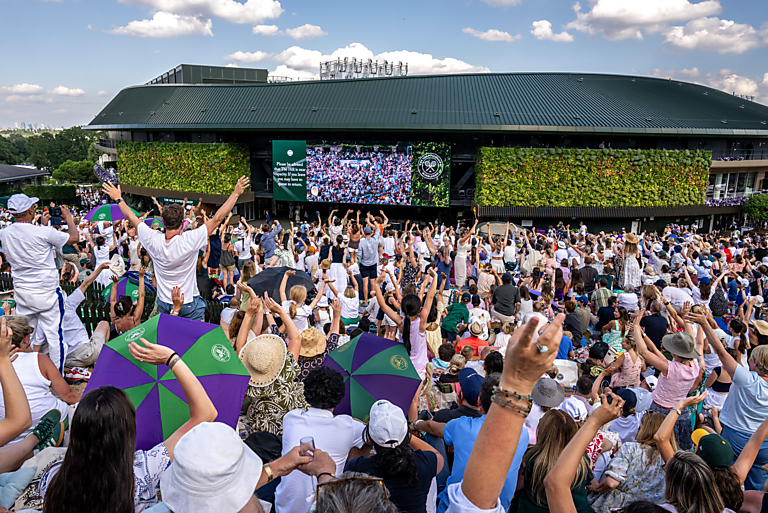
Photo Credit: AELTC/Edward Whitaker.
Live from London: There are moments in sport when the scoreline tells only part of the story. Jannik Sinner’s straight sets dismissal of Novak Djokovic on Centre Court was one of them.
The numbers, 6-4, 6-4, 6-4, were clinical enough. The performance behind them was something altogether more significant. It felt less like the passing of a baton than the confirmation that it had already changed hands.
For much of the fortnight, Sinner had looked efficient rather than irresistible. He won because champions usually do, but there were loose games, uncertain patches and occasional glimpses of vulnerability. Against Djokovic, all of that disappeared. The defending Wimbledon champion arrived in full.
The world number one served with precision, struck the ball with frightening conviction and never once allowed the seven time champion to believe the contest could turn in his favour. Every time Djokovic searched for an opening, Sinner quietly closed another door.
It was not disrespect. It was simply the ruthless efficiency of a player at the height of his powers.
Djokovic had already emptied the tank in a remarkable five hour quarter final against Felix Auger Aliassime. At 39, those recoveries come with interest. He fought, as he always does, but this time there was no puzzle to solve and no tactical rabbit to pull from the hat.
The Serbian admitted afterwards that Sinner had been “a level or more better” than him. It was an honest assessment. There were flashes of the old genius, a drop shot here, a clever change of pace there, but they were isolated moments against an opponent producing sustained excellence.
Perhaps the most telling statistic came behind Djokovic’s second serve. Sinner attacked it relentlessly, refusing to let the former champion settle into any rhythm. Even when Djokovic managed to create a rare break point in the third set, Sinner simply erased it with a 125mph ace. It was the shot of a man entirely certain of his place in the tournament.
Djokovic insists he is not done with Wimbledon and plans to return next year. Few would doubt him. Champions of his stature rarely leave quietly. Yet Centre Court had witnessed something unmistakable. The future had not merely arrived. It had taken complete control.
If the first semi final underlined the emergence of the game’s new standard bearer, the second showcased the growing maturity of Alexander Zverev.
For years Wimbledon had been the one Grand Slam that refused to yield to the German. A decade of frustration ended with a composed 7-6, 6-2, 6-4 victory over Britain’s Arthur Fery, whose remarkable run finally met an opponent capable of exposing every small weakness.
Fery’s fortnight had captured the imagination of British tennis. The wildcard from south west London had played with freedom, courage and the kind of fearless ambition that makes Wimbledon irresistible. But against the newly crowned Roland Garros champion, fairytales eventually collide with reality.
Zverev never allowed emotion to cloud his judgement. He absorbed the atmosphere, weathered an even opening set and then dismantled the challenge with the assurance of a player who now believes Grand Slam finals are where he belongs.
His serve was relentless, his baseline game suffocating and, unlike previous Wimbledon campaigns, there was no sense of impatience. It was mature tennis from a man who has finally learned that grass rewards discipline as much as power.
Sunday’s final now carries fascinating possibilities. Sinner arrives looking every inch the dominant force in world tennis. Zverev arrives carrying the confidence of a maiden Grand Slam title and the belief that another is within touching distance.
One man is defending a crown. The other is chasing history.
Centre Court rarely disappoints when the stakes are this high. Sunday promises another chapter worthy of Wimbledon.