
By Lehlohonolo Lehana.
City of Johannesburg intends to add an additional 50 MW of power to its grid by bringing online the Durban Street Substation, in the next financial year.
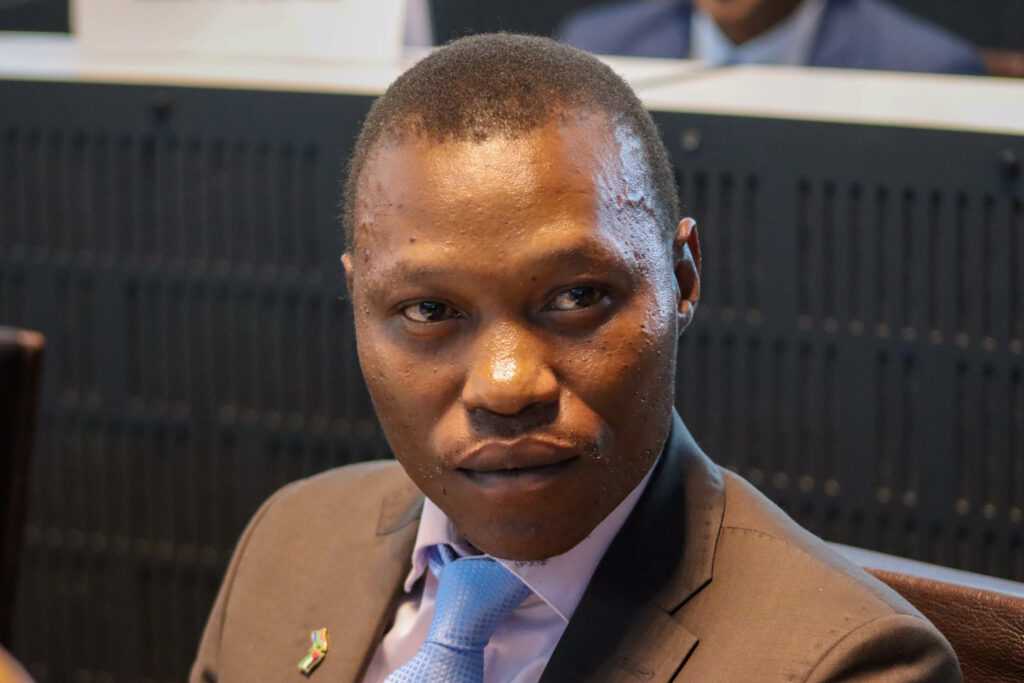
Executive Mayor Kabelo Gwamanda made an announcement during the State of the City Address at the Metro Centre on Thursday.
The address was attended by various prominent guests, including from the royal house, Prince Mandulo Zulu KaZwelithini and the clergy.
Gwamanda said the City had also planned for an additional 100 MW of energy by the financial year’s end.
“Our dedication towards avoiding loadshedding reflects in these actions aimed at protecting our citizens from discomfort and distress, “he said.
He said that for “too long” the city had been struggling with the “endemic loadshedding” that has plagued South Africans.
“…however, I am pleased to declare that we are taking firm measures to confront this obstacle directly. We recognise that we cannot tackle this crisis alone. It is for this reason that we have established partnerships with the Gauteng provincial government and Eskom to address it collectively,” he said.
He noted and said he appreciated the increased focus on planned maintenance at Eskom which he said had allowed the City to enjoy a temporary reprieve from loadshedding over the last month, with predicted record low stages of loadshedding for the coming winter months.
Gwamanda noted that through the City’s partnership with the Gauteng government and Premier Panyaza Lesufi in particular, the John Ware substation’s open gas turbine has been brought back into operation, enabling the infusion of a noteworthy 50 MW into the City’s network.
“This progression marks only the initial phase in our determination towards implementing innovative energy solutions and decreasing dependence on Eskom for uninterrupted electricity supply,” he said.
Gwamanda said the City was working on innovative measures to reduce power outages such as the implementation of load limiters and commissioning open cycle gas turbines.
Illegal Mining
The City is taking steps to reduce risks associated with illegal mining by continuously monitoring areas where significant damage has occurred to bridge embankments and road reserves owing to this activity.
He highlighted that the City’s financial situation was also deeply affected by illegal mining, in a “complex and significant manner”.
“Though an exact total for the expenses associated with this issue has yet to be calculated on a municipal level, it encompasses various costs such as the repairs necessitated by damage to water or sewage systems, replacing entire pipes that have been damaged beyond repair and restoring terrain ravaged through quarrying activities, “he said.
“The unlawful activities of zama zamas involve disruptive excavation, which leads to soil erosion around pipelines. This accelerates the possibility of sinkholes and severely undermines both our infrastructure’s stability and safety standards for repair teams,” said the mayor.
Moreover, he said the Johannesburg Roads Agency (JRA) is taking initiative to keep residents safe from damaged roads and excavations due to zama zamas and avoid further infrastructure dilapidation, by the use of barricades and road closures.
The mayor added that the metro is taking a financial knock. “The city’s financial situation is deeply affected by illegal mining in a complex and significant manner.”
Water and Sanitation
Furthermore, Gwamanda indicated that the city has enabled quality access to water and sanitation to residents.
Here, water and sanitation are accessible to 93% of households, while electricity is available to 94.1% of residents. Additionally, 97% of informal settlements have access to all basic services.
As Joburg is facing water challenges, the mayor emphasised there is water scarcity and, by far, water demand is threatening water infrastructure.
Moreover, Johannesburg Water has a publicised backlog of R27 billion in water infrastructure. “Our water use per capita far exceeds that which is the standard in developed and thriving cities of our world,” said Gwamanda.
Hence, the city approved the Water Security Strategy, which was endorsed on October 31 by the Mayoral Committee. “The Water Security Strategy is geared towards addressing threats to the city’s urban water cycle, while also capitalising on opportunities to transform Joburg into a sustainable, resilient and adaptive city.
“With seven strategic responses and 67 action plans developed for both short and long-term implementation, the strategy aims to ensure sustainable water management and future water security,” said Gwamanda.
Watch Live in the video below:
Video Courtesy of COJ.