
By Lehlohonolo Lehana.
City Power to spend over 23 million to replace burned underground cables on the M1 highway and install new interconnector cables between Fort and Braamfontein substations.
This comes after an underground fire broke out in one of the tunnels underneath the M1 on Wednesday, which plunged several nearby areas into darkness.
The cause of the fire is suspected to be attempted cable theft and vandalism.
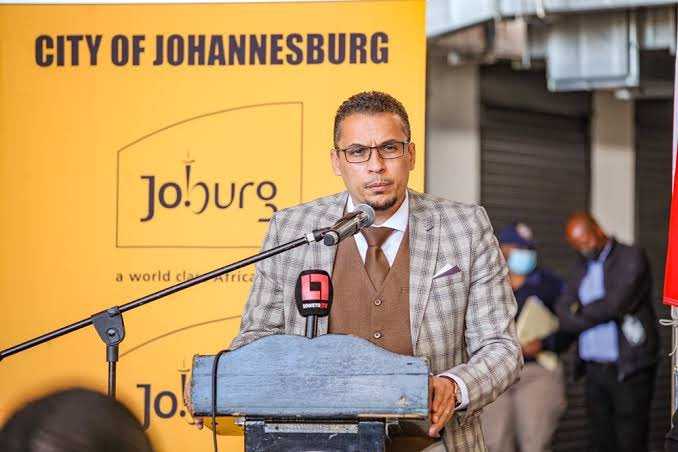
City Power Group executive for service delivery centres, Charles Tlouane and City Manager Floyd Brink gave an update on developments.
According to Tlouane, the overall work to fix the electrical damage on the M1 highway will cost R23-million.
“This is overall work from the bridge, including what we are trying to do through our interconnector cables. The interconnector cables we are laying them as an immediate intervention to resolve the power outages. Not all customers (residents) are restored. We still have customers (residents) who are off,” said Tlouane.
He confirmed that the Braamfontein sub-station, which was affected by the blaze, was still offline pending repairs.
Areas still without power include large parts of Braamfontein, Newtown and Parktown west.
City Power said it was considering supplying power on a rotational basis, to share the available load, until repair work has been completed.
Brink lamented the increasing cases of sabotage on the city’s infrastructure.
“The City of Johannesburg is concerned by the high level of sabotage of our infrastructure which is impacting our ability to render services.”
He said a criminal complaint had been lodged with the police.
Brink confirmed City Power had been given a case number and would be working closely with the police.
During inspection of the affected infrastructure last week, City Power officials found about 300 metres of cable had been stolen, which they said was likely the cause of the fire.
Officials also found tools seemingly used to cut the cables near the site.
At the same time, while engineers have cleared the M1 Bridge for traffic, some roads beneath the bridge remain closed to the public.
Meanwhile state-owned power utility Eskom is phasing out the use of copper cables due to high levels of theft of the item.
According to a report by the Global Initiative Against Transnational Organized Crime (GI-TOC), stolen copper cables, overhead lines, copper used in conductors, and copper stored for later use cost Eskom between R5 billion and R7 billion a year, plus about R2 billion to replace them.
“We are moving away from using copper because we have seen that it is quite in demand, so whenever we have any cable that has been stolen, we do not replace it with copper, “Gauteng Eskom spokesperson Amanda Qithi.
The mineral, the second-best conductor of electricity behind silver, is in high demand – especially among criminal syndicates.
The sought-after metal is widely used in various sectors, including water, rail, fuel and oil, communications, electricity, military, health, vehicle production, and more.
“Consequently, there will always be a market for it, and thieves find ready sources of the metal in South Africa’s poorly maintained and guarded national infrastructure, “said Corruption Watch.
According to the Economic Sabotage of Critical Infrastructure Forum, the theft of copper in South Africa is estimated to cost the country R46.5 billion a year across its various portfolios.
Qithi said that in response, Eskom has been installing vibration sensors in cables, which pick up when cables are being tampered with and send a signal to a control room, which then sends security to investigate. However, it has not made the dent that it had hoped for.
In hopes of deterring this massive issue for public infrastructure, in 2015, the legislature enacted the Criminal Matters Amendment Act, which could see perpetrators sentenced to 30 years and private companies fined R100 million for tampering, damaging or destroying critical infrastructure.
However, according to GI-TOC, this has not deterred copper thieves, who largely fall into two categories – organised crime syndicates who commit large-scale theft and petty or subsistence thieves who steal only what they need.