
By Lehlohonolo Lehana.
City of Tshwane has embarked on aggressive revenue collection campaign by disconnecting services to defaulting customers.
The city said that its aggressive and unprecedented revenue collection campaign was aimed at clawing back some of the R17 billion sitting on its debtor’s book by cutting off electricity and water.
The main culprits are government departments, embassies, businesses and residential customers.
The biggest bill was owed by the 5-star Sheraton Hotel in Pretoria’s CBD, which had R23 million outstanding.
Other departments without electricity include the Department of Water and Sanitation, which owes some 1,4 million, and the Department of Higher Education and Training.
The latter department owes the city R2,1 million.
The list of defaulters cut off by the city during the day was as follows:
- Sheraton Hotel — R23 million
- South African Women’s Federation — R5 million
- SANDF Navy logistics building — R3.2 million
- Lake View Business Centre — R2.7 million
- Club Crossing Shopping Centre — R2.4 million
- South African Police Service Pol TV — R2.4 million
- Commercial Crimes Court — R2.2 million
- Department of Higher Education and Training — R2.1 million
- Summermania Seven — R1.7 million
- Department of Water and Sanitation — R1.37 million
- Lyttelton Shopping Centre — R705,913
- Morning Star Express Hotel — R573,668
- Ditsong Museum — R294,288
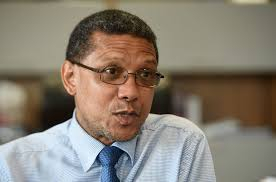
Mayor Randall Williams, who formed part of Wednesday’s campaign to collect the arrears, says the municipality will clamp down on all those who owe the city.
Williams said the City owed Eskom (R635 million in arrears) but the City was paying its suppliers like Rand Water and Magalies Water irrespective of hardships. However, it was not making the money back because businesses were holding R5 billion due to the City.
“We are going all after our debtors, because they have an obligation to pay because you cannot consume for free. You have an obligation towards the city.
“We are obligated in terms of the municipal legislation to recover money due to the city. It’s not something we can do voluntarily, we have an obligation to do it.
“So we have been doing it for some time and escalating it and turning it into operations has become more visibly active so that people can see.”
“The City is in a financial crisis. We need to get all the revenue in. You can see service delivery is falling. We have less money available to fix street lights. Less money availability to fix potholes.
This needs to change, and if you look at what has been happening all around the world businesses have adapted. South African businesses will also have to adapt according to the business circumstances.
The DA-led Tshwane metro is struggling with cash-flow problems, making it difficult to pay its dues to Eskom.