
By Lehlohonolo Lehana.
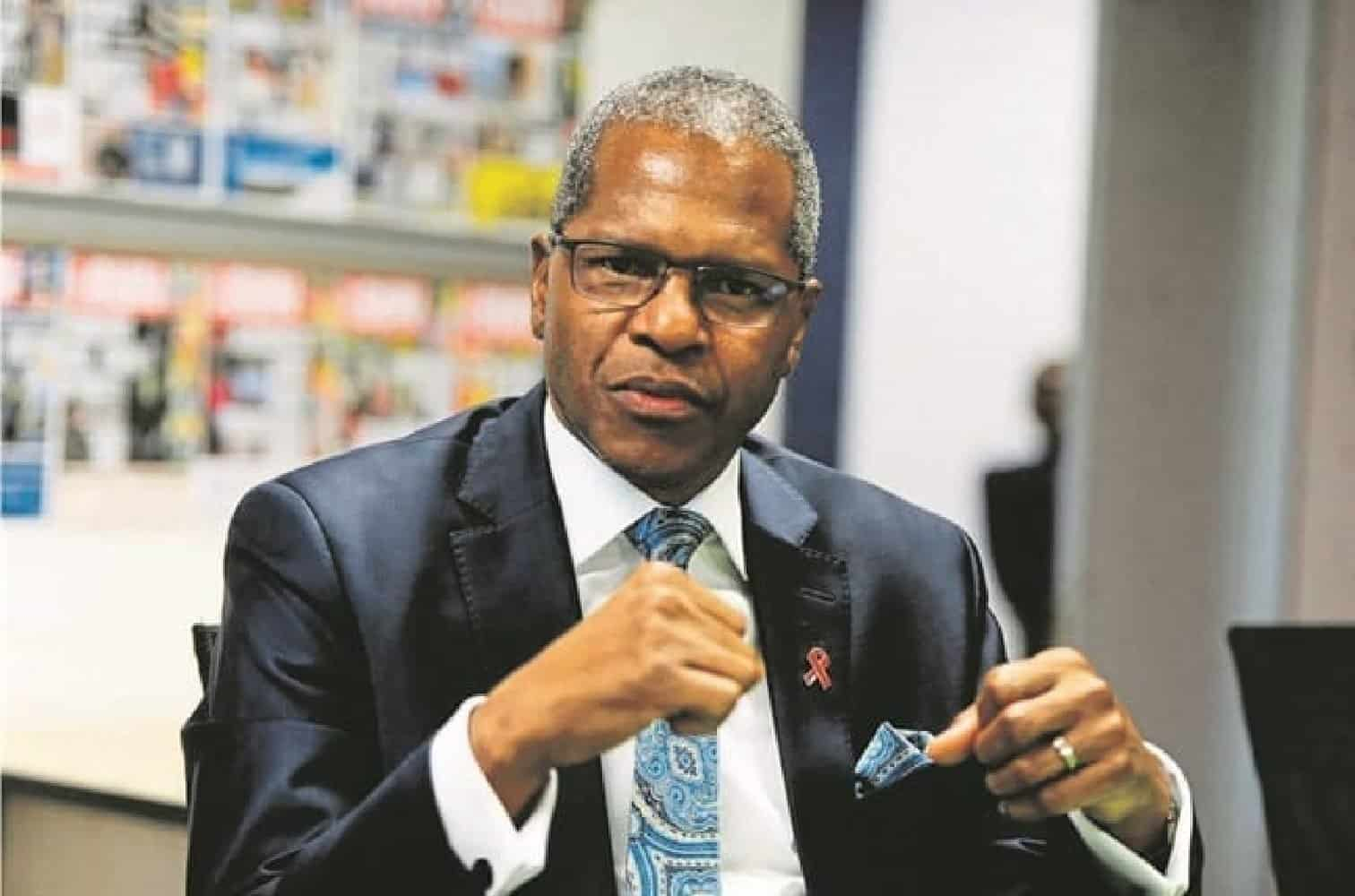
The Department of Co-operative Governance and Traditional Affairs (COGTA) minister Velinkosi Hlabisa has issued a stern warning to municipalities failing to deliver adequate services to communities.
Hlabisa was speaking to the media on the sidelines of the Government of National Unity (GNU) cabinet lekgotla in Pretoria on Saturday.
Following the 2024 election at the end of May, the ANC lost its majority in parliament for the first time in the democratic era.
Thus, President Cyril Ramaphosa created a GNU, which has been joined by the DA, IFP, PA, FF Plus, Rise Mzansi, UDM, PAC, Al-Jama Ah, Good, and UAT, making up over 70% of parliament’s representation.
Hlabisa said various political parties are all dedicated to improving municipal performance and enhancing service delivery.
“Our role as COGTA know that the first thing you do in dysfunctional municipalities is to intervene with support, but it cannot go indefinitely. A line must be drawn somewhere.
“If we realise we are trying to intervene, we are trying to support, the cooperation is bad, we dissolve.”
Hlabisa said all political parties will be consulted before he makes any decision.
“We work as a combination of political parties now. When you want to go to a decision of dissolving, you don’t do it alone as one political party, and the matter has to go through all stages.
“I am confident that all political parties do not want a dysfunctional municipality because it is just two-and-a-half years to go before local government elections, and the voters will punish political parties that would deprive them of what could have been better if it was done on time,” said Hlabisa.
He warned that municipalities which fail to comply will find themselves in the government’s cross-hairs.
The latest State of Local Government Report shows there are 32 municipalities across the country that are currently under administration, with 66 out of 257 being labelled as ‘dysfunctional.’
According to a paper published by parliament, the constitutional responsibility of municipalities is to organize their administration, budget, and plan processes in a way that gives priority to the fundamental needs of their community and promotes their social and economic development.
Additionally, municipalities are responsible for ensuring that essential basic public services, including water, electricity, refuse and sewerage disposal, public health facilities, and public transport facilities, are provided to the community.
Following the report, Cogta has introduced a number of substantial legislative and policy reforms, including:
– reviewing the Municipal Structures Act which reinforced the code of conduct for councillors, recognised the vital role of the Municipal Public Accounts Committees (MPAC), and introduced the position of the council whip in all municipalities.
– introduced the Municipal Staff Regulations that lay the foundation to professionalise local government by setting essential standards.
– Cogta, in collaboration with the National Treasury, introduced Circular 88, aimed at streamlining planning and reporting tools using specific municipal performance indicators.
– Set up the Results Management Office (RMO) to house experts in various fields, including infrastructure, finance, energy, and governance, to provide an additional layer of support, particularly in dysfunctional municipalities.
– Strengthened the Municipal Infrastructure Support Agent (MISA), which has been designated by the Minister to champion the development of Infrastructure Asset Management Plans, the deployment of more experts and trainee artisans, as well as supporting the implementation of the Community Work Programme.
Some of the interventions included introducing the Intergovernmental, Monitoring, Support, and Interventions (IMSI) Bill, which sets the stage for monitoring provinces and municipalities, ensuring their compliance with executive obligations and, in addition, outlines alternative steps for interventions to induce compliance, and grants the power to the national or provincial executive to appoint administrators in cases of intervention.
The Coalitions Bill will make provision for a binding coalition agreement in municipalities where no single party holds a majority of seats.