
By Lehlohonolo Lehana.
The opposition Democratic Alliance says the country’s 2021 matric results are not a true reflection of the number of students who are failed by the country’s education system.
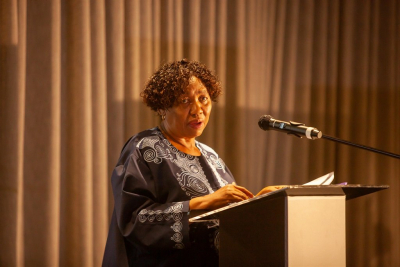
On Thursday (20 January), Basic Education minister Angie Motshekga announced the pass rate for the 2021 cohort was 76.4%. This is an increase of 0.2 percentage points compared to the 2020 matric pass rate (76.2%).
However, the DA said the ‘real’ matric pass rate is 51.4%, as the official results do not take into consideration the high dropout rate. This year, the dropout rate of learners between grade 10 to 12 is 32.7% (341,403 learners), the party said.
Calculations excluding IEB matrics in the grade 10 cohort put the ‘real’ pass rate slightly higher at 53%.
The two provinces with the lowest dropout rates are Mpumalanga, with a dropout rate of 25.5% and the Western Cape, with a dropout rate of 29.7%. The province with the highest learner dropouts is the Northern Cape with 44.7% of learners that were enrolled in grade 10 in 2019 (10 297 learners).
“We know that 897,163 learners wrote the examination, but the grade 10 enrolment in 2019 was 1,045,424. This means that at least 148,261 learners dropped out of the system and did not complete matric. The actual figure is much higher if we consider the students who wrote the examination but failed.
“The DA believes this is due to stringent lockdown regulations implemented by the Department. For these reasons, the DA is compiling court papers to bring an urgent interdict to direct schools to open fully. This policy is irrational and unjustifiable.”
The DA said South Africa’s education system is facing a crisis when considering the learner dropout rates in the statistics.
Covid regulations for schools have only made matters worse, and it is clear by the results that the Minister should scrap the rotational timetable with immediate effect, it said.
Meanwhile the Department of Basic Education will pilot the new General Education Certificate (GEC) at hundreds of South African schools in 2022, with plans to roll out the certificate to all schools in the country by the 2024 school year.
Speaking at a media briefing on Thursday (20 January), Basic Education minister said Angie Motshekga said the GEC is seen as an ‘important and progressive qualification’ that will improve career pathing, employability and reduce dropout rates of South African students.
“It allows for learners after 10 years of schooling (Grade R9), to be recognised for their levels of curriculum attainment, general capabilities and talents.
“Information and scores from the 21st-century skills into School-Based Assessment (SBA); standardised curriculum tests and through an inclination (or talent) assessment, will be used to generate a report card, reflecting a holistic dashboard of learner’s skills and capabilities.”
Motshekga said broad consultations around the certificate have already taken place with stakeholders, partners, and experts on the most appropriate model for the GEC, and public comments have been considered in introducing the policy.