
By Lehlohonolo Lehana.
The Democratic Alliance (DA) Member of Parliament (MP), Chris Hattingh, who sits on both the Joint Standing Committee on Defence (JSCD) and the Portfolio Committee on Defence and Military Veterans (PCDMV), has slammed SANDF plan to send 20 officers to Cuba next year.
SANDF has approved a R28 million programme to send officers to Cuba.
Each officer will cost between R115 000 and R140 000 per month during the two-year programme, with the first year dedicated to learning Spanish.
This forms part of the he ongoing Cuba/South Africa defence collaboration, rebranded earlier this year to Project Kgala from the original Project Thusano.
Course content ranges from artisan to journalism and specialist degrees in aspects of military operations, including artillery reconnaissance; long gunnery; armour protection and opto-electronics; ordnance, fuses, illuminating and signalling devices; hydrography and naval construction.
Others are on equivalent staff courses ranging from the Security and Defence Studies Programme (SDSP) to the Joint Senior Command and Junior Command and Staff programmes as well as a United Nations (UN) staff officers’ course.
Hattingh said, “This is for courses that are not even recognised in SA, while there are similar local courses that are recognised by the SA Qualifications Authority.”
He argues that the new initiative, which dedicates the first year to officers learning Spanish, further delays genuine skills development. “This is an ideological vanity project at taxpayers’ expense while accredited courses at home sit under-utilised.”
According to Hattingh, Project Thusano was flagged for irregular contracts, inflated tariffs and non-recognised training, racking up more than R1.7 billion in irregular expenditure before its name change.
He has called for the immediate suspension of the Cuban deployment and full disclosure of all Project Kgala contracts. “This is not reform, it is recycling failure,” he said, demanding that the funds be redirected to South African technical colleges and defence academies to strengthen local capacity and create jobs.
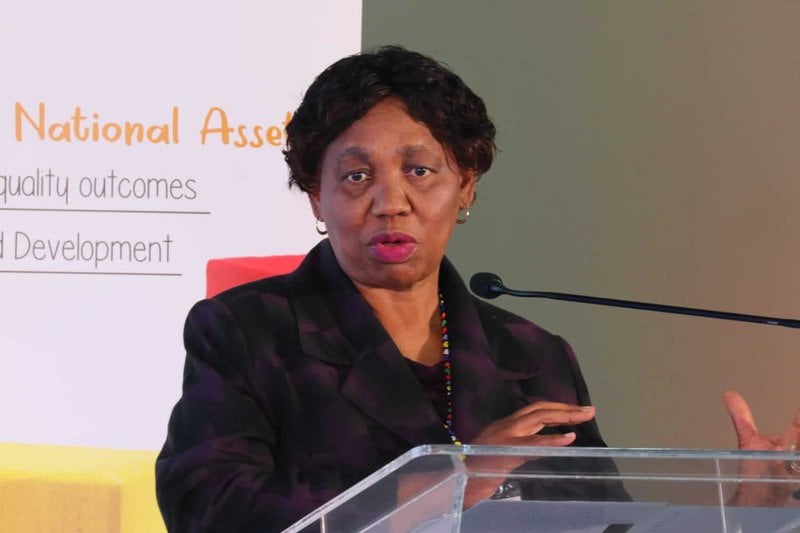
Defence Minister Angie Motshekga confirmed that 298 SANDF members are currently training in 13 countries, many of them in English-medium institutions with recognised qualifications.
Cuba, Hattingh insists, is the “costly, non-accredited exception” and offers little strategic value compared to partners such as the United States, United Kingdom, India or South Africa’s own academies.
Apart from Cuba, other foreign countries hosting SANDF personnel are Brazil, the Peoples’ Republic of China (PRC), India, Pakistan and Russia. In Africa, South African National Defence Force members are undergoing training in Burundi, Ghana, Kenya, Tanzania, Uganda, Zambia and Zimbabwe.